
Young job seekers turn to door-to-door campaigns as online applications fail
Young people under the Imisebenzi Yethu campaign are confronting employers face-to-face in a bid to ensure that human contact succeeds where digital systems fail.

Scores of young people have decided to stand up and return to the old tradition of knocking on doors for job opportunities, according to SA Job Seekers’ spokesperson Mush Raletjena.
They’ve sent CVs via email and filled out forms on career portals, but, to date, their phones remain silent and inboxes empty. Many have endured years of rejection, some as many as six, joining the ranks of the country’s 4.7 million unemployed youth. It was this frustration that drove them, mobilised under the SA Job Seekers Movement’s Imisebenzi Yethu campaign, to approach companies in the Wynberg precinct directly. Rather than joining the 3.9 million discouraged job seekers, they chose to channel their collective frustration into visible action.
Read more: Alex job seekers equipped to seize job opportunities

“I was dropping CVs, but for the past two years I have not found anything, not even a response,” said participant Lihle Nqothe. “I even tried the online system, but still haven’t found anything. It has not worked for me.”
He is among those who feel that digital tools, which promise efficiency, have instead delivered widespread disillusionment. Phila Bodoza, now in his third year of searching, said companies rarely respond to online submissions, emails, or portal applications.
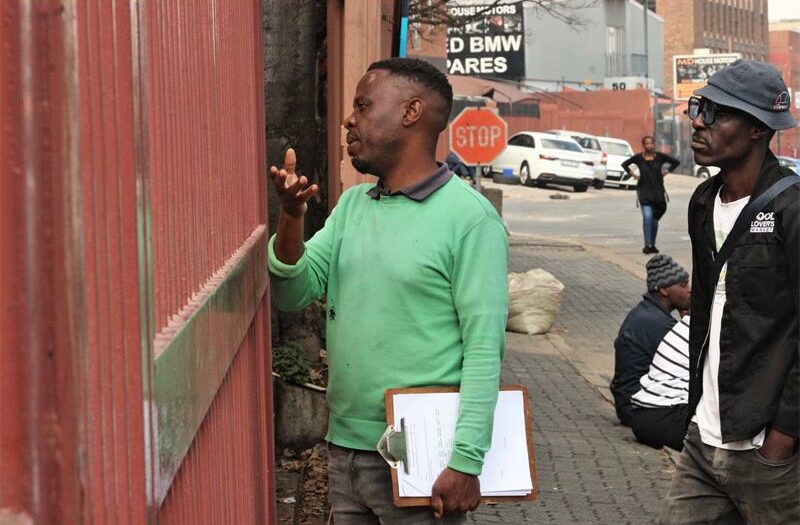
Raletjena explained that surveys conducted between 2017 and 2019 identified online applications as a core barrier. Applicants often submit dozens of CVs without acknowledgment, let alone interviews. He added that data poverty compounds the issue in communities like Alexandra, where many rely on limited social or WhatsApp bundles unsuitable for formal portals. He is convinced that door-to-door campaigns remain the most effective strategy.
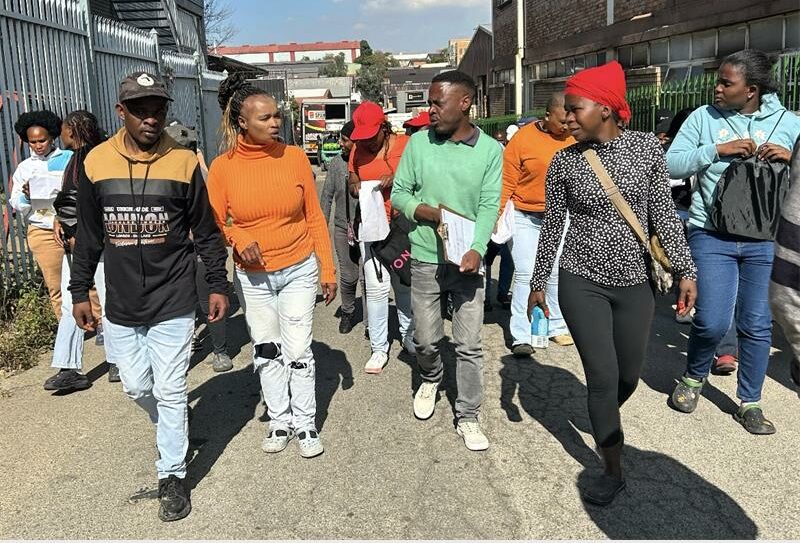
During the first campaign on May 26, about ten participants secured immediate opportunities in driving, security, and construction roles. Raletjena emphasised that the campaign has served many better than digital submissions, and they are determined to continue with more campaigns than before. “This year, we took a decision that we are going to have more of these campaigns. Indeed, this strategy is working.”
Also read: SA Job Seekers demand GNU initiate job summit
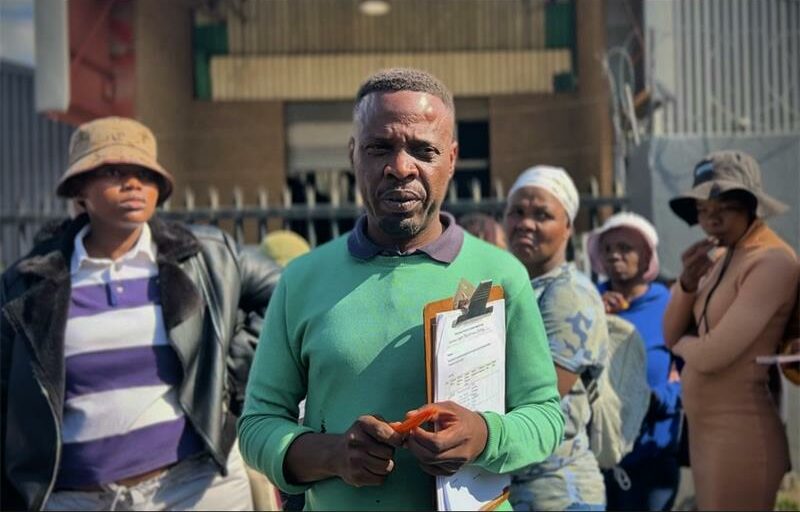
Statistics South Africa’s latest quarterly labour force survey for Q1 2026 underscores the urgency. The official unemployment rate climbed to 32.7% from 31.4%, with the economy shedding 345 000 jobs and total unemployment reaching 8.1 million. Youth bear the brunt, with figures for those aged 15–24 and 25–34 at 60.9% and 40.6%, respectively.
Confronted with these figures, residents believe that humanising the faces behind applications will force employers to recognise their plight.
Follow us on our Whatsapp channel, Facebook, X, Instagram, and TikTok for the latest updates