From the ballot box to the mayoral committee, here is what happens after you vote
You have cast your ballot. Now what? Within seven days the IEC must declare the results, and within 14 days after that, your new council sits to elect a speaker and a mayor. Here is how it all unfolds.
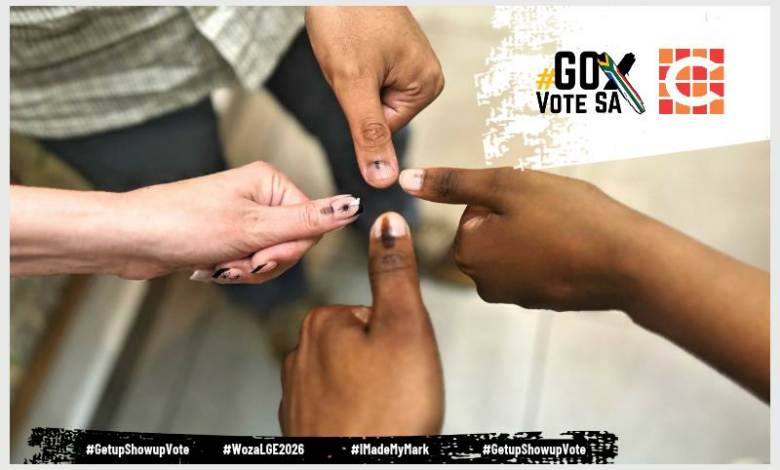
Casting your ballot is only the first step in a longer process.
Between the moment you fold your ballot paper and the day a municipality’s executive begins work, votes are counted, verified, audited and declared, and councillors elect the people who will lead them. The South African Local Government Association (Salga), Futurelect and the Electoral Institute for Sustainable Democracy in Africa (Eisa) explain how that process unfolds from the count, audit, declaration and inaugural council meeting to the election of office-bearers.
The period between election day and the establishment of a new municipal council, according to Salga, is governed by legislation and is not a governance vacuum.
What happens after you cast your ballot
Lindiwe Mazibuko, founder and CEO of Futurelect, said there is a widespread misunderstanding about how the Electoral Commission of South Africa (IEC) counts votes. She said the ballot does not go anywhere because the count takes place at the exact voting station where it was cast. “Everything happens at the voting station. No ballots are put in a truck anywhere until that count has happened. Once that count has happened, the results are posted on the door of the voting station for public consumption,” she said.
Mazibuko said voters who stay beyond closing time, around 21:00, can see the verified count outside the door. The most important part, she said, is that nothing is moved. “Nothing can happen that does not happen inside. Any irregularities will have to occur inside the voting station. The reason we count inside the voting station is to minimise those irregularities,” she said, adding that even during counting party agents would be present to see the votes counted and verify the count and the process would be closely monitored by electoral observers.
Special votes wait for election day
The IEC said special votes, cast on November 2 and 3, remain secured and are reconciled with the special-vote records before being counted together with the ballots cast on election day, November 4.
Some may worry about irregularities, but Mazibuko said the system is as watertight as it can be. “The number of measures taken by the IEC to protect the integrity of the votes is very strong,” she said.
Once the numbers are public, Mazibuko said, the auditors and cross-checks come in. “Once the totals have been reconciled at the voting station, and once the presiding officer and the party agents have actually signed the results slip to say that this is a certified result, one slip goes to the door and the other goes to the IEC office, and there it is scanned and captured twice independently by two different people,” she said.
Mazibuko said auditors then check the figures before they are added to the board at the IEC’s results centre. Smaller municipalities tend to report first, she said, followed by geographically small urban ones, where the results slip has a shorter way to travel to the local IEC office. “The bigger the municipality, the longer it takes to count and the longer it takes to verify and to independently audit,” she said.
Read more: Election observers are ready and set to go
Objections and disputes
Mazibuko said party agents can lodge complaints during the count, and those objections have to be addressed. Eisa said objections must be investigated and adjudicated by the IEC before results are finalised. “Once all material objections have been resolved, the IEC formally declares the election results for each municipality,” Eisa said.
Eisa’s Tokologo Ramodibe said objections relating to the election process can be lodged with the IEC, and that certain disputes can be taken on review to the Electoral Court. Courts may also be approached, he said, over the legality of electoral procedures, council meetings or the election of office bearers.
Declaration starts clock
Mazibuko said the figures on the IEC board come in over about seven days, and that government formation and coalition negotiations can only begin once the IEC calls a press conference and declares the results.
Salga spokesperson Motalatale Modiba said the seven-day deadline is contained in Section 5 of the Electoral Commission Act 51 of 1996, which requires the commission to declare national, provincial and municipal results within that period. “For municipal elections, Section 64 of the Local Government: Municipal Electoral Act 27 of 2000 provides that, once the commission receives the results of the count for the ballots in a municipality, it must determine the election result, record it in the prescribed form and declare the result publicly. If the commission cannot determine and declare the result within the seven-day statutory period, it may apply to the Electoral Court, within that period, for an extension, but must provide good reason,” he said.
Modiba said the Electoral Court may grant or refuse the extension. He said the declaration matters because it is the point at which the new councillors and council are regarded as elected. He explained that under Section 26 of the Local Government: Municipal Structures Act 117 of 1998, the term of an incumbent councillor ends when the next council is declared elected. Until then, the existing council structures legally remain in place.
Inaugural council meeting
Once the results are declared, Modiba said the municipal manager begins the formal process of convening the inaugural council meeting. He noted that, for a metropolitan or local municipality, Section 29(2) of the Municipal Structures Act requires the first meeting to be called within 14 days after the council has been declared elected. He said if there is no municipal manager, the MEC responsible for local government in the province designates a person to perform the function.
Ramodibe said the Municipal Structures Act also sets prescribed timeframes for convening councils, which limits unnecessary delays. Modiba said Section 36 of the Municipal Structures Act requires the council to elect a speaker from among its councillors at its first sitting. Mazibuko said the presiding officer then steps aside, and the speaker oversees every subsequent election in that council, including that of the mayor.
He said a mayor is elected from among the councillors under Section 55, using the procedure in Schedule 3. “Schedule 3 requires nominations. If there is only one candidate, that candidate is declared elected. Where there is more than one candidate, voting proceeds by secret ballot and the candidate receiving a majority is elected. If nobody achieves a majority, the lowest candidate is eliminated, and voting continues until a candidate secures a majority,” Modiba explained.
Modiba said it would be inaccurate to imply that every municipality elects an executive mayor. According to Salga, the distinction applies whether the municipality is a metro, local or district.
Mazibuko said under an executive mayoral system, the council elects an executive mayor, who then appoints the mayoral committee. She said most metros work this way, with the mayor empowered to appoint certain councillors to the committee. Under a collective executive system, however, the council first elects the executive committee, which must broadly reflect the representation of parties and interests in council, and then elects the mayor from among its members. Mazibuko said this usually results in political parties being part of the government together.

Who appoints mayoral committee?
Modiba said Section 60 of the Municipal Structures Act governs the mayoral committee. He noted that if the council has more than nine members, the executive mayor must appoint a committee from among the councillors, and may allocate specific responsibilities and delegate certain mayoral powers to its members. “A crucial distinction is that the council does not elect the mayoral committee. The executive mayor appoints it,” Modiba said. “Salga’s guidelines recognise that the committee may be announced at the inaugural council meeting if the executive mayor is ready to do so, or may be appointed subsequently. The mayoral committee exists to assist and advise the executive mayor. It reports to the executive mayor, and its term is linked to that of the executive mayor.”
Districts do it differently
Modiba said the basic governance principles are the same across municipalities, but district municipalities differ because not all their councillors arrive through the same route. “Under Section 23 of the Municipal Structures Act, a district council comprises both proportionally elected councillors and councillors appointed by the local councils within that district. A local council must appoint its representatives to the district council within 14 days after the local election result has been declared,” he said.
The district’s inaugural meeting is therefore held only once those representatives have been appointed, after which Section 29(2) provides a further 14-day window. “Once properly constituted, however, the same essential principles apply: the council elects its speaker and establishes the executive system appropriate to that municipality,” Modiba said.
Also read: Poor voter registration turnout for ‘watershed’ 2024 election
When no party wins outright
Salga defines a hung municipality as one where no party has an outright majority of seats. According to Eisa, the IEC announces the final composition of the council and coalition negotiations begin. Ramodibe said parties negotiate over support agreements, coalition pacts, committee positions and leadership roles, and may conclude formal agreements or issue public statements of co-operation. Regardless of those talks, he said, the inaugural meeting must generally proceed within the prescribed legal period.
Eisa said the election of the speaker often indicates which bloc commands support in the council. In the executive mayor vote, the winner is usually the nominee of the coalition with majority support, after which partners may finalise committee allocations. Ramodibe stressed that coalition negotiations are political processes, not procedures administered by the IEC.
Keeping lights on
Modiba said election day is only one stage in the democratic renewal of local government. What follows is equally important, he added, because councils must be constituted, office bearers elected, governance structures established and incoming councillors equipped to perform their responsibilities. “Salga’s transition management plan is therefore aimed at ensuring that political transition does not translate into an interruption of governance or municipal services,” he said, adding that the plan identifies governance stability, administrative continuity, uninterrupted service delivery, structured handovers and councillor induction as core components of managing the transition.
Follow the live results at the IEC results dashboard here.
Follow us on our Whatsapp channel, Facebook, X, Instagram, and TikTok for the latest updates!