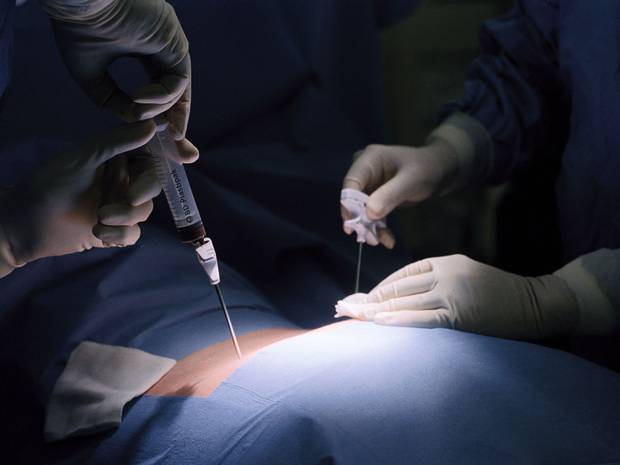
The South African Bone Marrow Registry (SABMR) urges individuals to become possible bone marrow stem cell donors.
This call was made in support of Bone Marrow and Leukaemia Awareness Month, which runs from August 15 to October 15.
All healthy individuals, aged 18 to 45, can register as a potential donor.
Professor Ernette du Toit, the medical director and co-founder of the SABMR, said leukemia, or cancer of the white cells, knows no limits and affects people of all ages and ethnicity.
“Sadly, it is the most common form of childhood cancer. Donors are a key component to saving lives, and that begins with you,” said Professor Du Toit.
“Every year, thousands of people are diagnosed with leukemia and for many, their only hope is to undergo a bone marrow stem cell transplant,” she said.
According to Prof Du Toit, there are currently 70 000 donors on the SABMR. While it may seem like a lot, more donors are needed because a perfect match is required.
“The best chance of finding a match is within the patient’s family. There is a 25 percent chance of finding a matching sibling donor, but with smaller family sizes and more diverse families, these odds are dropping. For the majority of patients, they will need to find a matching, unrelated donor. This is where the SABMR comes in. It is more likely to find a matching donor for a patient from the same ethnic group,” she said.
Prof Du Toit said they are the only medical facility in South Africa that conducts complex searches to identify life-saving donors. The chance of finding a matched unrelated donor is just 1 in 100 000.
Prof Du Toit said that leukemia patients are not the only ones in need of stem cell transplants.
People with illnesses such as non-Hodgkin lymphoma (cancer of lymphatic system), bone marrow failure (severe aplastic anaemia) and some genetic blood and immune system disorders such as sickle cell anaemia also require bone marrow stem cell transplants.
“These illnesses can affect anyone. Although bone marrow transplants are not always successful, they often give someone their only chance of recovery. The SABMR’s youngest patient was an infant just 10 months old,” said Prof Du Toit.
The SABMR often searches for perfectly matched donors worldwide.
“Donors living in other countries are found for 75 percent of patients in South Africa. This is made possible through the SABMR’s collaboration with 67 registries worldwide, with 27 million registered donors.
“The SABMR has also identified several South African donors that have matched overseas patients,” she said.
Prof Du Toit said many potential donors have some fears about the process.
“Many people fear signing up as potential donors because they believe the procedure to retrieve the stem cells involves a large needle being inserted into their bones,” she said. Stem cells are collected from the donor’s blood, in a similar way that one would donate blood or platelets. Prof Du Toit said most donors describe the process as uncomfortable but not painful.
If you are on the registry and turn out to be a possible match, the following will happen:
- You will receive a call from the SABMR informing you that you have been identified as a potential match for a patient. If you are willing to proceed, the SABMR will arrange for you to undergo several additional blood tests to further establish the suitability of your bone marrow.
- Once confirmed as a match, you will undergo a health check-up by a medical doctor.
- You will receive daily injections of neupogen from a week prior to the procedure. Neupogen is a naturally occurring hormone in the body that stimulates the production of stem cells. The injections ensure the donor produces sufficient cells for their body and for the patient. Some donors experience flu-like symptoms, which is a side effect of the neupogen.
- On the day of the procedure, the donor will be admitted to a collection facility and attached to a cell-separator machine, usually by intravenous line in both arms. It usually takes four to six hours to collect the stem cells. An SABMR member will accompany the donor throughout the process.
- On completion, the SABMR member will ensure the cells are transported safely to the patient.
You can register as a potential donor by contacting the Sunflower Fund, the SABMR recruiting agency, on 0800 121 082. If you fulfill the criteria, you will receive an application form and health questionnaire. You will be directed to a blood sampling facility to determine your tissue type.
Your form and tissue typing result will be forwarded to the SABMR, where your details will be entered into the SABMR database. You will receive an SABMR donor card to confirm that you are a potential donor. You will remain on the SABMR database until your 60th birthday, or until you ask to be removed. If you have concerns about becoming a donor, e-mail admin@sabmr.co.za or visit www.sabmr.co.za for further information.
ER24’s Emergency Contact Centre can also be reached 24 hours a day on 084 124 for any medical emergency.