Community members have been urged to keep an eye out and report any signs of the invasive beetle known as the polyphagous shot hole borer (PSHB).
This warning stems from the belief that several trees in Elma Park are infected with the beetle.
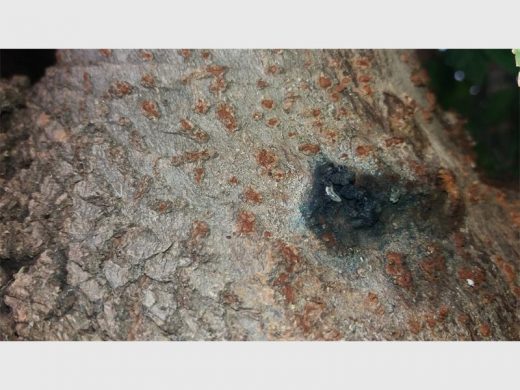
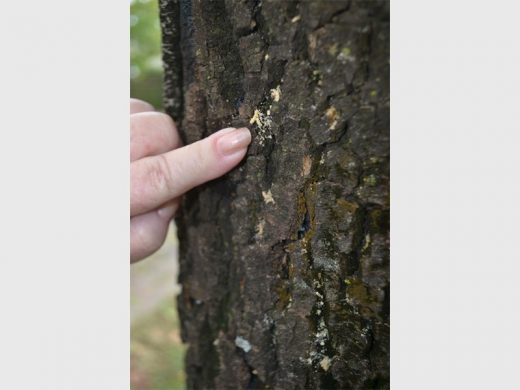
The trees affected have lost a portion of their leaves, have a fine light brown powder covering the bark and damp circular dark markings on the bark.
In a 2018 press release, found on the municipality’s website, the City of Ekurhuleni said the beetle originates from Asia and contains the fungal symbiont: fusarium euwallaceae.
Only two millimetres in size, the beetle bores tunnels into tree trunks and spreads the fungus.
“Trees the beetle infests often die from the fungus carried into the tree,” was stated in the press release.
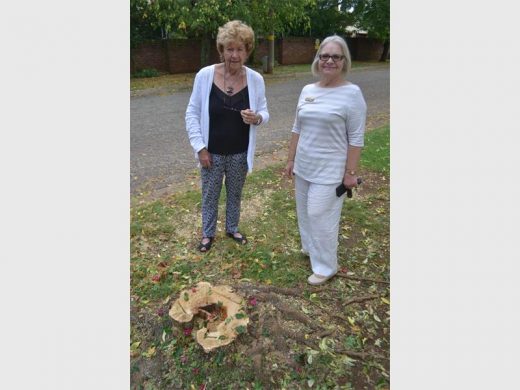
Elma Park resident Barbara Brandt said she first realised something was amiss with the trees when one near her driveway along Pierneef Road started dying last year.
Also read: From tree-killing beetles to crop disease
“I reported the tree to municipality last year so that it could be cut and removed,” said Brandt.
“I was worried that it would collapse on my gate or on a pedestrian.”
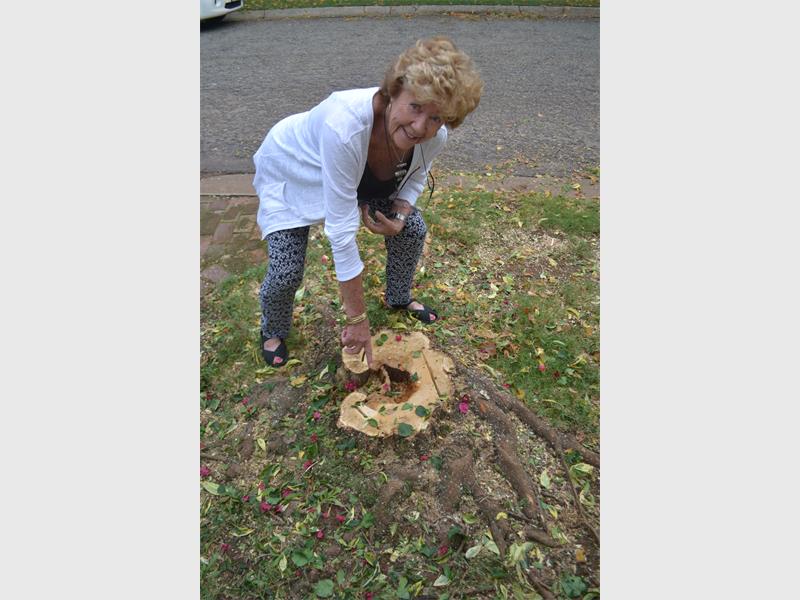
Brandt said when the tree was cut its middle was hollow.
Ward 18 Clr Heather Hart said she was made aware of the infestation of the tree when the tree was cut down at the end of February.
However, this was not the first infestation that was brought to Hart’s attention.
Earlier that month another Elma Park resident, Alex Dellas, informed her that trees in Du Preez Road were also infected.
Also read: CoJ takes steps to minimise impact of polyphagous shot hole borer
“I had called upon the assistance of an arboriculturist to look at one of my Conifers and while he was at my property, I asked him to asses some of the trees which looked like they were dying,” said Dellas.
“He showed me all the signs of the PSHB infection so I called Hart for assistance.”
A few days later officials from the CoE assessed and inspected the infected trees.
Hart said the municipality is working on a solution to deal with the infected trees and trying to prevent it from spreading.
“CoE officials told me that if trees are suspected of being infected it is better not to cut them down at this stage.”
“By cutting the trees the beetles could be disturbed and fly to other trees not yet infected.”
If community members suspect a tree is infected, they need to try to get an expert to identify the cause.
Once a cause has been identified community members must notify the CoE and ward councillor so the tree can be assessed.
A request for comment was sent to the City of Ekurhuleni on March 14 requesting comment by March 15.
At the time of going to print no comment was received.