Quondam Village workshop helps residents spot online scams and fraud
Residents at Quondam Village receive enlightening workshop on the dangers of scamming and tools to protect against becoming victims.
In an increasingly digital world, safeguarding your personal and financial information is more important than ever.
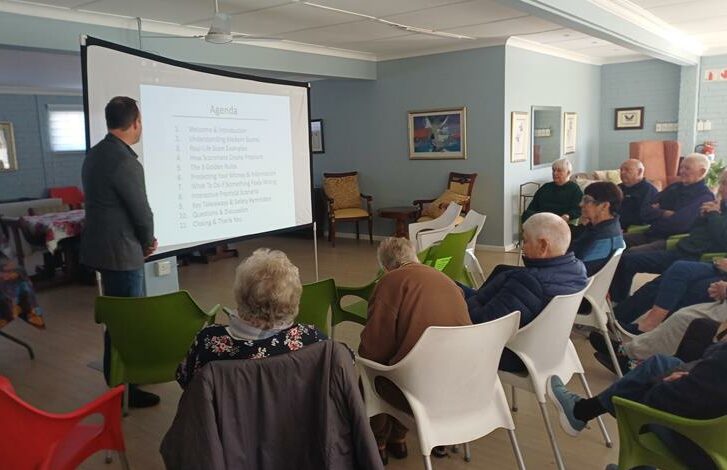
On May 7, Gareth Laing and Courtney Hardy from Resident H presented an enlightening workshop at Quondam Village, aiming to educate residents about the dangers of scamming and the tools available to protect against becoming victims.
The motto Laing shared, and one that resonates in today’s digital age, was: “Pause, think, check.”
ALSO READ: Quondam Village celebrates community spirit at traditional braai event
Understanding the risks
According to Laing and Hardy, scammers today are more sophisticated, employing advanced techniques to deceive individuals.
Whether through phishing emails, fake websites, or fraudulent phone calls, the threats are real and can affect anyone. It is crucial to stay informed about these risks and understand the tactics scammers use.
Common scams to be aware of
• Phishing emails and messages: These fraudulent communications often appear to be from legitimate sources, urging you to click on a link or provide personal information.
• Fake websites: Scammers create sites that mimic trusted organisations to steal your data.
• Phone scams: These involve calls from individuals pretending to be from reputable companies or government agencies, asking for sensitive information.
Tools and tips for protection
To safeguard one’s information and finances, Laing and Hardy advised people to consider implementing the following tools and practices:
Security software
Install antivirus and anti-malware software: Regularly update these programmes to protect against new threats.
ALSO READ: Organic gardening talk sparks growth in Quondam Village
Use a firewall: This adds an additional layer of security to your devices.
Strong password practices
Create complex passwords: Use a mix of letters, numbers, and symbols.
Enable two-factor authentication: This adds an extra step to verify your identity, making it harder for scammers to access your accounts.
Safe browsing habits
Be cautious with links and attachments: Do not click on suspicious links or open attachments from unknown sources.
Regular monitoring
Check financial statements regularly: Look for unauthorised transactions and report them immediately.
Monitor credit reports: Regularly review your credit report for any unusual activity.
ALSO READ: Quondam Village honours women who make their community thrive
The power of pause, think, check
Laing emphasised the importance of taking a moment to pause, think, and check before acting on any digital communication. By doing so, you can significantly reduce the risk of falling victim to scams.
• Pause: Give yourself time to evaluate the situation.
• Think: Consider whether the request is legitimate or seems suspicious.
• Check: Verify the source through official channels before responding.
“Given the success of this workshop, there has been a strong request for a follow-up session.
“Participants expressed interest in exploring more advanced topics and continuing their journey of learning in the digital era,” noted Quondam Village manager Neeri Stroebel.