Ekurhuleni voters face 67 parties on 2026 local election ballot
The IEC has certified 67 political parties to contest proportional representation seats in Ekurhuleni, meaning a double-column ballot is on the cards.
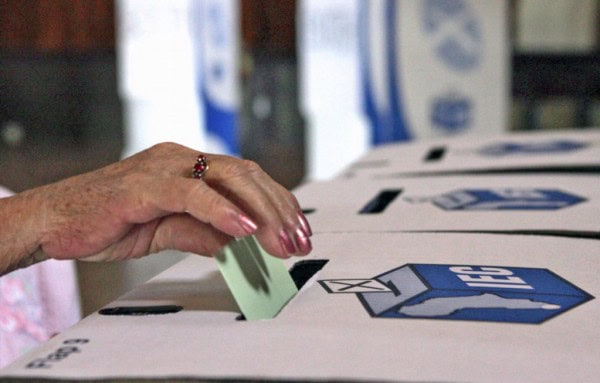
Ekurhuleni voters will face a crowded ballot paper when they head to the polls on November 4, with 67 political parties certified to contest proportional representation (PR) seats in the metro.
The Electoral Commission of South Africa (IEC) has certified 136 790 candidates to contest South Africa’s 2026 Local Government Elections, including candidates in Ekurhuleni.
View the full candidates list here: https://www.elections.or.za/pw/Documents/Candidate%20Lists/LGE2026/LGE2026%20Certified%20Candidates%20List_16092026.pdf
ALSO READ: Special vote applications open for 2026 Local Government Elections
The IEC published the final candidate lists after completing its statutory review of nominations.
A total of 5 096 candidates were disqualified, with the commission citing issues including unpaid deposits, incomplete nomination documents and candidates not being correctly registered on the voters’ roll in the municipalities they sought to contest.
Ekurhuleni among metros with most partiesA total of 136 790 candidates met the requirements to contest seats across the eight metropolitan municipalities, 44 district municipalities and 205 local municipalities nationwide.
Of the 136 790 candidates, 98 219 are nominated by parties to represent wards and 38 571 to represent parties in the Proportional Representation (PR) elections; 621 candidates are independents nominated to represent wards.
ALSO READ: Home Affairs urges voters to secure IDs before local elections
Ekurhuleni is one of five municipalities where more than 48 parties contest PR seats.
The IEC says 67 parties will contest PR seats in Ekurhuleni, meaning the metro will require a double-column PR ballot paper.
Similarly, the large number of ward candidates in these metros will result in double ballots for ward candidates.
Record number of candidates
Nationally, the 136 790 certified candidates will contest 10 526 council seats across eight metropolitan municipalities, 44 district municipalities and 205 local municipalities. This is a significant increase from the 95 427 candidates certified for the 2021 elections, despite only a small increase in available seats.
Of the 2026 candidates:
• 98 219 are party-nominated ward candidates.
• 38 571 are party-nominated PR candidates.
• 621 are independent ward candidates.
The IEC said 62% of candidates are men and 38% are women.
Candidates aged between 40 and 49 make up the largest age group at 31%, while those aged 18 to 39 account for 32% of all candidates.
What happens next?
Candidates received certificates confirming their candidature on September 25 and political parties signed the Electoral Code of Conduct on September 23, while ballot-paper preparations will proceed following the ballot draw.
ALSO READ: IEC introduces new disinformation rules ahead of local elections
Special vote applications opened on September 21 and close on October 12 at 17:00.
The period for applications will close on 12 October 2026 at 17:00.
Special votes are meant to ensure access to the vote by persons who would otherwise not be able to participate in elections on November 4.Special votes fall in two categories:
• The first are home visit special votes for persons who are unable to present physically at a voting station owing to physical condition.
This category of voters if approved, are visited at a place of confinement which must be in a voting district in which the voter is registered.
• The second category of special votes relates to voters who can present physically at their voting station but can’t vote at their voting station on voting day.
This category of voters will, if approved, vote at their voting station on the two days preceding election day.
Voters who may be out of their voting districts on November 4, including those in essential services and media, also qualify for special vote at the voting stations where they are registered.
Applications can be made at the IEC local offices across the country, via the website at www.elections.org.za or via SMS number 32249.
ALSO READ: IEC urges South Africans to register for 2026 local government elections
infographic with Lesh
Who is on the ballot?
The certified candidate list reflects diverse representation across age groups and gender categories ahead of 4 November.
Age profile
• Young people aged 18–39 make up 32% of all candidates.
• Candidates aged 40–49 account for 31% of the total list.
• Candidates aged 50–59 represent 24.3% of contestants.
• Candidates aged 30–39 make up 23.8% of the final list.
Gender representation
• Overall representation stands at 62% men (85 263) and 38% women (51 527).
• For PR candidate lists, women account for 44% and men 56%.
• In ward contests, women account for 35% and men 65%.