Four Paws reveals widespread big cat farming in South Africa
Between 2011 and 2020, 2 402 live lions and 359 tigers were exported with the majority of exports destined for Asia.
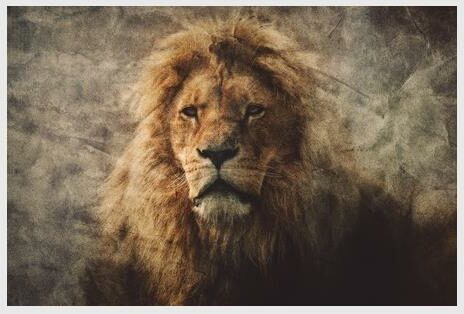
Unreleased footage obtained by global animal welfare organisation Four Paws has revealed that as many as 12 000 lions and an unknown number of tigers are being intensively farmed in captive facilities across the country.
According to a statement released by Four Paws, South Africa has become the largest exporter of big cats and their body parts globally, over the past decade.
“The trade in big cats and their parts is not discriminatory. All big cat trade is connected and allows the commercial trade in one species, which threatens them all.
“Four Paws believes if the cycle of big cat exploitation in SA is broken, it will have ripple effects worldwide towards protecting all big cat species.”
ALSO READ:
NSPCA, Hawks take action against game farm to save tigers
According to Fiona Miles, Four Paws director in SA, SA is the biggest exporter of live big cats to Asia.
“The footage serves as evidence that SA is also now intensively breeding tigers for commercial purposes.
“In the footage, large numbers of tigers are shown to be living in dirty, overcrowded enclosures that prevent the animals from exhibiting natural behaviours, increase their risk of zoonotic disease transmission and cause immense suffering.
“SA has taken the first step to prevent the commercial breeding and export of lions and their parts.
“Drafting policy and its subsequent implementation can end the captive lion breeding industry and break the vicious cycle of big cat exploitation.
“Vital to this is also the inclusion of tigers and other big cat species in this protective legislation,” said Miles.
The statement said an ever-growing online community featuring many NGOs like Four Paws is speaking up and calling for an immediate end to the exploitation and trade of all big cats.
The vicious cycle
According to Miles, all big cat trade is interconnected, including lions and tigers, which are used for tourism purposes and as attractions in cub petting or “walk with” opportunities.
“They may be sold for trophy hunting or their bones and other body parts are sent to Asia to be used in traditional medicine or as breeding stock on Asian tiger farms.
“It is worth noting that if SA supplies an international trade in lion bones; there is also a serious risk that it will also be exporting tiger bones.
“As South African facilities breed both the big cats, it is very difficult to determine whether the export is legal lion bones or illegal, and more lucrative, tiger bones.
“There have already been cases where the bones of both species have been mixed in what was deemed legal exports.”
Miles added that the demand for live big cats and their body parts from South Africa has shown no signs of slowing.
“If we continue on this trajectory, we will reach a point where big cats will cease to exist other than on farms, behind bars, as a source for traditional medicine or as luxury items, such as jewellery or rugs.
“We are urging people to sign our petition to urge the South African government to #BreaktheViciousCycle once and for all and end the commercial trade in all big cat species,” Miles said.
Find the petition at https://bit.ly/break-the-vicious-cycle.
ALSO READ:
A touching lion mother’s story as SA announces plans to end lion farming