
#Journeyto100years: Hills moves in four doors down from Oom Paul
It was Hills’s habit to take his dogs for walks, which “by some strange chance” always took them past the presidency.
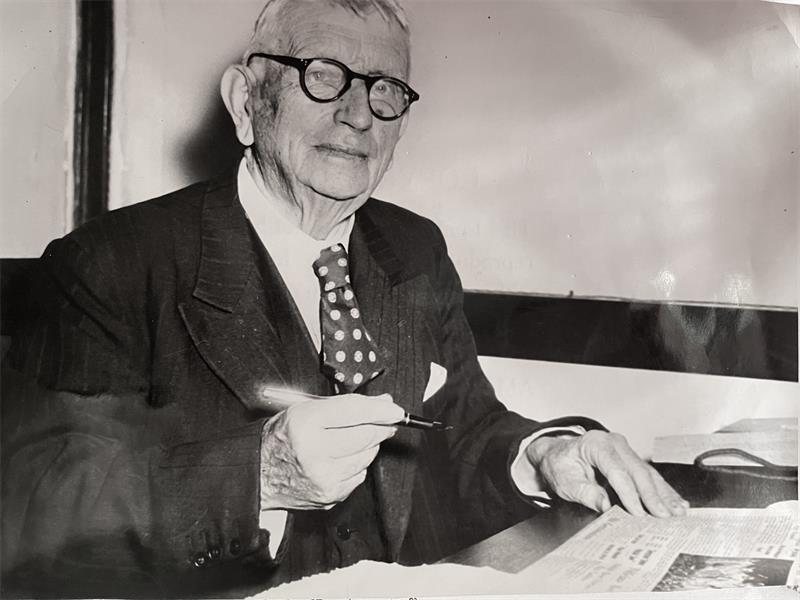
We are excited to resume our series on William Hills, the founder of the City Times, with the interesting articles penned by his great-granddaughter, Carol Stier. Her contributions come from a treasure trove of articles and memoirs by the newspaper man and were featured in the newspaper throughout 2021 as part of our “Journey to 100 Years”. The newspaper turned 100 on September 10.
For much of his time in Pretoria, William Hills lived just four doors down from the Presidency in Church Street West.
He lodged with Mr and Mrs van Amstel, who were “a cultured couple, like most Hollanders in South Africa at that period”, Hills wrote in the story of his life as a journalist in 1897, adding he believed Mr van Amstel was engaged in some form of government work.
“They were most obliging and permitted me to keep two small brown dogs of a more or less terrier variety,” Hills wrote.
The dogs had been presented to him during his time in Krugersdorp and were named Diamond and Jubilee, after the Diamond Jubilee of Queen Victoria.
ALSO READ: Part 22 in our series on William Hills: when fortunes were made in a day
“Diamond and Jubilee were very intelligent and soon became two of the best-known dogs in Pretoria, for they persisted, despite threats and cajolery, in following their master on every possible occasion.
“They were especially interested in the presidency and its sentries, two tall Zarps (Zuid-Afrikaansche Republiek Politien, or Kruger’s police force in the South African Republic) in spotless uniforms who generally stood just outside the main entrance.”
It was Hills’s habit to take his dogs for periodic walks, which “by some strange chance” always took them past the presidency. The dogs sniffed the presidential precinct to their hearts’ content, unless stopped by a sentry, or if they became too interested in a dog belonging to one of the president’s callers.
“On either side of the short (2m) footpath to the stoep were Barney Barnato’s famous lions, which evidently took their fancy.”
A British Jew who started out as a prizefighter and stage performer, Barnato, whose real name was Barnet Isaacs, came to South Africa during the diamond rush in 1873 and made a fortune in battle with Cecil John Rhodes for control of diamond mining in the Cape.
He later turned his attention to gold in Johannesburg, becoming a Randlord. He was Kimberley’s MP in the Cape government from 1889 until he died. He lost most of his fortune in the panic of 1896.
“I cannot honestly say the lions were great works of art, but at that time they were considered very appropriate and chic and to lend an air of dignity to the homely old house.
“Each statue represented a lion couchant on a small pedestal and as the visitors to the president generally sat on the front stoep, they were always faced by the lions’ hind quarters.”
Next time: The curious behaviour of Hills’ dog at the presidency.
ALSO READ: #Journeyto100years: Benoni Child Welfare has protected children for 97 years