Raising guide dogs is a dream come true for Farrarmere resident
Wet-nosed kisses, the ultimate reward for raising future guide dogs.
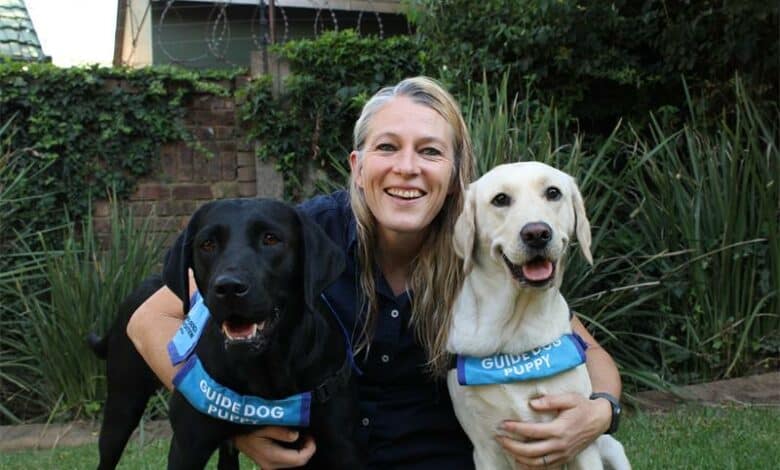
You may have spotted her going about her daily shopping with a loyal furry companion by her side.
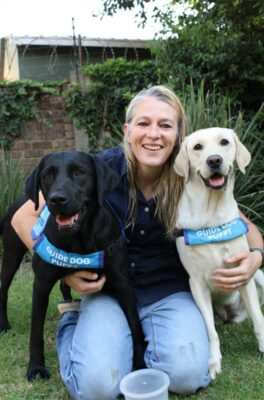
With fur-covered clothes and a satchel of doggie treats always in arm’s reach, being a puppy raiser for the South African Guide-Dogs Association is a dream come true for Robynne Kirkham.
Growing up, she could always be found cuddling up with a pup or playing with a round-bottomed hamster.
“Being a puppy raiser was a life-long dream but work/life responsibilities took priority while I was raising a young family,” she said, sipping on a cup of coffee while watching her furry brood play.
“In 2019, I came across an article of the association actively seeking raisers and, as they say, the rest is history.”
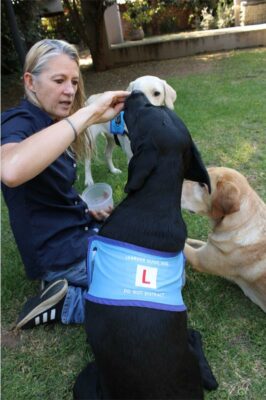
Since then, Robynne has opened her home to six lovable Labrador pups, three of which have been successfully paired with visually impaired, physically disabled and autistic matches across the country.
Two of the dogs in her care, Aspen and Eclipse, will soon graduate from puppy school and enter the formal stages of their training in order to be matched with one of the hundreds of eligible recipients on the SA Guide-Dogs’ waiting list.
Responding to Eclipse’s cues for affection, Robynne gently rubs her head explaining that being a raiser does not come with a step-by-step guide and that she learns through every interaction with her dogs.
“The association does provide you with practical information and are always available to guide and assist but as a raiser, your primary function is to love, handle, socialise and climatise the puppers as they mature into the training phase,” she said.
“From eight weeks to 18 months, we allow the dogs to play like all dogs should, but they go on daily car rides, and accompany me to work, restaurants, shops and other public spaces for them to get used to environments where they will guide their future matches.
“It is important that they become accustomed to everyday sounds and settings so that it does not distract them from their services.”
As Vixen pounces into her doggie pool for an early morning splash, Robynne giggles, saying that becoming a guide or service animal is not for every pup.
“Vixen is very spirited. She did not walk well on a leash and would lunge at anyone who would show her any attention,” she said.
“She was released from the training programme and I quickly jumped at the opportunity to adopt her. Now this silly goose lumbers around our home but her companionship must not be underestimated.”
As part of their foundation learning, pups need to learn to adapt to their match and their unique needs.
Throughout their stay at her Farrarmere home, Robynne has become increasingly conscious of the need for matches and tries to incorporate it into her puppy training.
“A visually impaired person will not be able to step over a sleeping dog. It is, therefore, crucial that the animals learn to move out of the way when a human approaches,” she said.
“Each dog’s unique personality will further dictate how they will learn and finally in which area of service they will excel.”
Shift
Rising at 04:00 each day, Robynne’s routine includes walks with the pooches, after-breakfast-zoomies, clocking in at work from 09:00 to 17:00 and making stops at local shops and eateries.
“Locally, managers and owners have become accustomed to me popping in with a pup,” she said.
“Outings like these are vital for the animals. There has been a gradual shift in the acceptance of service animals as well as those in training.”
Wearing their ‘learner guide dog’ vests, Robynne says it is no surprise that the pups draw loads of attention.
“Although engaged in informal training, their excursions forms part of further building awareness for the association. A quick run into the shop for a loaf of bread could extend in a lengthy outing as I happily answer questions from curious members of the community.”
Interaction
She says although interactions with the dogs are welcomed, people must remember that they will in future play a vital role in offering their match guidance and assistance.
“When you see a service dog, it is advisable to first engage with the handler,” she said.
“A visually impaired person will not see you approaching and immediate interaction with the dog could lead to them lunging or coming to an abrupt halt, which could lead to the handler being pulled off balance or tripping.
“People usually respond to dogs with great glee, however it essential to make the handler aware of your presence. Ask before simply stopping to pet the dogs.”
Of her role as a raiser, Robynne said that finally handing a graduated and accredited dog over to their new match is heartbreaking, no matter how many times she has done it.
Yet she feels fulfilled by the role she played throughout its journey.
“Guide and service dogs are about more than just working to make their handler’s life easier,” she said, looking into Eclipse’s gentle eyes.
“They offer companionship to someone who may have been living in isolation. They offer the freedom to move through the world with confidence and gives the gift of independence. These dogs have the ability to unlock these treasures which we often take for granted.”
About the South African Guide-Dogs Association
The organisation is a registered non-profit organisation and has been in operation since 1953.
The association provides trained guide, service and autism support dogs with the mission to set and maintain high standards in guide dog training and mobility services.
You can get involved by volunteering your time in various ways.
If you are on a tight schedule, you can make an impactful contribution through regular donations or supporting the organisation’s online store.
For more information, go to www.guidedog.org.za or email Alida Pansegrouw if you wish to become a puppy raiser at AlidaP@guidedog.org.za
ALSO READ: Enzo’s Mad Hatter Tea Party for SA Guide Dogs
ALSO READ: Cycle for SA Guide-Dogs Association in the 947 ride Joburg 2023