Psychologist testifies on former policeman’s mental health struggles
Clinical psychologist Kirsten Clark took the stand during sentencing proceedings, revealing that Marais had attempted suicide more than once.
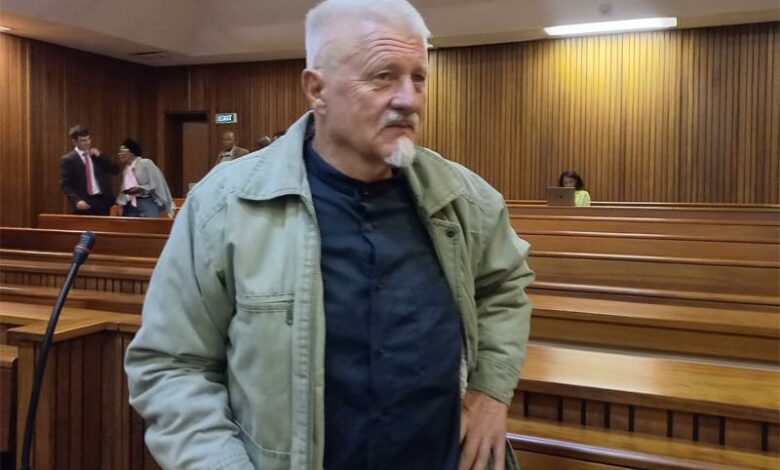
The Pretoria High Court heard testimony on June 5 about the psychological state of former apartheid-era police officer Johan Marais, who was convicted in November last year of the 1987 murder of Daveyton student activist Caiphus Nyoka.
Clinical psychologist Kirsten Clark took the stand during sentencing proceedings, revealing that Marais had attempted suicide more than once due to the nature of his work during apartheid.
Marais, who served in the South African Police under the apartheid regime, confessed to the killing of Nyoka, a prominent student activist, leading to his conviction.
In her testimony, Clark said Marais struggled with mental health issues, stating that after Nyoka’s murder, he was not the same.
According to Clark, Marais said he received no counselling after the murder or after traumatic experiences where he often removed bodies in areas like Katlehong and Germiston.
Clark recounted one particularly gruesome incident in which Marais had to hold a severed head.
Marais said some of his colleagues committed suicide due to the strain of their duties, including a friend who hanged himself in Marais’s presence.
Marais’s suicide attempts included drinking antifreeze, which he vomited, and attempting to kill himself at a railway line before being saved by local fishermen.
On another recent occasion, he reportedly tried to drown himself at Nigel Dam but was rescued by bystanders and taken to Pholosong Hospital.
Clark reported that Marais had previously been hospitalised in a psychiatric ward for 17 days but was discharged without a diagnosis and suffers from post-traumatic stress, insomnia and nightmares.
She also spoke about Marais’s living conditions. He rents a small room in Selection Park, Springs, relies on a SASSA grant, and suffers from severe gout, which affects his mobility.
Clark said Marais expressed remorse for his actions and wished he could turn back time.
He previously expressed he wanted to make peace with the Nyoka family and, while aware the court would make the final decision, he suggested that a sentence of house arrest and community service would be appropriate for him.
Marais’s two sons and ex-wife, contacted via email and phone, believe Marais does not deserve prison, arguing that he was following orders at the time, is now elderly and poses no threat to society.
However, State Advocate Ester Kabini challenged Clark’s objectivity, questioning whether she had gathered all the relevant facts to assist the court.
Kabini asked Clark why Marais never appeared before the Truth and Reconciliation Commission. She also scrutinised Clark’s assessment of his mental health.
The defence is expected to call a corrections officer to testify today (June 6) as sentencing arguments continue.
Also Read: The State and judge express frustration over delay in sentencing of apartheid-era officer
Also Read: UPDATE: Psychological report delays case against apartheid cop