Co-author of Benoni Son of My Sorrow dies
Benoni Son of My Sorrow was published by the Benoni Town Council in January 1968.
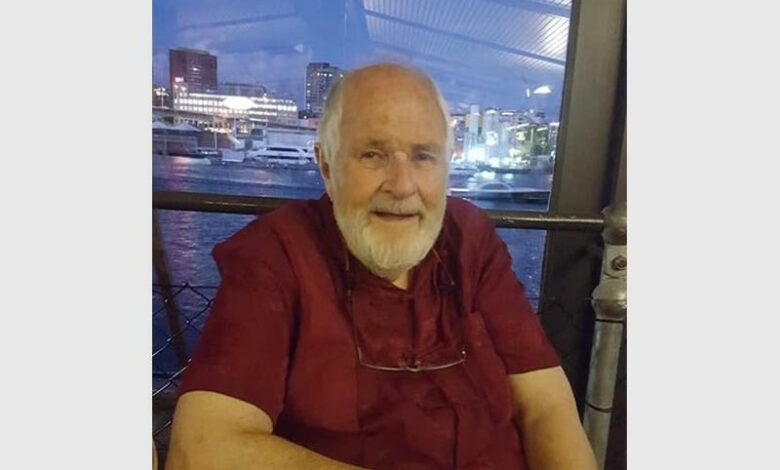
David Thomas, the co-author of Benoni Son of My Sorrow, died in Australia on November 1 after a battle with cancer.
He lived in New South Wales and celebrated his 87th birthday on March 27.
Deryck Humphriss co-authored the book, which was the second book written about the history of Benoni.
Local history enthusiast Glynis Cox Millett-Clay, who remained in contact with Thomas for more than 10 years and always made contact with him when he visited South Africa, is the proud owner of a copy autographed by Thomas.
ALSO READ: Benoni Bygones: Synogogue is a proud landmark
She explained Benoni Son of My Sorrow was published by the Benoni Town Council in January 1968.
Its foreword was written by Professor NG Garson of the University of the Witwatersrand, and Dr TS van Rooyen of the University of Pretoria.
Millett-Clay submitted the following article, which was written by Thomas during one of his frequent visits to South Africa, in 2014:
In the early 1960s, Thomas worked as a researcher and co-author on the history of Benoni project, sponsored by the Benoni Municipality, which in 1968 published the book Benoni Son of Sorrow.
He had lived in Benoni since 1947 and did all his schooling here, his father having been minister of the old St Andrew’s Presbyterian Church on the corner of Woburn Avenue and Bunyan Street between 1947 and the time of his death in 1963.
Thomas continued to live in Benoni during the time he was studying for his degrees at the University of the Witwatersrand, where he majored in politics and wrote a thesis on the South African Labour Party, which dominated Benoni’s political life between 1910 and 1958.
After leaving the Benoni historical project he worked as a journalist for a local news magazine called News/Check, for The Star newspaper and also for the South African Council of Churches and the South African Institute of Race Relations.
In 1981, he stood as the Progressive Federal Party’s candidate in Benoni and did not win, although, he says, winning was not the objective of that exercise – it was simply to tie up the resources of the other, pro-apartheid political parties.
He moved from Benoni to Johannesburg in 1980 and although he migrated to Australia in 1983 (‘for the best or the worst reason,’ he says, ‘a woman’) he has returned to South Africa on an annual basis.
While living in Australia, he wrote two books on historical aspects of South Africa – one based on his MA thesis on the missionary movement and the South African Council of Churches published in 2002 while in 2011, he published a book on the South African War in Namaqualand.
He asks: ‘Please do not call it the Boer War or the Anglo-Boer War – there were many others besides Anglos and Boers involved in that conflict.’ His book focused on a group of these – so-called coloured soldiers who saved their town, Concordia, from destruction by refusing to obey orders from their superior British officers to abandon it.
In Sydney, he gravitated from journalism into the academic world and in 2004 obtained a PhD degree from the University of Sydney.
He continued to teach at the University of New South Wales in Sydney on a part-time basis but this year finally retired completely to write yet another book on history, this time focused on the ‘health wars’ between mainstream and alternative medicine in his home state of New South Wales which he hopes will be ready for publication early next year.
Despite having had a fairly diverse career over the last half-century, Thomas says that researching and contributing to writing the history of Benoni was one of the most interesting and enjoyable things he ever did.
ALSO READ: Benoni Bygones: Benoni boasted very ‘fine’ buildings back in the day