Elephants belong to the citizens, says Botha
The saga of the elephant sculptures at Warwick Junction is finally over, and artist, Andries Botha, is proud of the finished artworks.
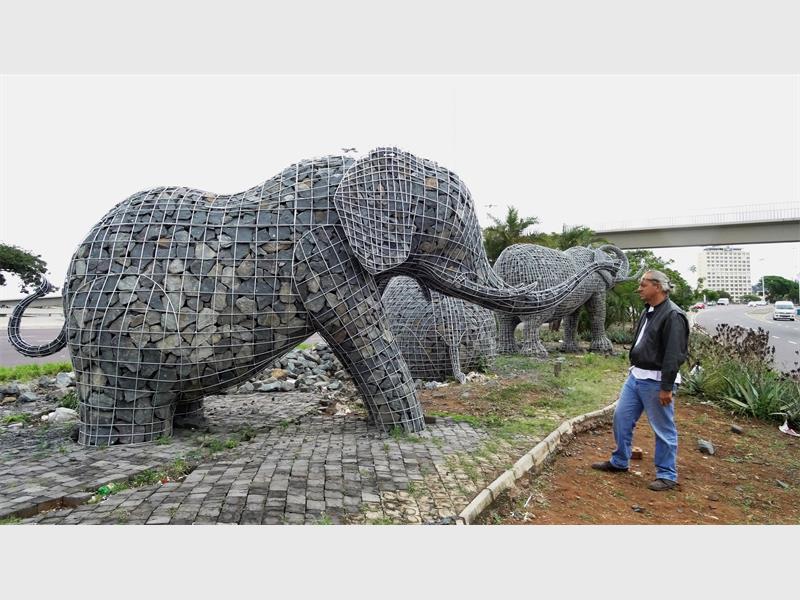
ANDRIES Botha's contravertial elephant sculptures at Warwick Junction have been completed at last, and he appeals to the community to adopt them as their own and look after them as he has defended them for long enough.
The project was halted in 2010 when the ANC-led municipality stated the three sculptures, completed by Botha out of wire and stone, reminded them of the Inkatha Freedom Party's logo.
The unfinished artworks, which were commissioned at a cost of R1.5-million, were covered by shade cloth and plastic in February 2010.
“I refused to accept the elephant was a political animal in this case – I made them as an ecological environmental symbol of an animal which is seriously under threat, and stated that it was so. I created the animals as a metaphor for strengths and weaknesses of society. In retrospect I look at the event sadly. I have learnt a lot and feel the city has a lot to learn about art. The four elephants are now standing at the gateway to the city for all to see how beautiful and majestic they are, and I challenge anyone to say otherwise. I consider this situation a victory for all,” he said.
He was assisted by co-artists Ernest Ngcobo, Siya Madlala and Sbu Mazibuko, and said this was truly a collaborative project.
He dedicated the finished elephants to Dr Ian Player who introduced the idea of the intimate, inseparable relationship between the wilderness, animals and humans, and to Macqubu Ntombela.
“I believe when the spirit leaves the body it enters the sky, and that is what I placed on a sign above the completed elephants in memory of Ian Player: 'Phuzumoya, drink the wind'. I have found a space for the wilderness to have a place in modernity, and secured wilderness as part of the city on that island,” said Botha.
The story of the elephants began when the idea was put forward to the city to create a herd of five or seven elephants, not dissimilar to what Botha created on a beach in Belgium, walking into the sea.
He was approached by the city to create the animals, and the municipality felt the elephant was an appropriate metaphor for Durban.
“I met with 15 people and there was a lot of pressure on to produce the animals in time for the 2010 Soccer World Cup. However, I said I was not going to be able to do four, five or six in that time. I said I would be able to do three, and these symbols were politicised by the city. I felt confused about the political symbolism,” he said.
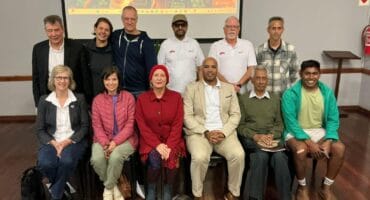
After four years and through various court cases, Botha said he is grateful to all who stood by him, including senior counsel, Max du Plessis, senior counsel, Gilbert Marcus, his lawyer, Toby Orford, JP Purshotum and Allan Boulle.
He said the public at large, through the media, also played an important role, and spoke out about what he said was quite clearly an outrage.
“It took four years of nerve-wracking negotiations, and we were heading to the High Court to present the case when the city's senior advocate approached us to settle. They proposed a compromise and allowed me to make four elephants,” said Botha.
He said after the four years of negotiations with the city, these elephants now belonged to the citizens of Durban.