UKZN professor leads groundbreaking HIV cure trial
A groundbreaking HIV cure trial conducted in Durban has demonstrated promising results in achieving antiretroviral therapy (ART)-free virus control. The trial shows that 20% of participants remain off ART and are virally suppressed after one-and-a-half years.
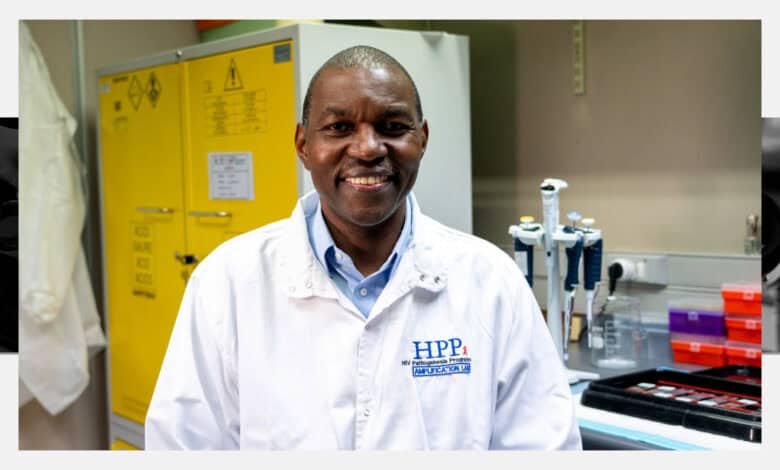
A UKZN professor is at the helm of a groundbreaking HIV treatment trial which aims to either eliminate or reduce hidden traces of the virus in the body so that the immune system can keep the virus in check without the need for lifelong medication. The results of the study were presented at the 2025 Conference on Retroviruses and Opportunistic Infections (CROI), currently underway in San Francisco, USA.
The first HIV cure trial in Africa shows that 20% of trial participants remain off ART and are virally suppressed after one-and-a-half years. Results provide insights toward the development of future HIV cure approaches.
UKZN Professor Thumbi Ndung’u, the director for basic and translational science at the Africa Health Research Institute, led the trial. He said, “While this treatment approach didn’t work for most participants, it is still a significant development in HIV cure research. Studying how the 20% managed to control the virus on their own will help scientists develop better HIV cure strategies, as well as work out ways to improve future treatments.
Also read: UKZN launches new HIV research clinic
“This trial is also significant because it proves that complex HIV cure research can be successfully conducted in resource-limited settings where the need is greatest, and highlights the importance of including African populations in global scientific advancements,” added Ndung’u.
Twenty women were reportedly enrolled in the trial – a significant milestone because women are a group disproportionately affected by HIV, yet are often under-represented in cure-related research. The trial results show that 30% of participants (six out of 20) were able to stay off HIV treatment for nearly a year, and 20% (four participants) remained off treatment until the trial ended at 55 weeks. Even after the trial, these four individuals, who are still being closely monitored, have continued without medication for an average of 1.5 years.
For more from Berea Mail, follow us on Facebook, X and Instagram. You can also check out our videos on our YouTube channel or follow us on TikTok.
Click to subscribe to our newsletter – here