
Faith leaders unite to confront GBV as a spiritual crisis
Faith leaders and activists from diverse religious traditions joined forces with Lotus FM to declare gender-based violence a spiritual and societal crisis, committing to concrete action, accountability, and healing across South Africa.
GENDER-BASED Violence (GBV) is not only a social emergency but a deeply spiritual crisis that affects the very fabric of society.
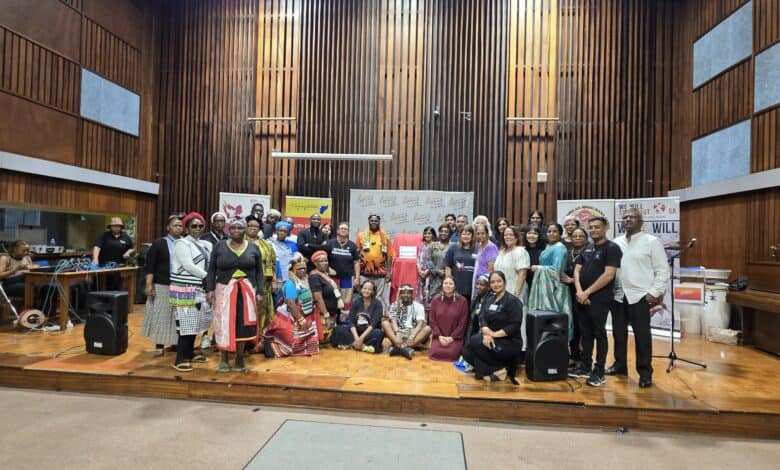
This was the view of interfaith leaders and activists who have joined forces in the fight against the scourge in the province. During the launch of the interfaith programme, which was broadcast on Lotus FM, the Hindu, Christian, Muslim, Baha’i, Buddhist, and traditional African faith perspectives were united by a shared commitment to confront GBV.
They have partnered with organisations such as the South African Hindu Maha Sabha, the KwaZulu-Natal Interreligious Council, We Will Speak Out South Africa (WWSOSA), and the Faith Action Collective to End GBV.
Nompilo Gcwensa, chairperson of the Phephisa Survivors Network, emphasised the spiritual impact of violence, explaining that abuse violates the spirit and severs a person’s connection with God, making faith communities critical to the process of healing and restoration.
With approximately 85% of South Africans identifying as religious, Dr Veena Lutchman noted that the country’s alarming GBV statistics are unfolding “under our watch as faith communities”.
Also Read: KZN Premier launches 365-day anti-GBV campaign
Canon Daniela Gennrich, co-ordinator of WWSOSA and the Faith Action Collective, said the faith sector is uniquely positioned to drive change due to its deep roots in communities, while acknowledging that its response to GBV “has not always been good so far”.
A strong call for accountability resonated throughout the discussions. Moulana Mohamed Rafeek Shah urged communities to move beyond rhetoric to action: “We must educate our sons, protect women, intervene when we see abuse, support survivors, not silence them, and we must report offenders and not hide behind religion and culture.”
Participants unanimously rejected silence in the face of abuse, declaring it forbidden across faith traditions — described as ‘haram,’ ‘sin,’ and against the will of God. Sabina Besesar, an executive member of the Hindu Maha Sabha, stressed that religious institutions must place accountability at the centre of their work by transforming internal structures and practices.
The gathering concluded with firm resolutions, including turning places of worship into safe havens, developing safeguarding and accountability structures, reclaiming sacred texts from misuse, creating spaces for mutual learning and joint action, and advocating for adequate and sustainable funding for grassroots GBV initiatives.
For crisis contacts: https://www.wwsosa.org.za/wp-content/uploads/Crisis-Contacts-Bookmark.pdf. For further information, visit www.wwsosa.org.za, www.interfaithendgbv.org.za, www.sahms.org.za.
For more from Berea Mail, follow us on Facebook, X and Instagram. You can also check out our videos on our YouTube channel or follow us on TikTok.
Click to subscribe to our newsletter – here