
World Interfaith Harmony Week reaffirms commitment to end GBV
Faith organisations representing South Africa’s major religions are using World Interfaith Harmony Week to promote peace, justice and collective action against gender-based violence.
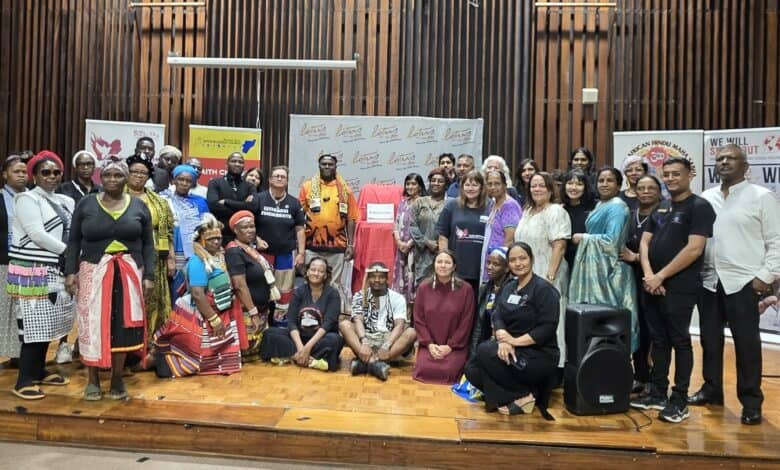
FAITH-BASED organisations across South Africa are strengthening their collective voice for peace, justice and social cohesion as they mark World Interfaith Harmony Week, a United Nations initiative observed annually during the first week of February.
The faith sector, leaders say, plays a critical role in promoting and restoring peace in South Africa’s democratic landscape. This view, expressed by Tashmica Sharma of the SA Hindu Maha Sabha (SAHMS), is increasingly shared by a growing movement of interfaith scholars and activists committed to turning dialogue into tangible action.
In a significant collaboration, the Faith Action Collective to End Gender-Based Violence, representing adherents of the country’s eight major faiths, has partnered with SAHMS to implement strategies at a local community level. The initiative aligns with the objectives of World Interfaith Harmony Week, which was established by the United Nations to promote mutual understanding and co-operation among people of all faiths.
“As the faith movement, individually and collectively, we honour this week to highlight shared values in our bleeding world of violence, fear, insecurity and anxiety,” said Daniela Gennrich, co-ordinator of We Will Speak Out SA (WWSOSA), the secretariat of the Faith Action Collective.

Also Read: Faith leaders unite to confront GBV as a spiritual crisis
The week’s objectives include celebrating religious diversity, encouraging co-operation across faiths, and strengthening integrated, neighbourly communities. Sharma emphasises that interfaith collaboration is a powerful tool in addressing entrenched social harms.
“Interfaith collaboration and action harnesses the energy of significant social and moral networks to uncover the structural and cultural drivers of gender-based violence. It is important to call out patriarchal narratives in our own communities and institutions,” said Sharma.
Christian faith representative Nontando Hadebe highlighted the shared moral foundation across religions. She said, “An interfaith approach is vital as all our faiths share the same values that promote justice and gender justice. Together we are stronger and can transform the world.”
Echoing this sentiment, Moulana Rafeek Shah of the Muslim faith underscores the broader social impact of interfaith co-operation. “An interfaith approach fosters mutual respect, breaks down barriers and promotes harmony amongst diverse communities,” he said.
For more from Berea Mail, follow us on Facebook, X and Instagram. You can also check out our videos on our YouTube channel or follow us on TikTok.
Click to subscribe to our newsletter – here