Haematologist explains why race matters in stem-cell donation
Clinical haematologist Dr Theo Gerdener explains why it is so important for donors from all race groups to register for stem-cell donation.
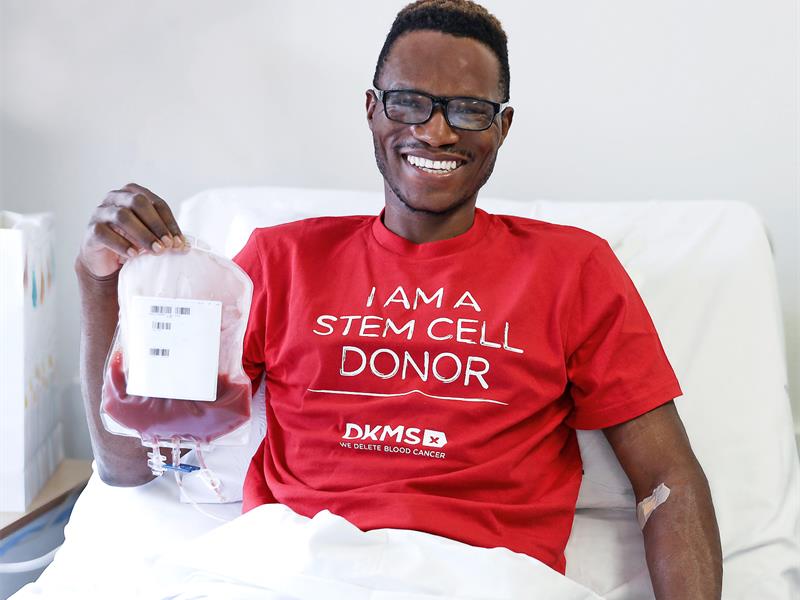
STEM-CELL donors of African, Asian and Indian descent make up just 25% of the donor pool available to children and patients with life-threatening blood disorders. This is according to DKMS South Africa, previously known as The Sunflower Fund. The shocking statistic came to light this month when DKMS unveiled a mural in Glenwood ahead of Sunflower Day.
According to Nabiella De Beer of DKMS, 500 children lost their lives to blood cancer in 2020. This week, Berea Mail chats to clinical haematologist Dr Theo Gerdener to find out why it is so important for donors from all race groups to register for stem-cell donation.
“We strive to find a perfect match (10/10) for each patient, but since our donor pool is very small and biased towards people of European descent, we struggle to find a genetic twin/match for the majority of our African and mixed-race patients. Only local donors who are willing to test can solve this massive problem and provide South Africa with its own solution going forward,” explained Gerdener.
Stem-cell donation is impossible without a close genetic match as the recipient of the transplant would immediately reject cells and tissues.
ALSO READ: Glenwood High School dons purple Speedos for cancer awareness run
“We are basically looking for a person that is HLA-matched to our patient. HLA-matching concerns a number of genes located on human chromosome six, which are highly diverse in every individual and lead to the rejection of organ and tissue transplantation if they are not carefully matched. While every individual has a unique set of HLA genes, these genes tend to match more frequently when persons of the same race and origin are tested, compared to random testing of individuals,” explained Gerdener.
Not only does each race group have its own unique set of HLA genes, but these also vary even more between individuals of the same race.
“The South African black population is extremely diverse. We have Zulu, Xhosa, Sotho and other racial groups; these groups are not genetic twins, so therefore, the local registries need to strive for representation that is not necessarily required elsewhere in the world. The Cape Town population also has a fascinating and extremely unique ancestry with genetic constituents from Europe, Africa, South-East Asia and India, so while this makes for an incredibly rich cultural diversity, it does make genetic matching of individuals very difficult,” explained Gerdener.
Without a diverse donor pool, many South Africans with blood disorders are faced with no options.
“While we are actively encouraging all races to get tested and enrol their names into the DKMS registry, we would really like our registry to reflect the racial distribution of our rainbow country,” said Gerdener.