
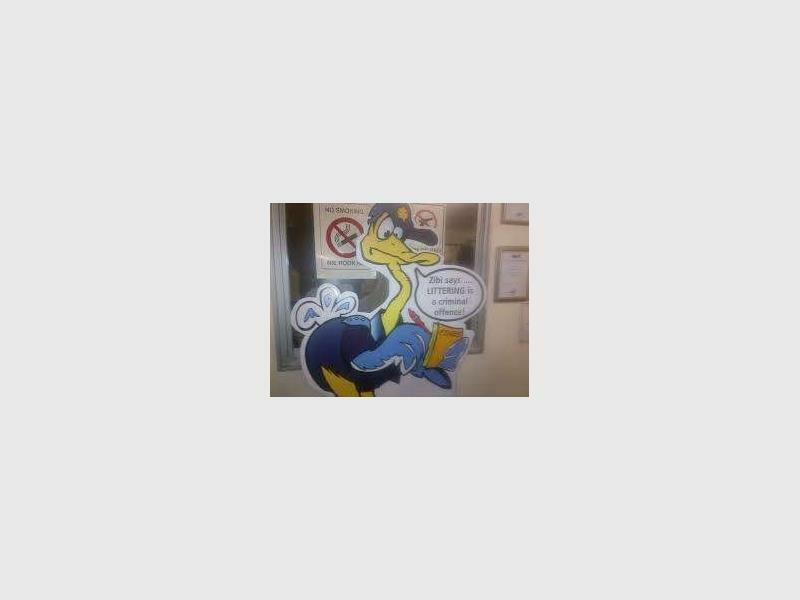
LETTER: Towns were clean when Zibi was around
Zibi was a cartoon ostrich, and his name came from izibi, meaning ‘rubbish’ in isiZulu.
Anna Tobius, an Ekurhuleni taxpayer, writes:
What has happened to being fined for littering? I suppose it goes hand in hand (pardon the pun) with urinating in public – everyone does as they please because there are no consequences.
I can climb through my windscreen with anger when I see someone toss rubbish out of their vehicle.
You can also see along shady streets and park areas where people stop and have their lunch and then – with a bin in clear sight – just chuck their rubbish right there on the grass and drive off.
I am old enough to remember the Zap it in a Zibi can campaign, going back to the early 80s.
ALSO READ: Litterbugs clean up Atlasville Spruit
Zibi was a cartoon ostrich, and his name came from izibi, meaning ‘rubbish’ in isiZulu.
Obviously, this campaign worked because it was embedded in the minds of all those of all races who were exposed to it.
I’d like to think these are the people who don’t litter today.
Sadly, a cartoon mascot and slogan won’t do the trick today.
Zibi was a consistent education and awareness campaign backed by bins deployed strategically and an efficient waste management system, all of which were reinforced by visible by-law enforcement.
That’s how you create behaviour change.
The City of Ekurhleni ironically has some rubbish about ‘a cleaner, greener city’ on its public bins – which are seldom emptied and mostly broken.
Our cities look like dumpsites.
In Singapore, for example, you are shamed by your peers if you litter, let alone nabbed by the police on the streets.
What do you think would happen if I challenged someone chucking their takeaway packet out the window onto the road?
We’re living in a lawless country among criminals. Littering is a crime against the environment.
ALSO READ: Johnson Crane commits to a litter-free event