Double amputee’s driving hampered by mechanics
Van Dyk Park resident Warrant Officer Mauritz Prinsloo has adapted to life as a double amputee while keeping the Benoni Flying Squad’s fleet moving and now he is looking for a better driving system.
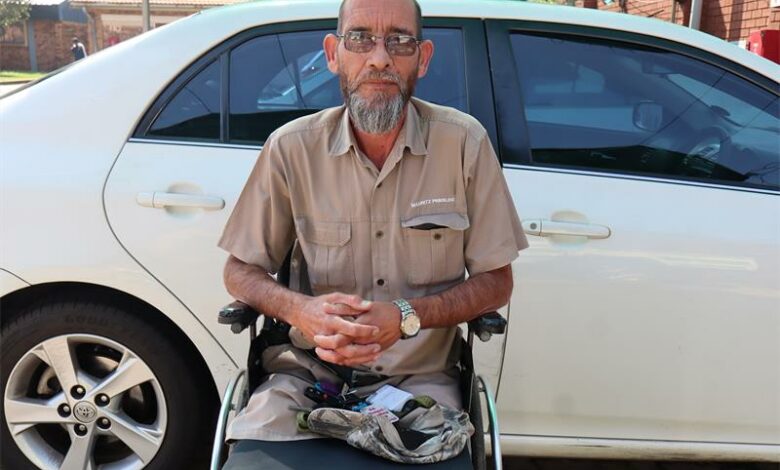
Many people, when they see someone using a wheelchair, may instinctively want to offer help.
For Warrant Officer Mauritz Prinsloo, however, the most useful support is often finding practical solutions that allow him to remain independent.
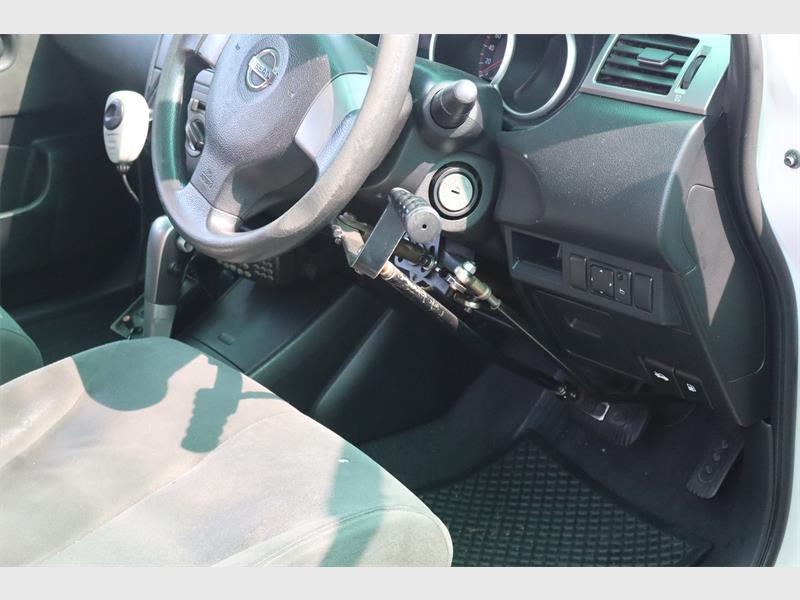
The Benoni Flying Squad (BFS) fleet manager and double amputee is currently looking for a more effective braking system for the adapted driving mechanism in his private vehicle.
Independence is particularly important to Prinsloo in his personal vehicle, where he wants to improve the braking system fitted to his adapted driving mechanism.
The Van Dyk Park resident joined the police service in 1994, following in his older brother’s footsteps, and joined the BFS in October 1996.
Before moving into fleet management in 2016, Prinsloo spent years in active policing, including visible policing and crime prevention.
His career changed after he suffered a leg injury while responding to an armed robbery in Etwatwa in 2006.
The injury damaged an artery and restricted blood flow to his leg.
Despite surgery, the complications continued, and he was later diagnosed with peripheral vascular disease, a condition that affects blood flow to the limbs.
ALSO READ: News from the flying squad
Further complications eventually resulted in both of his legs being amputated.
Rather than moving away from the practical side of policing, Prinsloo found a role where he could still use his knowledge of vehicles and mechanics.
His technical background began at a high school in Klerksdorp, where he specialised in mechanics.
Today, as the BFS fleet manager, he moves between police garages, dealerships, service providers and workshops to check vehicles and follow up on repairs.
“If there’s a small problem, I solve it before it becomes a big problem,” he said.
Prinsloo said moving into fleet management was a change from the work he was used to.
“I won’t say it was a very difficult transition, but it was a change as I was used to working outside and am now office-bound,” he said.
Despite the change, he remains hands-on with the vehicles under his care.
“You have to be hands-on the whole time. If something goes wrong, you deal with that and then move on to the next vehicle,” he said.
Outside of work, Prinsloo enjoys fishing, including outings with fellow police members.
ALSO READ: SAPS – Rate our service
“Fishing is relaxing. It gets you away from routine stuff. When I am fishing, I am literally in my own world,” he said.
While Prinsloo has adapted to changes in his working and personal life, one area he is still looking to improve is the adapted driving mechanism in his private vehicle.
The system lets him operate the accelerator and brakes with hand controls, but he said the braking response isn’t as effective as he would like.
“It works well and does what it is supposed to; it accelerates and brakes with a push or pull of the handle,” he said.
However, he said the braking requires him to remain particularly aware of his speed and stopping distance.
“When I am driving, I need to be alert at all times, taking speed into consideration to bring the vehicle to a stop in time,” he said.
Prinsloo said he would like to find a more effective system that could also offer greater flexibility if he changes vehicles in future.
“If I get something fitted to one vehicle, I have to think about how I’m going to get into the vehicle and whether I can use it in another vehicle,” he said.
For those who see Prinsloo loading and unloading his wheelchair from his vehicle, a wheelchair lift may seem like the obvious solution.
However, he said that addition would not necessarily address the issue he is trying to solve.
“It doesn’t help if I have a lift, but my driving control mechanism isn’t working properly,” he said.
Prinsloo’s focus is therefore on finding equipment that works with the way he uses his vehicle, rather than simply adding equipment because it appears to offer an easier solution.
He said the driving mechanism currently fitted to his private vehicle is more economical, but he would like to improve its braking response.
“If I had more time to tinker with the mechanism, I am sure that I could fine-tune it. Unfortunately, time ticks by and I have not gotten around to it,” he said.
Prinsloo has already adjusted different aspects of his daily life to accommodate his mobility needs, and he approaches his vehicle much the same way.
For him, it comes down to identifying what isn’t working, finding a practical solution, and making the necessary adjustment.
“I think if we can get the driving system right, it would make things easier,” he said.
Whether he is checking a police vehicle for a mechanical problem or working out how to make his own vehicle more functional, Prinsloo approaches both with the same practical mindset.
“It is only when you are in a wheelchair that you realise what really contributes to your quality of life,” he said.
“Little things often make the biggest difference.”