Siblings battle near vision loss
"Most parents take allergies lightly and believe the over-the-counter medicine will fix all of it, but it does not."
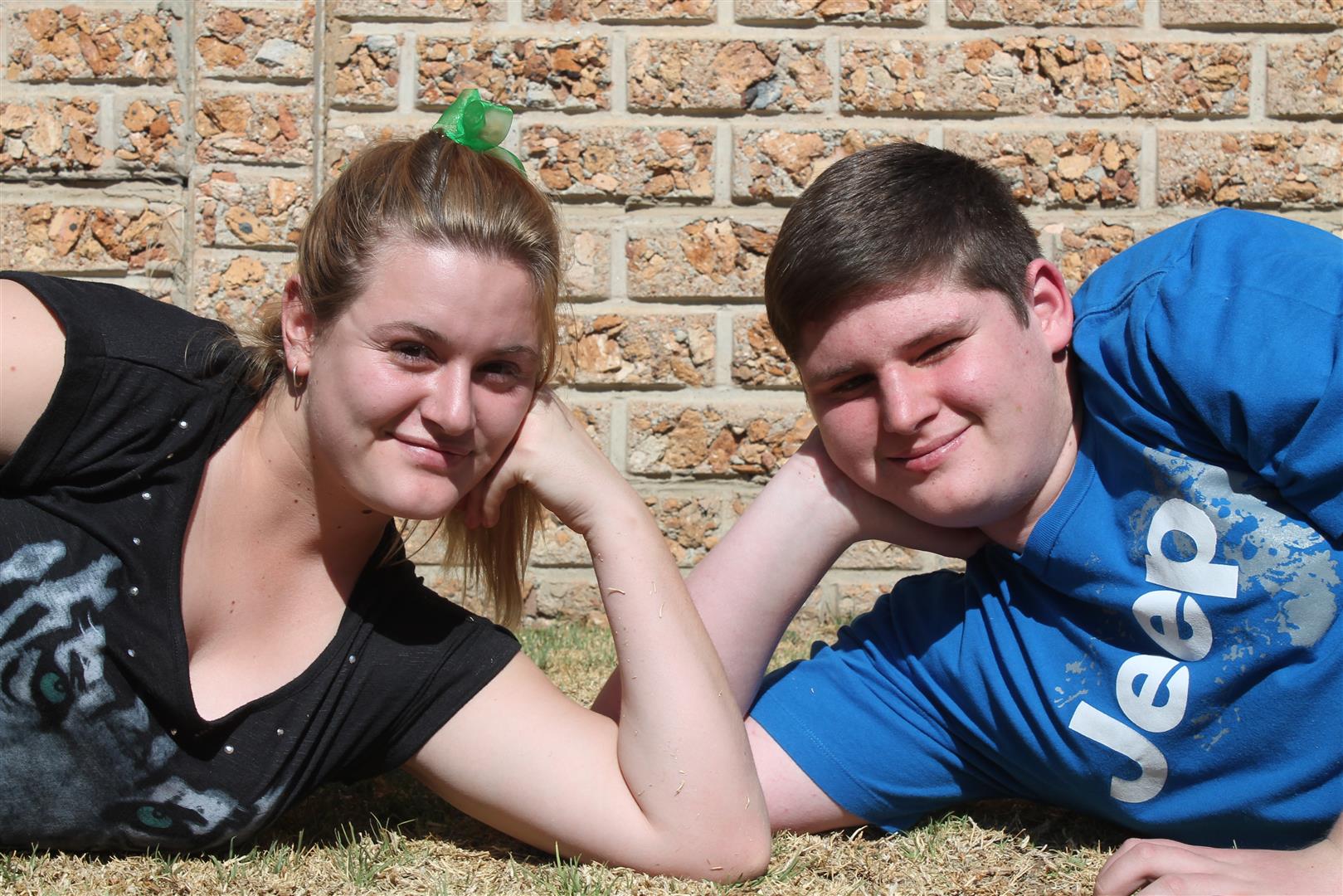
A Brakpan mother is doing everything she can to spread awareness about a progressive eye disease that affects both her teenage children.
Yolande Schenck (37), from Sonneveld, is urging other parents to take allergies seriously, after her children, Andrew (14) and Domenique (15) Nolte, were both diagnosed with Keratoconus.
Keratoconus affects the normally round cornea of the eye, thinning it and making it bulge into a cone-like shape.
This cone shape deflects light as it enters the eye on its way to the light-sensitive retina, causing distorted vision.
While the exact cause of Keratoconus is unknown, many who have the disease report vigorous eye rubbing and also have allergies (causing eye itching and irritation, which leads to eye rubbing).
Andrew, who is a Grade Seven pupil at Laerskool Die Arend, was diagnosed in 2013.
“As a child he suffered with severe allergies and we would always just give him an over-the-counter medicine,” said Yolande.
“It would seem to be under control, but he would constantly rub his eyes.”
An optometrist detected a problem with Andrew’s eyes during a routine eye test.
“I took my daughter for an eye test because she complained that she had difficulty reading, and I decided, while we were there, that I would have Andrew’s eyes tested too,” said Yolande.
“The doctor told me that we have a serious problem and that glasses will not help Andrew see better.”
Yolande took Andrew to the Pretoria Eye Institute, where it was confirmed that he had the disease and required surgery.
“He then had only 20 per cent eyesight left,” explained Yolande.
“We booked for theatre there and then.”
The surgical procedure, called corneal cross-linking, only stops the Keratoconus from progressing and does not improve the eyesight.
“It is a very painful procedure and he had both his eyes done on the same day,” said Yolande.
She warned that to continue rubbing the eyes after the surgery can cause the disease to progress and sufferers can lose their eyesight completely.
Andrew now needs to wear a special hard lens to fit over the cone-shaped cornea.
Hoërskool Stoffberg pupil Domenique was diagnosed with the disease in February, this year.
“She was also complaining about itchy eyes and was rubbing her eyes very badly,” said Yolande.
“After the diagnosis, we had to leave it for six months to see if it progressed, and it did, but only in one eye.”
Domenique underwent the corneal cross-linking surgery last week.
Despite the problems with her eyesight, Yolande reveals that her daughter, who is in Grade Nine, is a keen and talented photographer, undertaking family portraits and matric farewell and wedding shoots.
“Both my kids now have to use special eye drops and take tablets daily to keep the Keratoconus under control,” said Yolande.
“It is not easy with the allergies.
“Most parents take allergies lightly and believe the over-the-counter medicine will fix all of it, but it does not.
“This is also a very expensive treatment if you do not have medical aid.”
She added that Andrew and Domenique are not allowed to eat certain foods, because it triggers the allergies.
This includes popcorn, crisps, flavoured milk powder and fried chicken from a certain fast food chain.
Follow us:
To receive the latest news on your phone:
WhatsApp number: 0794306641 (add us to your contacts and send your name and surname on WhatsApp)