Making vision count on World Sight Day
This year’s focus was on primary school learners whose uncorrected vision problems could impair child development and interfere with learning.
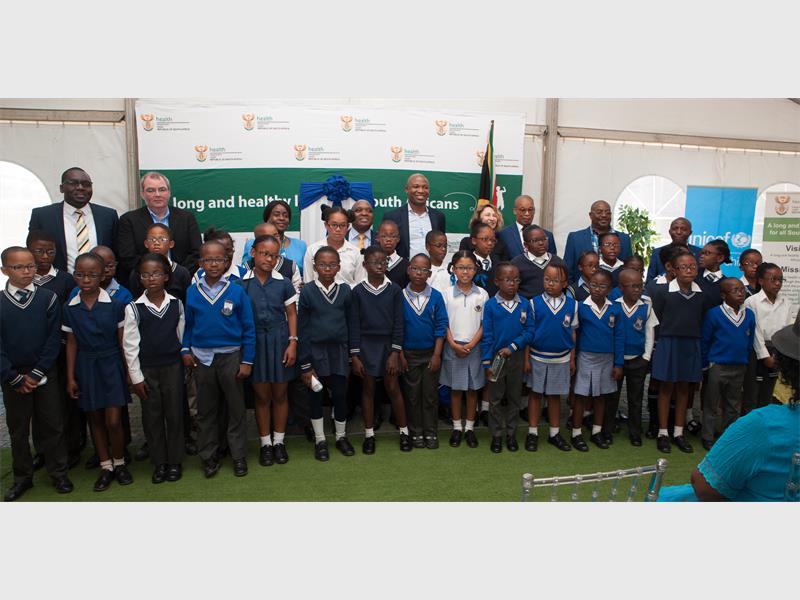
Ster-Kinekor, the deputy minister of health, Dr Joe Phaahla, and Unicef, together with other government departments, business and community leaders, joined the global celebration of World Sight Day, on Thursday, last week, under the theme “Make Vision Count” at Geluksdal Primere Skool.
This formed part of the Ster-Kinekor CSI programme, Vision Mission, and was aimed at shedding more light on the importance of eye care amongst community members and young learners.
Amongst the delegates were MEC of health and basic education Dr Gwen Ramokgopa and representatives from the office of the MEC of education.
This is an annual day of awareness that focuses on blindness and vision impairment.
Eye health screenings or eye examinations are conducted to promote early detection and treatment of vision disorders which could result in permanent vision loss.
This year’s focus was on primary school learners whose uncorrected vision problems could impair child development and interfere with learning.
Since 2005, Ster-Kinekor has screened over 54 000 disadvantaged learners with the assistance of ophthalmic nurses in conjunction with the Department of Health and the Department of Education.
In addition, over the last few years, the department, through its Integrated School Health Programme, screened over 3.25 million children and 519 704 were referred for various health problems.
Of these, 119 340 (23 per cent) were found to have eye problems.
“Provision of eye health care services through vision screening and early detection are essential elements of a strong public health approach to vision and eye health, which is in line with the development imperatives of the National Development Plan and National Health Insurance (NHI) priorities to promote quality of health.
“Sight plays an important role in the physical, cognitive and social development of the children,” said Phaahla.
The department is currently working on the second phase of the NHI.
This is aimed at bringing much-needed universal access to health services to the broader South African population.
The second phase deals with the creation of the fund to support select health programmes, including eye health services.
A successful case study of the Vision Mission programme is Philani Twala.
Philani had keratoconus, which is a degenerative disease of the cornea.
It results in a thin and weak cornea.
This affects vision, eventually resulting in the need for a cornea transplant.
Philani had a weak cornea and minor trauma to his eye as a child resulted in a tear in the cornea.
He received the precious gift of sight through the Ster-Kinekor CSI flagship programme, Vision Mission.
“The partnership with Ster-Kinekor through its Vision Mission Project continues to assist government to deliver eye health services and has already reached over 300 000 children from previously disadvantaged backgrounds across the country who have benefited from spectacles, squint operations and corneal transplants,” said Wanda Matandela, CEO of Ster-Kinekor Theatres.
“This is a giant step in improving the health of South Africans.”
Also read: Siblings battle near vision loss
Blind Woman Sees Her Son for the Very First Time
Residents educated on the importance of eye health
Follow us: