Plastic City clean-up reveals desecrated historic cemetery
Once a tribute to victims of the 1922 Rand Revolt, this Brakpan memorial is now a decaying casualty of illegal mining.
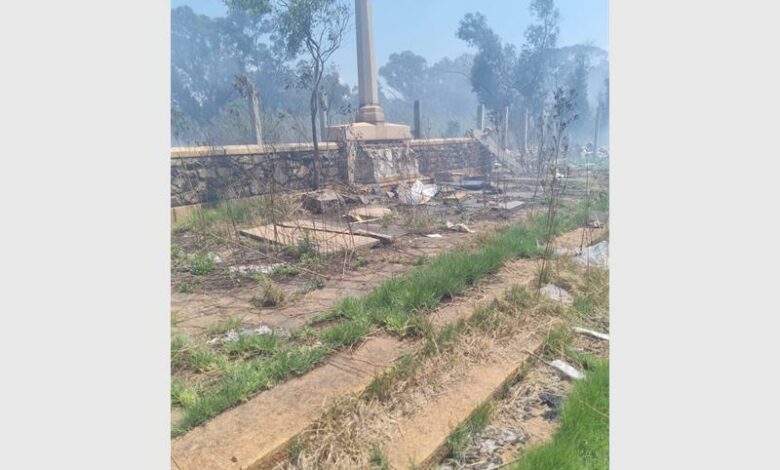
A site commemorating those who died in a historic miners’ strike has been tragically and ironically destroyed by illegal mining activity.
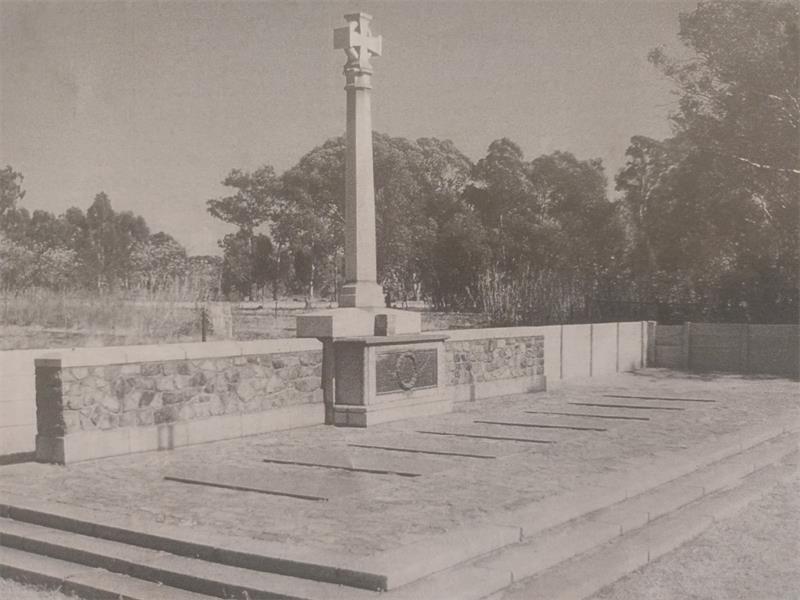
The recent demolition of the Plastic City informal settlement has unearthed what remains of a special cemetery and memorial of local mine officials and special police killed in Brakpan during the 1922 Rand Revolt.
The revolt is also referred to as the Rand Rebellion, Red Revolt, the 1922 Miners Strike or Black Friday. The remembrance site is located just off of Main Reef Road, and was engulfed by the expanding settlement.
Marius “Vlam” van der Merwe, who has played a pivotal role in the operation to clear out and clean up Plastic City, told the Brakpan Herald he recently came across the site.
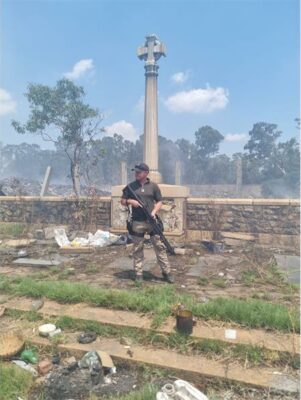
“Only when we started coming in and doing inspections and tracing suspects for firearms and other crimes, we realised there’s actually a memorial relating to the 1922 Miners Strike,” he said.
“What shocked us was the level of decay. It looks like a war zone in this area. There was a shebeen operating here.
“The actual grave site has been destroyed, the plaques, where the bodies are, all of it. It’s at a point where if we leave it, it won’t be here.
“We want to fix this to give back to the community and have this space as a garden of remembrance again where people can come through and teach the next generation about this.
“I think the sad part is that these guys died for a miners’ strike and at the end of the day, it’s miners that actually occupied this area; illicit miners.
“There’s a lot of crime that was committed on this site and all around it as a result of illicit mining and illicit dumping.”
The special cemetery lies in ruins. The monument has been vandalised and extensively damaged, and is overgrown with grass. The area is awash with scattered debris and the remains of burning fires.
Drummond Doig, deputy chairperson of AfriForum Brakpan, who has also been actively involved in the demolition of Plastic City, said there has been interest expressed by several historians and other interested citizens in Brakpan who want to restore the monument and its surrounds to its former glory.
“AfriForum Brakpan encourages all stakeholders to work together to put the blight of the illegal settlement once called Plastic City behind us,” he added.
Bloody day in Brakpan’s history
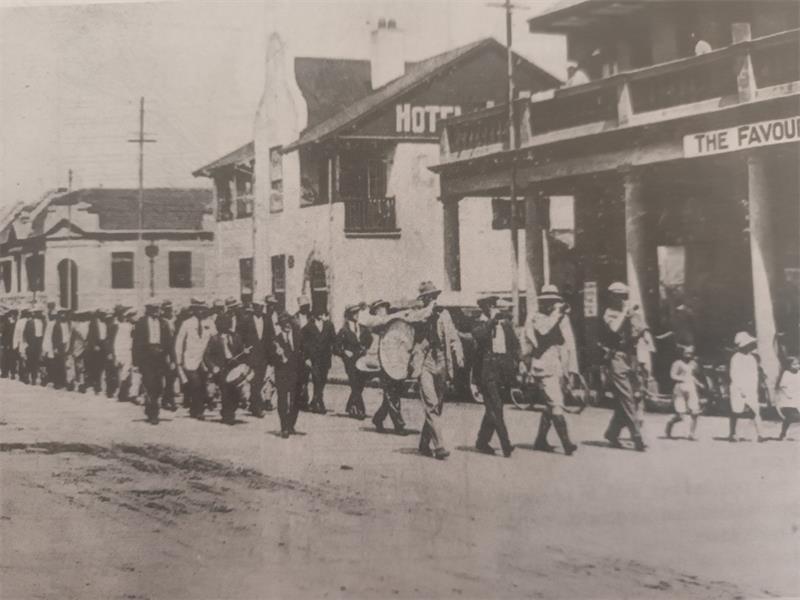
In his book The Brakpan Story, Selby Webster recounts the violent uprising that took place in Brakpan on March 10, 1922, during the Rand Revolt.
What started as a miners’ strike escalated into chaos, with homes and shops set ablaze and people shot in cold blood.
The perpetrators were white miners whose fear of losing their jobs to cheaper black labour had been inflamed by trade unions and political rhetoric.
The roots of the revolt lay in a post-World War One agreement between the unions and the Chamber of Mines, which maintained the ratio of white to black workers.
ALSO CHECK: Concerns raised over sinking graves, insufficient burial space
As economic pressures mounted, the chamber sought to reduce costs by employing more black workers.
The white miners saw this as a threat to their livelihoods and identity. In January 1922, they launched a strike that spread across the Witwatersrand.
By March, the situation had spiraled. On the night of March 9, strikers torched the homes of mine officials in the town. Early the next morning, a bomb exploded in Market Square (where the old Brakpan Plaza is situated).
Armed groups overran Apex Colliery (near Anzac Station), attacked the local police station, which was then located at the corner of Germains Avenue and High Street, and stormed Brakpan Mines, killing officials and special police.
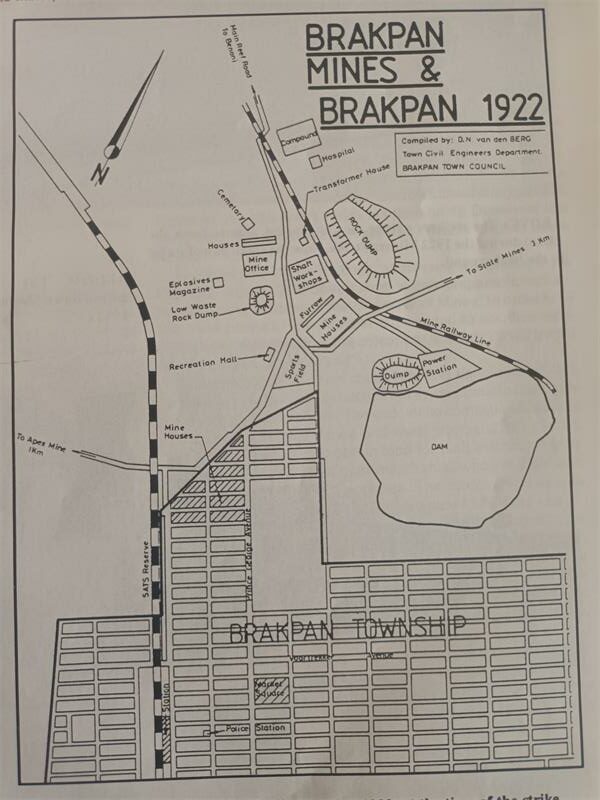
Despite the declaration of martial law, violence continued. Military intervention followed and the strikers were eventually overcome.
One striker was killed during the fighting at the mine, and two were killed by machine gun fire from the police station, but the names of only two, Messrs Fourie and Horak, are known.
They were buried on the grounds of a church along Victoria Avenue. A few months later, however, the council received a letter from the provincial secretary pointing out that the church grounds could not be used as a cemetery.
The council then arranged for a firm of undertakers to exhume the bodies and move them to the Benoni cemetery which was still used by Brakpan.
The council obviously felt that some of the strikers would object to this and the exhumation took place in great secrecy and under cover of darkness.
The officials who lost their lives – H Martin, L Phillips, A Momsen and G Lowdon, and the members of the special police – Lieutenant V Brodigan and Constables F Smit, J Jordan and S Combrink lie buried in the special cemetery.
The inscription on the tombstone, which has been desecrated, used to read: Victims of a violent and internecine strike, they valued duty higher than life.
This plot of ground was given to the council when Brakpan Mines closed down in 1966, and council accepted responsibility for its upkeep.
Carton Katene was also killed during the fighting at the mine. Published books on the strike make no mention of him and the role he played in the battle is unknown. He has been forgotten and lies in an unknown and unmarked grave.
ALSO CHECK: Plastic City cleared: Now the real work begins, says ward councillor