JSB management sets the record straight
Johannesburg Society for the Blind (JSB) residents feel they are treated unfairly by their management.
This after management increased rent to R1 700 per month for its residents who are mostly receiving Sassa grants of R1 890. This increase was effective from July 1.
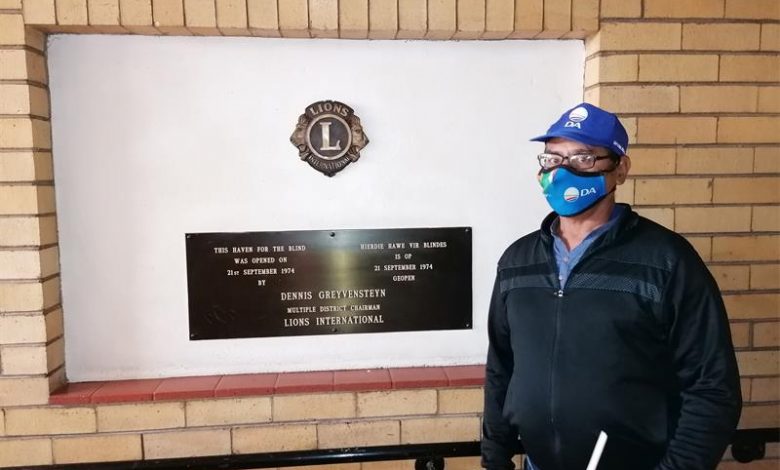
Community member Faried Davids, who is also the chairperson of the DA in the South, said he feels JSB was built for blind people and their well-being.
“It is unfair for the CEO, Vangile Nyamathe, to charge this high amount just for rent,” he said.
The COURIER spoke to four residents of JSB in anonymity. They all feel aggrieved by these changes.
“My chronic medication costs R745 a month and I still have to buy food,” she said.
“I am diabetic and so are lots of us. We need to buy special food,” explained one resident.
“We are forced to sign a contract that says they will put cameras in our rooms and we must be in bed by 20:00,” he said.
“We now have to pay for a taxi when we want to go to the shops. We are made to pay for copies of IDs. Also, there are no nurses and doctors on site. When we have an emergency, we struggle,” noted one resident.
There are other grievances, including water and light cuts, residents experienced in the past.
“On July 15, I took them to Moffat View SAPS to do an affidavit stating they cannot afford the rent and other essentials,” said Davids.
JSB sheds some light on the allegations

JSB board member Hennie Els said to save the organisation, the rental increase is absolutely needed. He said they have a few residents who ‘gang’ together with only one objective and that is to destroy the management and the organisation as a whole.
“Absolutely nothing management does or does not do is acceptable to them as they claim ‘entitlement’ because of their disability.
“The board of directors and management have been facing this for the past six years and we need to put this to rest once and for all.
“What is more amazing is the fact that the CEO, Vangile Nyamathe, is always blamed and verbally abused, but she only carries out instructions and rulings by the board of directors,” explained Els.
He said this is a vicious and malicious circle and these allegations are starting all over again because management has to increase the rent to survive, and this is the first increase in nearly 48 years.
“After our electricity and water were disconnected by the late chairperson, Adv [Dr] Steve Thebogo Kekana, and the board of directors fully investigated the concerns lodged by residents that management ‘steals’ the money instead of paying for the water and electricity.
“It was then discovered both the Joburg Water and City Power charged wrong rates and in many cases, they were estimates, which we challenged. This issue is still under investigation. We are preparing documents and evidence for our attorney to approach the high court.
Revised policy

“Management also received and implemented the revised policy on residential facilities and independent living centres for persons with disabilities on March 2019 from the Department of Social Development and discovered some shortcomings, which the board of directors and management are putting into place. For example, residents’ application forms, residents’ contracts, updated house rules and POPI Act provisions,” noted Els.
During the investigation, led by the late Kekana, it was identified that through the years, there were no proper forms completed when residents applied for accommodation, no proper contracts and house rules. This is now updated as per the policy and directive of the Department of Social Development.
“Management has started to put this in place but the same ‘group’ of residents object and refuse to enter into an agreement or to subject themselves to the house rules, which is in line with the policy and directive of the Department of Social Development.
“Management is openly threatened with ‘political’ contacts, the press and other institutions and the board of directors cannot allow this. The policy document and directive is clear and management tries to implement this fully as part of our turnaround strategy plan.
“Management has now informed the residents who refuse to enter into the agreement that if the organisation does not have a signed agreement within seven days, it would be accepted that the parties do not have a binding agreement and they are free to move out and stay with their relatives. This matter is also with our attorney to take care of.
“The agreement also makes provision for the provisions in the POPI Act and we have to inform the residents that CCTV cameras will be installed in strategic places. Nobody said that their privacy will be invaded and cameras will be installed in rooms and/or bathrooms.
“But CCTV cameras have to be installed as we have experienced some burglaries in the past and if we had cameras in more strategic places the people could have been arrested. This is for the residents’ own safety and security,” Els explained.
Market-related fee
Else continued, “Adv Kekana intensively had a look at the finances and why the organisation owes millions. It was found that one of the main reasons was that a resident is not charged a market-related fee for boarding and lodging.
“The board of directors and management also conducted due diligence on what it cost the organisation per month per resident, which came to R6 800 per month.
“Part of the research was to get costing from other NPOs and it was established that the cost mentioned above per person in the standard application and it is clear that for all these years, the organisation was running at a loss due to the low rental income.
“During the investigation, it was also taken into consideration the Department of Social Development grant and it is clear that government cannot increase the payments as JSB is not the only institution that needs grant funding,” explained Els.
To sustain the organisation and lift up from an insolvent state, the board of directors have now issued a guideline that all boarding and lodging will be increased as follows:
Residents have been informed by the social worker.
• Boarding and lodging: R6 800
• Less Sassa contribution: R1 701 (90% JSB entitlement)
• Less social grant contribution: R2 500 (paid by the government)
If not on Sassa or social grant, this must be covered by private residents.
The shortfall of R2 599 will be carried by the organisation in the meantime.
“Most of the residents have adopted this and paid the amount required and management has issued letters of demand for the few who refuse. Should they be persistent, our attorney will issue a summons,” he said.
JSB stated this for the record:
• Vangile Nyamathe, the CEO, acts on the instructions of the board and does not issue an instruction on her own.
• The centre provides transport for hospital trips and residents must book via the clinic nurse.
• Trips to the shops are provided once a month and this is booked with the social worker.
• The few residents who want to go shopping after the driver’s scheduled trips cannot be covered by JSB due to costs.
• The organisation has an enrolled nurse on the premises as well as a care worker and five student nurses who rotate.
• A registered sister is contracted to the centre.
• The Department of Health recommends that all residents must be taken to South Rand Hospital as it is within a 5km radius of the centre.
• The organisation had its own clinic, but JSB could no longer access medication from the Hillbrow pharmacy.
• Residents can get all chronic medication from the South Rand dispensary and see the doctor every six months or as they are booked.