Housing pressure: Informal settlements need attention (VIDEOS)
R752 855 allocated to the department of Human settlement under the Informal Settlements Upgrading Partnership Grant.
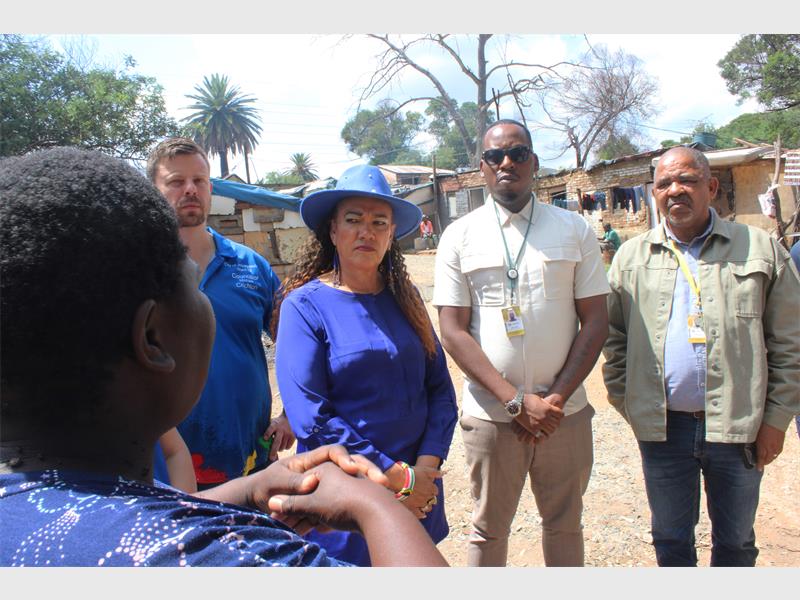
DA delegates conducted oversight visits to different informal settlements in the South of Johannesburg, including Springbok and Electron, on January 22.
The delegation included: DA spokespersons on Human Settlements, Luyolo Mphithi MP and Conrad Poole MP, DA Gauteng Shadow MEC of Human Settlements, Mervyn Cirota MPL, and DA councillors Faeeza Chame, Rashieda Landis, and Michael Chriton.
During these visits, they accused the City of Johannesburg’s Human Settlements Department, led by MMC Mlungisi Mabaso, of neglecting residents in informal settlements.
They said they (City) are supposed to give them (informal settlement community) alternative accommodation where there’s water, electricity and sanitation.
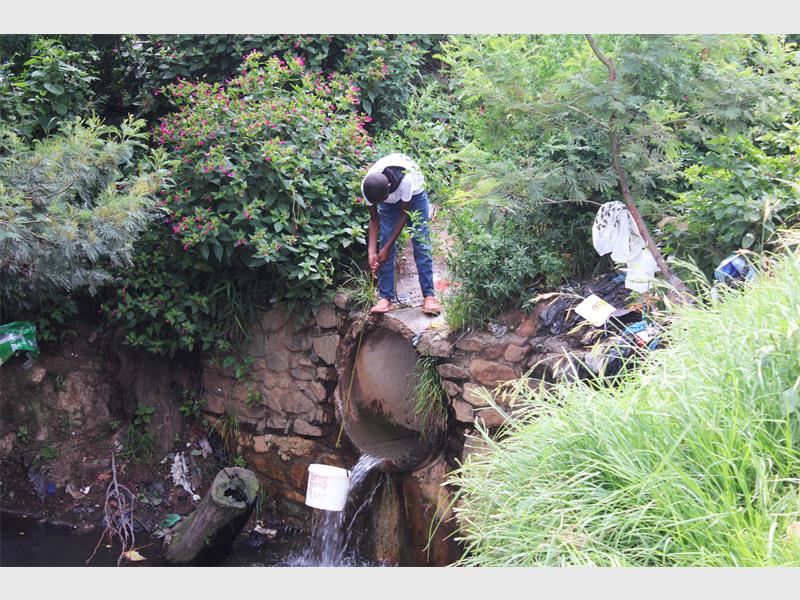
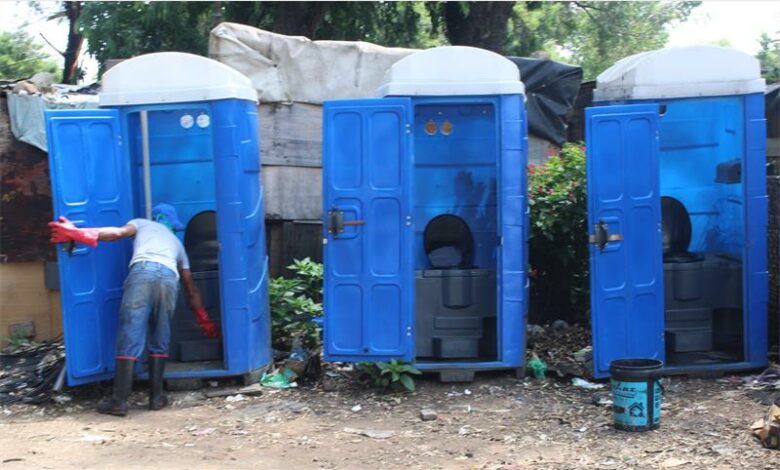
In these informal settlements, people live in squalor. They live without electricity, water and sanitation. In Springbok informal settlement, the community gets water from a stream in Moffat View that flows under Henderson Road, which they also use to wash their clothes.
Community leader Lettia Mashiloane spoke about safety and the influx of foreign nationals. She said they desperately need a safe place to stay.
“Before, the majority were South Africans; however, now there are a lot of foreign nationals. We have no say when they are around; we fear for our lives. Just on January 9, we discovered a decomposed body of a woman in the stream.
“Because of job opportunities, this area is nearer Joburg Market, where we go and market for jobs every day. The population has grown tremendously here,” she said.
Amendment of PIE Act
Mphithi said the government must provide houses for these communities, and he mentioned that these informal settlements are in the middle of the suburbs. He also revealed that they are planning to propose an amendment of the Prevention of Illegal Eviction from Unlawful Occupation of Land Act (PIE Act) when they sit in parliament on the human settlement portfolio on February 18.
“We want the PIE Act to be amended so that if the City cannot provide the alternative accommodation because of financial constraints, then the Province and National must take the liability.
“We spoke to the community members here about challenges they continue to face. We know that there has been a huge delay on providing housing for South Africans, and the delay is really exposed here.

“Here, South Africans are living in the worst conditions, in the middle of a Johannesburg suburb. They have no water, no electricity and no adequate sanitation. We are truly concerned that, in Johannesburg, no attention has been paid to this particular community.
“This is also an example of land invasion where community members, because they have been waiting for houses for so long, have decided to take over this piece of land as they can’t wait for houses any longer. We are saying there is a dire need to fast-track what we are doing in parliament regarding legislative change pertaining to the PIE Act.
“We will take the issues the community has given us to ensure we represent those views in parliament. This is a very unfortunate situation that South Africans find themselves in. We need urgent intervention at the Springbok informal settlement.
Electron informal settlement
A community representative named Tbose said they don’t know what will happen to them after March 31, as they will be evicted.
“We need help. There’s a private company that owns this land, and they have given us notice to vacate this place by March 31.
“I don’t know what they are going to do on April 1, and what is going to happen to us. Our matter is in court and the City need to find us alternative accommodation,” he said.
Ward 57 councillor Faeeza Chame
She said that on Nephin Road, there are 205 empty units; this is the fifth year they have not been allocated to anyone.
“Human Settlement said they are waiting for the managing agent. While they wait, these flats are falling apart; there are leaks from the walls, and even before people can move in, they need to be fixed.
“People in informal settlements live in squalid conditions, children not going to school, fetching dirty water from the stream to do their washing and wash themselves, and they also have to boil it before drinking. This is the failure of the current government.
“We also receive a lot of complaints from the dumpsite in East Road, The Hill. People are dumping without any consequences. About 100 gentlemen live on that site.

“They have their own shacks where they recycle anything from tins to plastics. Most of them are foreigners. We are going to bring Pikitup to see what’s going on here. This is next to St Martin’s School, and the stench is unbearable.
“I’m glad that National took this matter seriously; they promised to take it to portfolio holders for human settlement in National.
“I’m concerned about the Electron settlement community and what will happen to them when they are evicted on March 31, as there’s no place for them. It is the city’s responsibility to take care of these people. MMC Mlungisi Mabaso has no plan for these people.”
Comaro Chronicle contacted Department of Human Settlement for comment on this matter:
- What is the budget for informal settlements that the Department of Human Settlements has in the City?
“R752 855 was allocated to the Department of Human Settlements under the Informal Settlements Upgrading Partnership Grant (ISUPG).” - What is the plan for these people (Springbok and Electron informal settlements) in terms of alternative accommodation?
“The two settlements are among the 180+ settlements without upgrading plans, nor have they been categorised in line with National Upgrading Support Programme (NUSP) categorisation. The City submitted a list of settlements that need to undergo this process, which will assist in terms of determining the future plans for the settlement.” - In these two informal settlements mentioned above, there are about 800 people living there. Do you think the City has the capacity to accommodate them?
“It is the City’s plan to upgrade its informal settlements and ensure provision of basic services.” - According to SA’s Constitution, Section 26 – access to housing is a human right. Is the City infringing on those rights?
- “Section 26 of the Constitution guarantees the right of access to adequate housing and requires the state to take reasonable measures, within available resources, to progressively realise this right. This obligation is implemented through housing programmes such as the Upgrading of Informal Settlements Programme (UISP) and the Emergency Housing Programme. While the UISP provides for in situ upgrading of informal settlements, its implementation depends on settlement readiness, land suitability, planning approvals, and funding availability, meaning not all settlements can be upgraded simultaneously.
“In circumstances where informal settlements are not yet prioritised for UISP upgrading due to resource constraints, the organisation continues to ensure that basic services are rendered. Accordingly, the absence of immediate upgrading plans does not constitute a constitutional violation, provided that the state applies fair and transparent prioritisation and provides interim relief where necessary while progressively advancing long-term housing solutions.”
- Are the growing housing pressures that affect these communities placing strain on land, basic services and infrastructure?
“Yes. The growing housing pressures in these communities place significant strain on available land, basic services, and existing infrastructure. Rapid population growth, ongoing in-migration, and the expansion of informal settlements increase demand for serviced land, water, sanitation, electricity, roads, and social facilities, often beyond the capacity of current infrastructure. As a result, infrastructure networks experience accelerated wear, capacity exceedances, and service delivery backlogs.
“This pressure is further compounded by the limited availability of suitably located land and constrained funding for bulk and connector infrastructure. Addressing these challenges requires coordinated planning, phased upgrading, and alignment of housing delivery with infrastructure investment to ensure sustainable and orderly development.”