
Seeds of Hope: Women in Jackson Informal Settlement empowered through agriculture
After attending a global food conference, Tintswalo ‘MaSpinach’ Makhubele leads training that equips over 20 young women with farming and business skills in Jackson Informal Settlement
When Tintswalo Makhubele returned from Rome, she brought back more than just memories; she returned with opportunities.
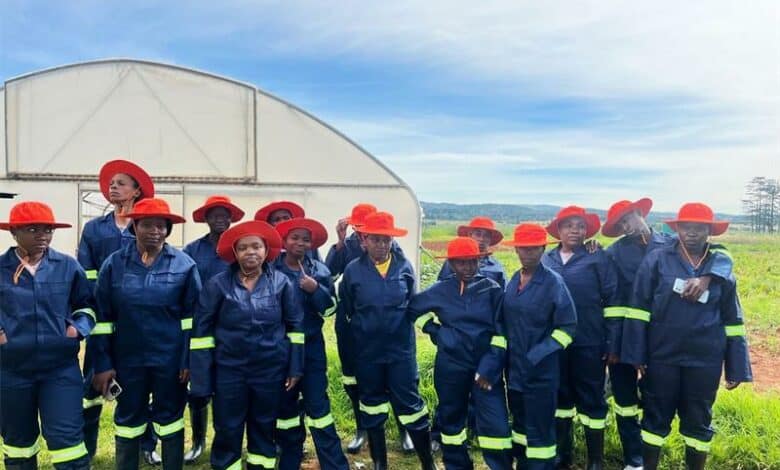
Thanks to her efforts, over 20 young women from the Jackson informal settlement have received agriculture training, equipping them with the skills to grow food, build businesses and sustain their families.
Makhubele, known as ‘MaSpinach’, and women from the South African Congress of Non-Profit Organisations (Sacono) attended the Food Security Conference in Rome, where they advocated for the recognition of young women in agriculture, the right to food and peri-urban farming policies that support small-scale farmers and businesses.
Upon their return, Sacono, an NPO funded by the Gauteng Department of Social Development, led the skills development initiative.
“Through this initiative, we have trained 25 young women in agriculture and agribusiness. Our goal is to empower them to become entrepreneurs, take initiatives and achieve food security for their families,” said Makhubele.
The training covered food production, soil preparation and plant cultivation. Today, the women manage three plots growing spinach, cabbage, and seedlings and a greenhouse tunnel cultivating cucumbers and leafy greens.
Makhubele emphasised the importance of bringing back global knowledge to uplift local communities.
“The Jackson informal settlement is an underdeveloped area with no schools, and most parents work on farms. We are proud to work with the Department of Agriculture and other stakeholders to empower young women and strengthen food security.”
She also thanked MEC Faith Mazibuko and Premier Panyaza Lesufi for ensuring that funded NPOs receive financial support to sustain these critical projects.
One beneficiary, 30-year-old Tankiso Sematla, discovered her love for farming at 16 and has never looked back.
“I enjoy learning about agriculture and hope to supply food to major retailers one day. Thanks to the department for believing in us and funding this project,” said Sematla.
She added, “Not everyone will become a doctor or a lawyer, but many opportunities are available, especially for those from disadvantaged backgrounds. Agriculture is one of them.”
With hard work, training and support, these women and men are not just growing food; they’re growing a future.
What started as a small training initiative has planted the seeds of entrepreneurship, empowerment and economic independence in the Jackson informal settlement.