German-backed R3.8bn loan powers Joburg’s energy upgrade
The City of Johannesburg has secured one of the largest development finance facilities granted to a South African municipality to fund critical electricity infrastructure projects.
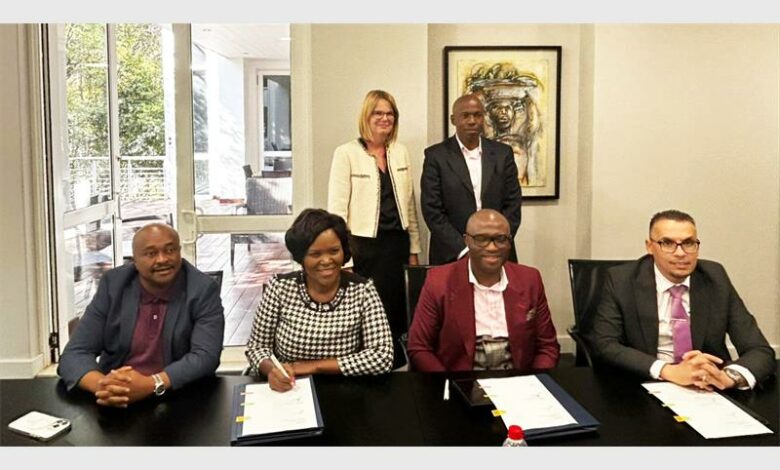
The City of Johannesburg (CoJ) announced the conclusion of a landmark loan agreement with Kreditanstalt für Wiederaufbau (KfW), the German state-owned development bank, for a facility of R3.8b to finance critical electrical infrastructure investments at City Power (CP) Johannesburg across the 2025/26 to 2027/28 medium-term financial years.
This agreement, approved by the Johannesburg city council, represents one of the largest concessional development finance facilities ever extended to a South African municipality and forms a centrepiece of the City’s Just Energy Transition (JET) programme – a strategic commitment to deliver reliable, affordable and clean energy for all residents and businesses of Johannesburg.
The CoJ and CP emphasised that this agreement forms part of a broader long-term financial recovery and infrastructure turnaround strategy that has been under development and implementation over several years.
They have consistently acknowledged the significant financial and infrastructure pressures facing Johannesburg’s electricity network, including an infrastructure refurbishment, maintenance and modernisation backlog estimated at more than R40b.
As part of this recovery programme, the CoJ and CP have actively pursued strategic partnerships with development finance institutions, the private sector, and other funding partners to support infrastructure investment, network modernisation, revenue enhancement, operational sustainability, and long-term energy security.
The KfW facility therefore forms part of a series of mitigation measures and turnaround interventions aimed at strengthening City Power’s financial sustainability, accelerating infrastructure investment, and improving service delivery across Johannesburg.
Highlighted key projects
Among the specific infrastructure projects to be delivered under this facility, the following are of significant strategic importance:
• Transformer replacement and substation upgrades (500 MVA of new transformer capacity by 2028): CP will replace and upgrade high-voltage transformers across Johannesburg, including projects at Allandale, Brynorth, Dainfern, Eikenhof, Hopefield, Mondeor and Ruimsig substations. The upgrade programme eliminates high-risk, aged transformers that are a primary cause of unplanned outages, directly improving supply reliability for homes and businesses.
• Secondary distribution network rehabilitation: Emergency and planned works across both the North Riding and Reuven distribution areas, refurbishment of medium and low voltage infrastructure, replacement of aged MV cables, CBD network upgrades and the conversion of load centres to 11kV will collectively reduce technical losses and improve network resilience across all areas of the city.
• Substation automation and SCADA (R80-m in 2026/27 alone for Remote Terminal Unit installations): Installing RTUs, intelligent electronic devices (IEDs), a fibre optic telecommunications backbone, and upgraded network management systems will enable real-time monitoring and control of the electricity network, dramatically reducing fault response times and enabling predictive maintenance.
• Smart metering and revenue enhancement (R395m in 2026/27): The installation of statistical meters, smart prepaid meters and revenue generation systems will directly address CP’s commercial losses – currently at 18.35% of distributed energy. The target is to reduce commercial losses to 13.2% by 2028, translating into billions of rands in additional annual revenue for City Power and the city.
• Renewable energy projects (solar high-masts, solar streetlights, energy efficiency programme): These investments advance Johannesburg’s sustainability commitments and reduce CP’s dependence on expensive Eskom purchases, lowering costs for consumers and the utility.
• Public lighting – LED conversion: The programme targets the installation of 1 700 new public lighting fixtures per year (up from 700 per year), improving public safety and security in all communities, including informal settlements, with specific attention to gender-sensitive lighting design.
City’s take on the loan
CoJ group CFO Tebogo Moraka said, “This KfW loan represents a breakthrough moment for the CoJ’s financial strategy and for the people of Johannesburg.
“We have secured concessional development finance at a fixed rate of 8.56% in South African Rand, with no security required and with a five-year grace period before repayments begin. These are terms that simply do not exist in the domestic commercial lending market for municipalities of our size.
“More importantly, every rand of this facility will go directly into the ground – into transformers, cables, meters, substations and renewable energy infrastructure that will make CP more reliable, more efficient and more financially sustainable.
“We are investing in the backbone of Johannesburg’s economy, and we are doing so on terms that protect the city’s long-term fiscal health.
“This agreement also demonstrates that the CoJ and CP have been proactive in pursuing sustainable funding solutions and strategic private sector collaboration to address long-standing infrastructure and financial challenges.
“We will continue engaging additional institutions and development partners to support infrastructure investment, energy reform, and long-term financial sustainability for the benefit of residents and businesses across Johannesburg.
“We thank the Federal Republic of Germany and KfW for their partnership and their confidence in the City of Johannesburg’s commitment to the JET.”
City manager Dr Floyd Brink said, “As the accounting officer of the CoJ, I carry the constitutional and legislative responsibility under the Municipal Finance Management Act to ensure that every rand borrowed by this municipality is borrowed prudently, deployed effectively and repaid sustainably. I am therefore pleased to confirm that the KfW loan agreement meets that test in full.
“The CoJ is home to over six million residents and is the economic engine of the African continent. A reliable, affordable and expanding electricity supply is not a luxury for this city – it is the foundation upon which jobs are created, businesses grow, and communities thrive.
“When City Power fails, Johannesburg’s economy suffers, and it is our most vulnerable residents who bear the heaviest burden. This investment directly addresses that reality.
“As accounting officer, I have satisfied myself that this borrowing is within the city’s approved funding plan, consistent with council’s mandate, and structured in a manner that protects the long-term fiscal position of the municipality.
“The five-year grace period, the fixed concessional interest rate, the rand denomination and the absence of any security requirement mean that the city is not taking on excessive financial risk.
“On the contrary, we are leveraging Germany’s development partnership to mobilise capital that would otherwise cost the city significantly more to access commercially.
“I also wish to place on record that this agreement comes with meaningful accountability conditions, including independent project coordination, annual audits of procurement and fund utilisation, and rigorous environmental and social standards.
“I welcome these conditions. They reinforce the governance discipline that the CoJ is committed to demonstrating, and they give our residents and our partners confidence that this investment will be implemented with integrity and transparency.
“The people of Johannesburg deserve a city that works. A city with lights that stay on, streets that are safe, and an energy system fit for the twenty-first century. This loan agreement is a significant step in delivering exactly that.”
ALSO READ: City Of Johannesburg Council approves R97.1b 2026/27 budget