
Battle over Baby Saver Boxes divides child welfare sector
While the Department of Social Development calls the practice illegal, organisations like Door of Hope and Alberton’s Angels Baby Sanctuary argue that safe relinquishment is a lifeline for abandoned infants.
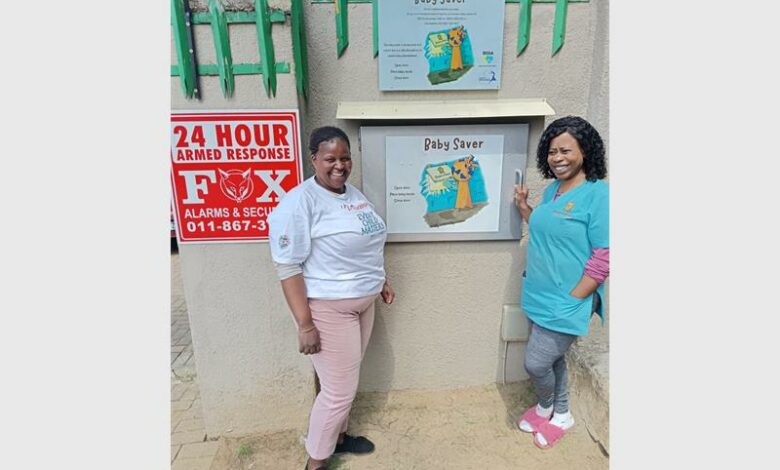
The Department of Social Development (DSD) is embroiled in a legal dispute with Baby Savers, a movement advocating for the use of ‘baby boxes’, safe havens where infants can be anonymously relinquished.
The DSD, which oversees the Children’s Act of 2005, has firmly opposed the practice, arguing that it is illegal and not supported by the law.
According to the Department, the Children’s Act does not permit such anonymous relinquishments, and they are currently involved in a court case to halt the practice.
In South Africa, baby abandonment is a tragic and frequent occurrence, with many infants left in unsafe conditions that put their lives at risk. Baby Savers provide a potentially life-saving solution, offering a safe and anonymous alternative for desperate parents.
However, the Department of Social Development objects to proposed changes to the law that would include babies abandoned in these boxes under the definition of ‘abandoned’ in the Children’s Amendment Bill. While the legal battle continues, the safety of vulnerable children remains at the heart of the debate.
Door of Hope defends safe relinquishment
Door of Hope has been at the forefront of providing care for abandoned children in South Africa, running both baby homes for infants and a children’s village for long-term family-style care.

The organisation’s efforts began in 1999 when a stainless-steel Baby Saver Box was installed at the Berea Baptist Mission Church in Johannesburg.
Designed to be accessible from the outside, the box allows mothers in crisis to safely place their babies inside.
Once a baby is placed in the box, sensors trigger an alarm, notifying the Door of Hope team to come and collect the infant.
While there are no official statistics on baby abandonment in South Africa, private research conducted in 2010 and 2016 estimates that around 3 500 babies are abandoned every year. For every baby found alive, it is believed that two are discovered dead.
The operations director at Door of Hope highlighted the tragedy: “But how many babies are never found? There are so many factors that lead to baby abandonment.”
These factors, she explained, include socio-economic challenges like poverty, rapid urbanisation, lack of support from the father or family, gender-based violence (including rape), and pregnancy-related issues such as unwanted pregnancies, teenage pregnancies, and failed illegal abortions.
Without the intervention of organisations like Baby Savers, it’s feared that two out of three babies abandoned in unsafe circumstances would tragically end up dead.
A recent article in The Citizen highlighted the heartbreaking discovery of a newborn’s body found on the side of the road in Mt Moriah, KwaZulu-Natal.
According to the report, the baby’s legs had been consumed by dogs, and in another instance, twins were discovered abandoned in a pit latrine in Jackson’s Informal Settlement.
Door of Hope, and the Baby Saver initiative in particular, offer a safer alternative to these dangerous outcomes. As a last resort, Baby Savers provide an option that gives babies the right to life and dignity. “It’s a chance to save a child when all other options have failed,” said the operations director.
However, she pointed out that the alternatives are not always accessible or supported. Parents can seek temporary care, adoption, or speak to social workers for help but often face judgement or rejection.
“We’ve had mothers reach out to us who were told to ‘go home and be a parent,’” she said. She also shared the case of a schoolgirl who was raped and pregnant and, when she sought help, was told, “You must grow up and get over it.”
According to the operations director, the lack of empathy and support for mothers facing crisis pregnancies is widespread, with some social workers, nurses, and police officers offering little understanding or compassion.
“This is why organisations like Baby Savers are so important,” she said. “They provide a vital alternative when all other options have failed, and should be legally recognised and supported.”
Door of Hope continues to receive messages from mothers who, after seeking help, were met only with judgement. In these times of crisis, the organisation believes that a safe, non-judgemental option like Baby Savers is essential to saving the lives of vulnerable infants.
Baby Savers SA raises alarm over child safety
In a media statement issued on September 20, 2025, Baby Savers SA revealed that its legal counsel had written to the Department of Social Development (DSD) following a troubling series of events involving the case of Nandi (name changed to protect her identity), a newborn girl in urgent need of care. Nandi was placed in a Baby Saver Box in Edenvale, Johannesburg.

The organisation expressed concerns about the severe impact these events had on the baby’s well-being.
Baby Savers SA, a coalition of safe surrender sites and community-based child protection networks, has for years played a crucial role in South Africa’s child protection system.
The organisation provides a life-saving service, offering non-judgemental, urgent care to vulnerable infants and desperate mothers when state services are unavailable.
Through its network of Baby Saver Boxes, the group has stepped in to fill a critical gap, responding to the needs of both mothers in crisis and children in serious and immediate danger.
The letter to the DSD follows a series of actions that Baby Savers SA argues undermined the well-being of Nandi, who was in need of immediate medical care upon being retrieved from the Baby Saver Box. The organisation has called for better co-operation and understanding from the Department in handling such sensitive cases.
Department of Social Development stands firm
In a media statement released on September 21, 2025, the Department of Social Development (DSD) reiterated its position on the growing controversy surrounding Baby Saver Boxes, declaring that such practices are illegal.
As the custodian of the Children’s Act 38 of 2005, the Department is tasked with the care and protection of children and emphasised that the Act does not allow for the use of Baby Boxes. “The practice is illegal,” the statement stressed.
The DSD clarified that it works closely with other government departments and designated Child Protection Organisations (CPOs) to ensure children’s rights are upheld.
“In no way will we, as the Department of Social Development, instruct a CPO not to intervene in cases where a child requires child protection services, nor will we deny services to a child abandoned through Baby Boxes. This would go against the very core and purpose of DSD services,” the Department emphasised.
However, the statement also raised concerns about the business model of Baby Savers. According to the DSD, the practice allows mothers to abandon their children anonymously, without any trace or accountability.
This, the Department argued, is irresponsible and undermines the vital work of child protection services.
In a media statement released on October 1, 2025, DSD announced a formal communication sent to all relevant stakeholders.
The statement reminded officials and organisations that mothers wishing to relinquish their babies or children must be provided with the necessary information and support.
The Department said it plans to improve its Child Protection System to safely receive babies that birth mothers want to abandon. This will involve co-operation between hospitals, the South African Police Service, and Child Protection Organisations, all of which act as safety nets within communities.
Gauteng DSD also stated that prevention, awareness, and early intervention efforts will be increased. Officials and communities will be given more information and training to help identify and support vulnerable mothers and children.
The Department reiterated its position on Baby Saver operations, emphasising that they are illegal under the Children’s Act, Act 38 of 2005, as amended. When asked by the Comaro Chronicle about the exact date of the amendment, the Department was unable to provide details.
“We are clear on the following: Mothers have the right to state upfront that they want to relinquish their child. Mothers have a legal obligation to safely relinquish their child to families, or alternatively, within the child-care system,” the Department said.
However, according to DSD, relinquishing a child safely does not equate to wanting to remain anonymous.
Anonymity of the mother effectively equates to abandonment of the child due to the following:Even though the mother has the right to declare that she does not want her child, equally, the child has a constitutional right to his or her mother, father, siblings, extended family members, culture, religion, community, nationality, etc. (Children’s Act – Section 7 – Best Interests of Child Standard).
Section 9 of the Children’s Act states that the best interests of the child are paramount; in all matters concerning the care, protection, and well-being of a child, the standard that the child’s best interest is of paramount importance must be applied. “Paramount” means of utmost importance and hence supersedes everyone else’s interests, including the mother’s, in such cases.
Section 305 of the Children’s Act states offences related to abandonment of a child:
305(3)A states a parent, guardian, or other person who has Parental Relationship Responsibilities in respect of a child, caregiver, or person who has no PRR in respect of a child but who voluntarily cares for the child either indefinitely, temporarily, or partially, is guilty of an offence if that parent, caregiver, or other person – (b) abandons the child.
305(6) A person convicted of an offence in terms of subsection (3) is liable to a fine or to imprisonment for a period not exceeding ten (10) years, or both a fine and such imprisonment.
305(7) A person convicted of an offence in terms of subsection (3) more than once is liable to a fine or to imprisonment for a period not exceeding twenty (20) years, or both a fine and such imprisonment.
Angels Baby Sanctuary speaks out
The Comaro Chronicle/Southern Courier also reached out to Angels Baby Sanctuary, a home for abandoned babies in La Rochelle, for their comment on the ongoing legal dispute over Baby Saver Boxes. The sanctuary currently cares for 12 babies, aged between one and five years old.

Founder Anne Ebrahim said: “We make it a priority to ensure that these babies are well cared for in a safe and loving environment. We take care of babies until they are adopted or reunited with their families. Over the past 11 years, we have cared for 64 babies, 39 were adopted, and 13 were reunited with their families.”
Ebrahim has been involved in saving abandoned babies since 2014. Angels Baby Sanctuary installed a Box of Hope on their premises in January 2022 to offer a safe place for mothers to leave their babies. However, due to the ongoing legal battle, the box was closed in 2024 and is no longer operational.
To operate a Baby Saver Box, organisations must be registered with Baby Savers SA and have an agreement with a registered Child Protection Agency. When a baby is placed in the box, an alarm sounds, and the infant is immediately collected and taken to a hospital or clinic for a medical check-up. The Child Protection Agency is then notified to carry out the necessary legal procedures. Mothers remain anonymous throughout the process.
Ebrahim explained, “Whether a baby comes from a Baby Saver Box or is abandoned at a hospital, they all go through the same legal process under the Child Protection Act. There is no difference, and the baby still needs protection and care.”
When asked about a personal experience showing the importance of Baby Saver Boxes, Ebrahim shared, “In April 2023, a baby was abandoned in a park in Rosettenville and brought to us. A year later, this beautiful baby girl was adopted.”
The sanctuary’s work underlines the vital role Baby Saver Boxes play in saving vulnerable infants and offering hope to desperate mothers.
Call for clarity and compassion in the law
The Department of Social Development (DSD) maintains that there are existing systems in place for mothers to safely relinquish their babies.

These include support through hospitals, the South African Police Service, Child Protection Organisations (CPOs), and the Children’s Court. The DSD says that services for child protection are available 24/7 throughout the year, although many departments operate during office hours, with SAPS stepping in after hours and on public holidays. These services range from early intervention and counselling to placement in foster care or adoption.
However, Baby Savers SA co-founder, Nadene Grabham, has urged the government to revise the proposed legal amendment to clearly differentiate between unsafe abandonment, which puts a child’s life at risk, and safe relinquishment through baby saver boxes or to authorised child protection services. She added that if the law does not allow for this distinction, it may lead to more unsafe baby abandonments, ultimately endangering more lives.
“If Baby Savers were shut down, babies dying from unsafe abandonment could become so common that it may not even make the news anymore,” she expressed.
Grabham reminded the public that South Africa has many people doing good work for children, and protecting them must remain a national priority. “Children are the future adults of South Africa. We need to be good role models for them,” she said, adding a powerful reminder from Nelson Mandela: “There is no keener revelation of a society’s soul than the way in which it treats its children.”
Members of the public who wish to oppose the proposed amendment can do so by visiting Draft Children’s Amendment Bill 2025 or by emailing their comments to MatlhogonoloS@dsd.gov.za or ntopot@dsd.gov.za or LuyandaMt@dsd.gov.za by no later than October 25.