
Tiffany Miguel shares life-saving tips during National Water Week
Tiffany Miguel shares vital tips on supervision, swimming rules and awareness as the community is urged to take water safety seriously.
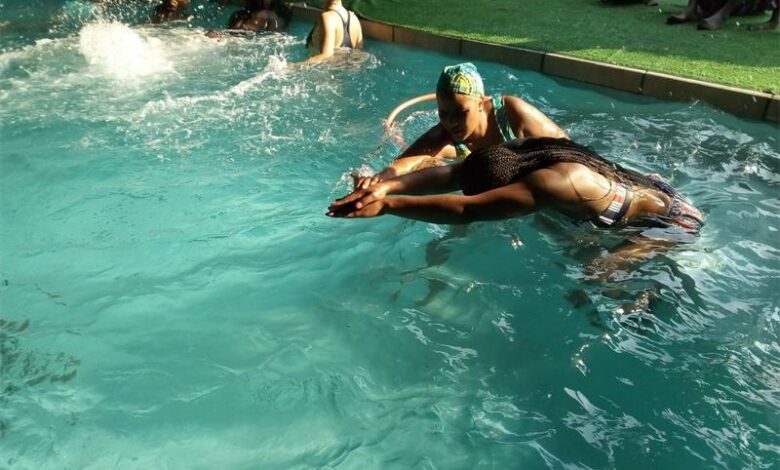
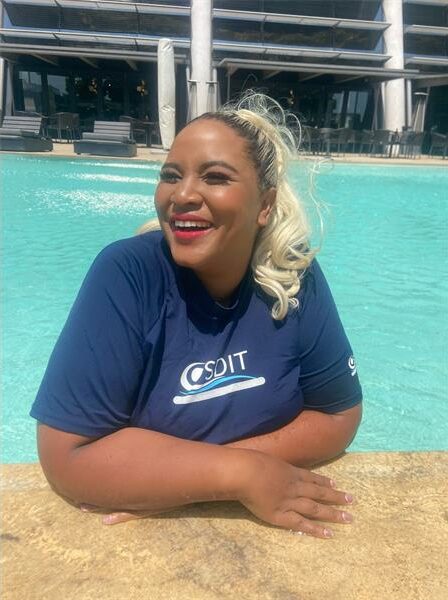
As South Africa marks National Water Week, Kibler Park resident Tiffany Miguel is using her voice to raise awareness about water safety.
After leaving her marketing career to focus on being a present mother, she founded Splash Aquademy, an initiative that helps both children and adults overcome fear, build confidence and learn how to swim.
Tiffany’s journey with water began early. Introduced to swimming at the age of eight through naval cadets, she gained skills in water survival and life guarding.
“That early exposure gave me a real sense of discipline and respect for the water,” she said. For her, swimming has always been more than a physical activity. It became something deeply calming, ‘like meditation.’
Why ‘water safe’ matters more than perfect technique
Tiffany explained that her teaching focuses first on safety, not perfection. She describes being ‘water safe’ as the ability to fall into water, turn around, swim about two metres, and get out without help.
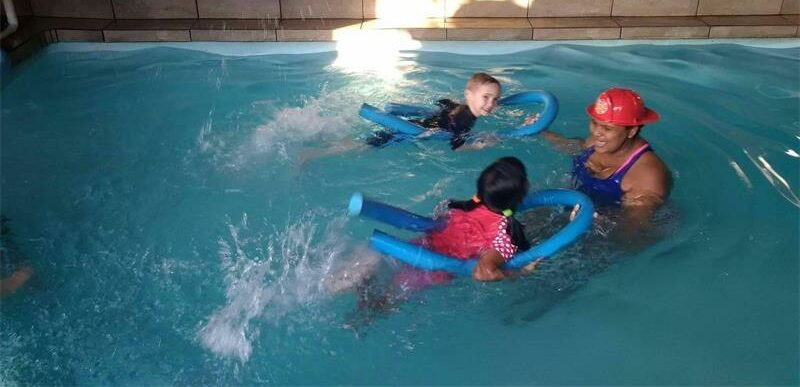
“The water is dangerous,” she said, adding that the term ‘water safe’ is always used carefully. Her approach prioritises survival skills before teaching formal swimming strokes.
She follows a structured system inspired by an international programme, where students progress step by step- starting with readiness, then safety, and only later learning proper techniques.
Simple rules that save lives
Tiffany emphasises clear, non-negotiable rules for everyone around water:
• Always ask permission before entering
• Never swim alone
• Never push others into the water
• Never swim while intoxicated
“Never let your guard down when you or your kids are around the water,” she said. She also highlighted the importance of exiting the water immediately when instructed and warned about hidden dangers like lightning.
Even indoor pools are not safe during storms. “If there is lightning within 20 kilometres, you should get out,” she explained.
Common mistakes families make
According to Tiffany, the biggest mistake families make is failing to provide proper supervision. She stressed that supervision must come from someone capable of rescuing a child in danger.
Another overlooked risk is small amounts of water. “A child can drown in as little as 2.5 cm of water,” she warned, pointing to everyday hazards like buckets, ponds, and even pet water bowls.
Tiffany cautioned against underestimating rivers and oceans, especially with recent heavy rainfall and strong currents.
She shared her own near-drowning experience at a surfer’s beach, where a rip current pulled her far out to sea.
Despite being a strong swimmer, she struggled to return. “I had to make a decision, I’m either going to keep fighting or give up,” she said.
She emphasises that swimmers should always follow beach safety signs, swim only during designated hours, and stay within lifeguard zones.
Parents play a key role and learning CPR
Tiffany believes parents must take an active role in their children’s swimming journey. “The most important thing a parent can do is to learn how to swim,” she shared.
She encourages parents to practise regularly with their children, rather than relying only on weekly lessons. Early exposure is also critical. Ideally, children should start swimming before age 2 to avoid developing a fear of water later.
Additionally, she stressed that CPR training is essential for anyone around water. “It literally is the difference between life and death,” she said.
With emergency services taking time to arrive, CPR helps maintain oxygen flow to the brain. However, she warned that it must be learned properly from accredited professionals to avoid causing harm.
A call for awareness
As drowning incidents continue to rise, Tiffany hopes more people will take water safety seriously. She expressed concern that National Water Week is not receiving enough attention.
“People think it won’t happen to them, but the water is always dangerous. It is beautiful, but it’s always dangerous,” she added.