

WATCH: MEC on department’s 2025-2030 Strategic Plan and state of the education
This year there are 2 835 168 learners in Gauteng schools.

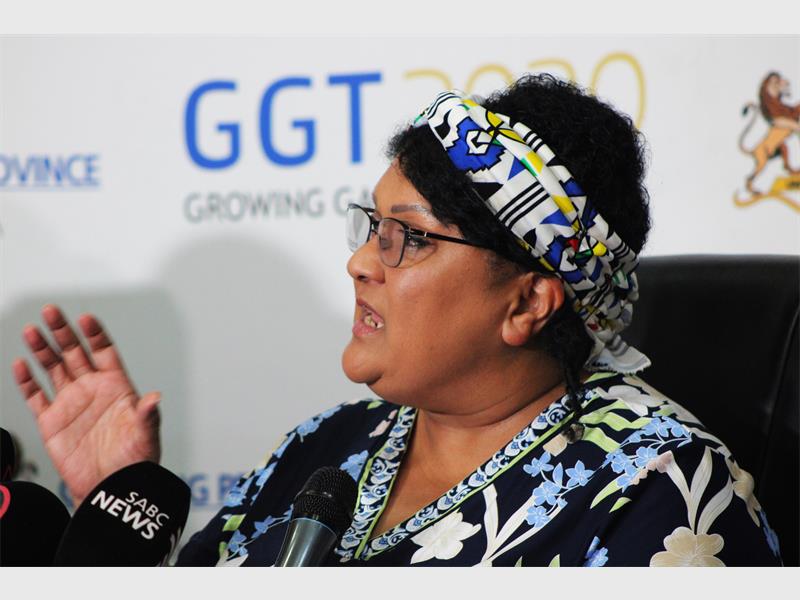
Education MEC Lebogang Maile confirmed that the Gauteng Department of Education will engage various stakeholders to discuss how they can all play their part in ensuring the implementation of the 2025-2030 Strategic Plan and related programmes aimed at improving the education system in the province.
On April 12 at Bryanston High School, Maile said they engaged with stakeholders, including the Executive Management Team of the provincial department and district officials.
“A meeting with principals and deputy principals across Gauteng schools will be taking place this coming week, to be followed by a meeting with School Governing Bodies within the coming week. We will also engage parents and communities, as well as stakeholders in the private, public, and civil society sectors.
“We are committed to improving the quality of teaching and learning in Gauteng, but we recognise that as the provincial government, we cannot achieve this on our own. Public-private partnerships, as well as collaborations with multilateral institutions, non-government organisations, academic institutions, religious institutions, and other stakeholders, will play a key role in this endeavour.
“We will also be relying on the media to continue its important work of informing and educating the public, while also maintaining its independence and holding us accountable where necessary,” he said.
@southern.courierWe are committed to improving the quality of teaching and learning in Gauteng, but we recognise that as the provincial government, we cannot achieve this on our own. Public-private partnerships, as well as collaborations with multilateral institutions, non-government organisations, academic institutions, religious institutions, and other stakeholders, will play a key role in this endeavour. Full story on southerncourier.co.za♬ original sound – Southern Courier
He said South Africa’s basic education system faces interlinked challenges shaped by structural factors rooted in historical inequality, socio-economic pressures, and delivery constraints. The situation is especially pronounced in the Gauteng Province, where rapid in-migration, uneven access to early learning, weak foundational skills, infrastructure backlogs, safety risks, and resource limitations continue to affect education quality and learner outcomes.
In this media briefing, we will reflect on these challenges and provide an overview of the Gauteng Department of Education’s five-year Strategic Plan.
Gauteng Department of Education 2025-2030 Strategic Plan
In support of quality teaching and learning, the Department has introduced support strategies to improve all phases of the curriculum.
• The first is the General Education and Training (GET) Language and Mathematics Strategy, which incorporates the reading component.
The GET Strategy locks in gains in language and mathematics made in the foundation phase, including the Read to Lead Campaign, Library Services, the Book Flood Campaign, and the Grade Eight and Nine Mathematics Strategy.
Key focus areas of the strategy include monitoring and supporting the utilisation of mathematics and language lesson plans and providing technical support to educators.
• The second is the Maths, Science and Technology (MST) Strategy, which aligns with the National MST Strategy and Implementation Plan. The strategy seeks to improve learner participation and success in MST subjects; strengthen teacher demand, supply, utilisation, and support; enhance the provision of resources; establish partnerships; and support monitoring, evaluation, and qualitative and quantitative research that inform the preceding four pillars.
• The third is the Technical High School (THS) Strategy. The aim of the THS Strategy is to expand participation by promoting and strengthening technical high schools for a changing, modernising world, offering technical subjects that will guide its activities over the next five years to address the skills shortage and unemployment crisis among the country’s youth.
The objective is to transform technical schools into centres of excellence that will equip learners with the skills and knowledge to give them the best chance of success in academic and career pathways in technical-vocational fields and entrepreneurship.
The strategy is also geared towards career advocacy programmes, ongoing teacher training, and resourcing schools with modernised equipment similar to that used in industry.
• The fourth is the FET Strategy, which is aimed at high and improved learner performance to ensure that it performs above the national average. The strategy is the National Development Plan (NDP), goal-driven and continues to build on innovative teaching methodologies through ICT infrastructure enhancements and digital curriculum and assessment resources, supporting learners to progress in a diverse and purposeful manner.
Through this strategy, the use of data to inform decision-making is being expanded at all levels and critical partnerships are formed to support subject improvements.
Within this strategy is the Secondary School Improvement Programme (SSIP), which follows an integrated approach to ensure alignment with the school programme.
There are activities aimed at monitoring the delivery of curriculum in underperforming schools and in establishing systems to ensure the synchronised delivery of curriculum. This intervention programme aims to provide adequate and effective electronic and printed resources for learners and teachers through teacher training and holiday camps, and pre-exam camps.
@southern.courierEducation MEC Lebogang Maile confirmed that the Gauteng Department of Education will engage various stakeholders to discuss how they can all play their part in ensuring the implementation of the 2025-2030 Strategic Plan and related programmes aimed at improving the education system in the province. Full story on southerncourier.co.za
The purpose of the intervention is to achieve a Grade 12 pass rate of not less than 90 per cent while preparing Grade 10 and 11 learners for the interim and final examinations, targeting mathematics, physical sciences, accounting and English first additional language (FAL) or home language (HL).
In addition, the focus is on achieving a pass rate of at least 50 per cent for progressed learners and high-risk learners.
• The final support strategy is the Reorganisation of Schools Strategy, with a specific focus on Schools of Specialisation. The Gauteng Department of Education has taken a policy decision to ensure learners have access to a specialised, modern, relevant, dynamic and responsive curriculum as an alternative to the traditional academic curriculum.
The Schools of Specialisation seek to nurture top talent in Gauteng across various disciplines, producing the country’s future generations of economic and industrial entrepreneurs and leaders.
Schools of Specialisation aim to address the mismatch between the skills learners exit the system with and those required by industry. There is a growing need to expand learner opportunities within the system by providing an alternative pathway to the world of work after matric.