
South Africa’s ECD system unravels under illegal expansion
Thousands operate illegally while compliant owners face crippling costs, exposing a broken system that risks fairness, sustainability and child safety.
South Africa’s Early Childhood Development (ECD) sector stands at a critical crossroads.
The rapid uncontrolled expansion of ECD centres across municipalities is raising concerns about regulation, fairness and sustainability.
Thousands of centres operate outside the law; enforcement is largely absent and compliant centre owners are being financially punished for doing things correctly.
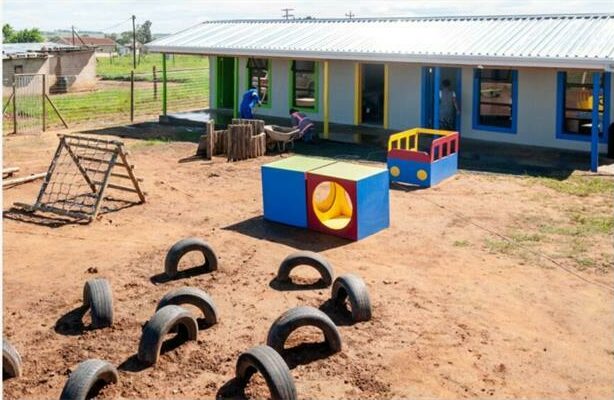
Across municipalities nationwide, ECD centres are increasingly ‘mushrooming’, operating from residential homes, informal structures, converted garages, and unregulated facilities. While the growing demand for childcare and early education is understandable, the pace of expansion has far outstripped regulatory authorities’ capacity to enforce compliance consistently and meaningfully.
The result is a deeply fragmented industry in which compliant centres bear the burden of costly regulation while thousands of non-compliant centres continue to operate unchecked.
A regulatory framework does exist, but it is not enforced.
Lisa Januario, ECD Upliftment Projects and Consulting in Walkerville, said that, under South African law, ECD centres must comply with the Children’s Act 38 of 2005, municipal zoning and land-use schemes, health and safety bylaws, fire regulations, building compliance, and programme registration.
Oversight falls under the municipalities and the Department of Basic Education, following the 2022 migration from the Department of Social Development. Yet despite the extensive government’s own registration drive, Bana Pele, enforcement remains inconsistent and absent at worst.
“Municipalities lack the capacity to process applications efficiently or conduct routine inspections. As a result, at least half of the ECD sector continues to operate outside formal compliance, often without consequence.
“The numbers tell a story. The scale of the sector and the problem is staggering. The national 2021 ECD Census identified approximately 42 000 ECD programmes across South Africa, including both registered and unregistered facilities. Yet government registration efforts remain incomplete, with only thousands of centres formalised through recent Bana Pele drives, including just over 1 600 new registrations in early rollout phases.
“By 2025, only 12 000 ‘bronze certificates’ of registration had been issued, a fraction of the total sector. This leaves a massive portion of the sector either unregistered, partially compliant or operating outside regulatory oversight,” noted Januario.
Cost of running ECD centre
The unequal cost of compliance is crippling. For compliant private ECD owners, compliance costs are neither simple nor affordable, with expenditures of tens of thousands of rands.
Opening a fully compliant centre requires zoning approval, building plan approval, fire compliance, health and safety certifications, occupational certificates, programme registration and legal documentation. These requirements can cost tens or hundreds of thousands of rand before a single child is enrolled.
One of the sector’s greatest frustrations is the growing discrepancy between private ECD centres and non-profit/NPO-based facilities.
Private ECD owners are frequently expected to meet full compliance standards, at high cost, while some NPO or subsidised facilities appear to receive leniency, phased compliance allowances or government support. While this is necessary to ensure access in vulnerable communities, the uneven application of standards has created a perception of a two-tier regulatory system, one set of rules for the private sector and another for everyone else.
“This disparity distorts competition, discourages investment, and punishes those attempting to operate legally and professionally. Meanwhile, non-compliant centres often bypass these requirements entirely, continuing to trade without consequence.
“The intention behind regulation is clear: to safeguard children and ensure quality early learning environments. However, when compliance becomes excessively complex or financially prohibitive, it has unintended consequences. ECD owners may delay or avoid registration entirely, pass costs onto parents, making ECD less affordable or abandon expansion plans due to regulatory barriers,” she said.
A key concern raised by ECD sector stakeholders is the lack of visible enforcement against non-compliant centres. This raises an important question: if the government is aware of widespread non-compliance, why is enforcement so limited?
MEC of Education, Lebogang Maile on ECD
During the recent media briefing by the MEC of Education, Lebogang Maile said that the ECD sector in Gauteng is privately operated, with no public sites. Access to ECD remains unequal, particularly for children from low-income families.
“The key challenges with ECD centres in Gauteng are that a large number remain unregistered, often operating from informal structures that do not meet municipal health and safety requirements.
“These unregistered sites cannot access subsidies, but many cannot afford upgrades. While the provincial government has undertaken a mass registration drive for ECD centres, the process is slow and paperwork-heavy. Additionally, zoning and approvals can take years and require coordination across multiple departments.
“Furthermore, subsidy funding is insufficient to expand coverage in poor communities in line with demand. Practitioner supply is also constrained and many ECD practitioners are not formally trained and are paid below minimum wage,” explained Maile.