
City Of Johannesburg Council approves R97.1b 2026/27 budget
Some opposition parties do not support the approved budget.
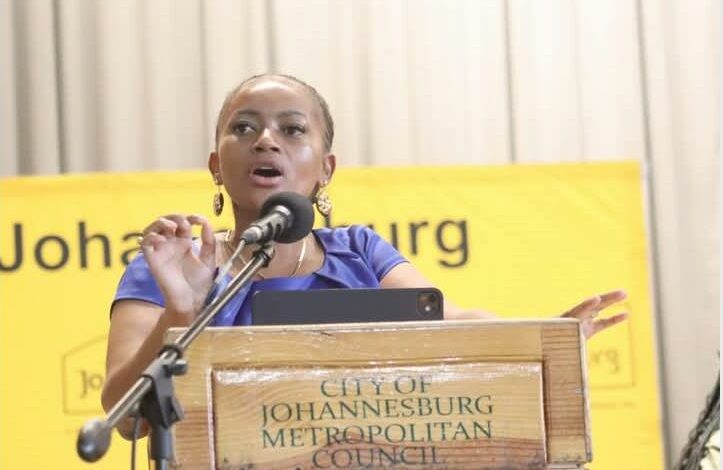
The City of Johannesburg Council approved the City’s 2026/27 budget following a robust debate at the Conny Bapela Council Chambers in Braamfontein on May 28.
The R97.1b budget, tabled by the Executive Deputy Mayor and Member of the Mayoral Committee for Finance, Clr Loyiso Masuku, on May 27, was adopted with 139 councillors voting in favour and 92 voting against.
The approved budget is anchored in the theme “Building Johannesburg Together: Investing Today, Securing Tomorrow” and seeks to strengthen infrastructure investment, improve service delivery, advance financial sustainability, and support inclusive economic growth across the city.
Presenting the budget, Masuku said the city had chosen “responsibility over slogans”, adding that the budget prioritises “repair over decline, investment over neglect, and discipline over drift.”
“This budget must be an economic instrument to support growth, expand access to services and enable investment and maintain existing infrastructure whilst investing in new services,” said Masuku.
The key allocations in the budget include investments towards:
• Electricity infrastructure rehabilitation and energy security through City Power;
• Water and sanitation infrastructure upgrades and non-revenue water reduction initiatives;
• Roads, stormwater infrastructure and public transport improvements;
• Inner-city rejuvenation and township renewal programmes;
• Safety, law enforcement and urban management interventions; and
• Community upliftment and social support programmes.
Masuku further emphasised that the approved budget seeks to protect vulnerable residents through measures such as free basic services, pensioner rebates and support through the Expanded Social Package.
The budget also advances the City’s Metro Trading Services Reform programme, aimed at improving governance, revenue collection, infrastructure investment, and long-term sustainability across key municipal entities, including City Power, Johannesburg Water, and Pikitup.
Not everyone approves of the budget
Joburg Crisis Alliance (JCA) wanted an oversight over CoJ’s 2026/27 budget. They said adopting the budget in its current form could deepen financial instability, weaken essential services, and expose the council to legal challenge.
The Alliance said municipal budgets must be realistic, funded, and procedurally compliant.
JCA coordinator, Yunus Chamda, said, “The City cannot ask residents to carry the cost of a budget that appears unstable, under-justified, and potentially unlawful if adopted without correction. Johannesburg needs a budget that is credible, transparent, and fully aligned with City’s legal obligations to deliver services sustainably and accountably.”
DA’s Helen Zille said they do not welcome Joburg’s unfunded budget.
She said residents are now expected to pay 12.5% more for water, 11% more for sanitation, 8.6% more for electricity and 6.2% more for refuse collection. “And what do they get in return? Water cuts.
Power outages. Sewage running down their streets. Tariff increases are painful in any city, but in Johannesburg they are especially indefensible because residents are being asked to pay more into a collapsing system that is not investing enough in the infrastructure needed to fix basic services,” she said.
Freedom Front Plus councillor Cor Boer said Johannesburg Metro is sinking deeper into a financial quagmire. He said the 2026/27 budget fails to address the Metro’s critical financial crisis, allowing it to sink even deeper into a financial quagmire.
“The R97b budget relies on a meagre surplus of just over R2b – an amount that falls short of addressing the metro’s enormous debt obligations, arrears to creditors and infrastructure backlogs exceeding R220b. The capital budget amounts to only R8.7b.
“The budget does not represent a road to recovery, but rather a recipe for disaster and further decay. It demonstrates a general lack of political will to stabilise the Metro’s finances, combat corruption and restore basic service delivery,” he said.
ActionSA Clr Mpumi Edward said her party will never support a self-congratulatory budget speech that neglects the needs of the poor. They said they reject it as if it offers nothing new to the residents of Joburg.
“The 2026/27 budget continues to prioritise service delivery and infrastructure investment commitments that have been repeatedly made in previous budgets. Yet across Johannesburg, communities are still experiencing water interruptions and sewer spillages.
“The City of Johannesburg’s infrastructure is deteriorating at an alarming rate, yet there appears to be insufficient urgency to address this crisis. The city is grappling with a severe water crisis and faces an infrastructure backlog exceeding R27b, while the entity continues to be underfunded,” she said.
RISE Mzansi Lukhona Mnguni said the budget speech represented the final account of an administration that asks for forgiveness while preparing to squeeze the middle-class and the poor even further.
“A city cannot function when the money we pay is swallowed by split accountability, institutional fatigue, and outright criminality inside the council and the administration. This budget shifts the burden of their failures onto residents’ pockets through inflation-linked tariff hikes. We reject a status quo where citizens pay for a city that fails them,” he said.
ALSO READ: Eskom warns of possible power cuts as Joburg debt climbs to R6.84b