
Randa Road damage exposes deeper storm water failures
Local leadership warns that persistent underground water flow is accelerating road failure and exposing broader weaknesses in Johannesburg’s storm water system.
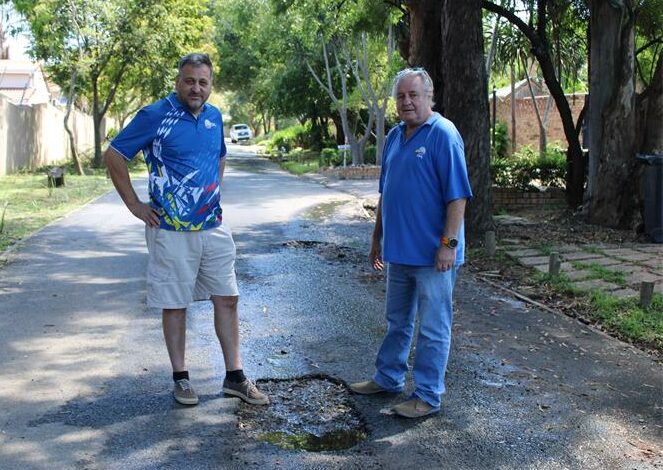
Persistent underground water flow and an alleged drainage diversion are accelerating Randa Road’s collapse, according to Ward 115 councillor Mark van der Merwe, as he calls for urgent intervention from Johannesburg Roads Agency.
During a recent on-site inspection, Van der Merwe, and Shadow MMC for Transport Sean Krush, pointed to what they believe is a problematic storm water diversion, which is steadily undermining the structural integrity of the road.
The concern centres around storm water flowing from attenuation dams and drainage infrastructure in Duff Road. According to Van der Merwe, instead of connecting to the established storm water system in Inchanga, the water has allegedly been diverted to a kerbside outlet, roughly 500m before the next inlet.
The result, he says, is a continuous stream of water running along Randa Road, not only over the surface, but beneath it.
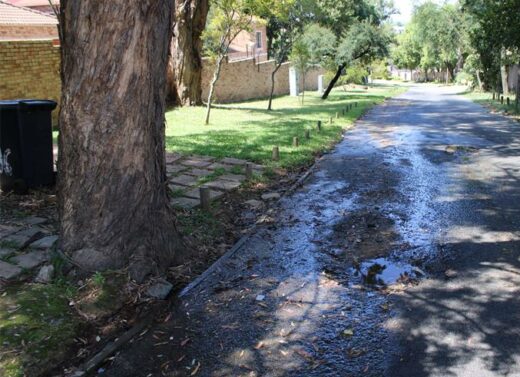
“The road is literally disintegrating. Water is running under the asphalt and coming out through cracks and potholes. The edges are collapsing, the middle is breaking up, and the ground is permanently saturated.”
Visible damage stretches along large sections of the roadway. Road shoulders show clear erosion, while multiple potholes suggest prolonged underground water pressure. In some areas, the asphalt appears to be lifting and separating, a common sign of water intrusion beneath the surface layer.
Also read: Potholes multiply as water leak forces excavation of Broadacres Drive
Krush said the situation is symptomatic of a broader storm water management challenge facing the city. He pointed to similar failures along the Braamfonteinspruit and the Jukskei River, where collapsing embankments, damaged bridges, and failing retention systems have placed both infrastructure and private property at risk.
“What we are seeing here is not isolated. Across the city, storm water systems are under strain. Without proper maintenance, adequate funding, and correct design implementation, infrastructure will continue to fail.”
Ven der Merwe further questioned the decision-making process that led to the current drainage arrangement, alleging that the diversion received approval despite its long-term consequences. He argued that the storm water should have been linked directly to the existing drainage network, rather than released in a way that allows constant surface flow.
Johannesburg Roads Agency was approached for comment regarding the storm water design, whether the diversion was formally approved, whether any structural assessments have been conducted, and what remedial measures may be planned. We will publish their response as soon as we receive it.
Follow us on our Whatsapp channel, Facebook, X, Instagram and TikTok for the latest updates and inspiration!