Lonehill Dam’s foreign plant clean up comes to a halt due to lack of equipment
Environmentalists battling the invasive plant at Lonehill Dam have been forced to suspend their cleanup efforts, due to inadequate equipment, after weeks of trying to get ride of the stubborn plant.
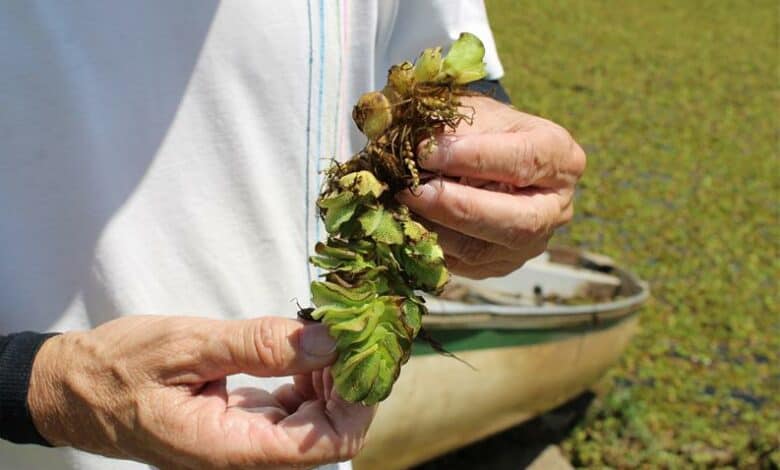
The critical efforts to eradicate the invasive foreign salvinia molesta plant, threatening to engulf the Lonehill Dam, have come to an abrupt halt.
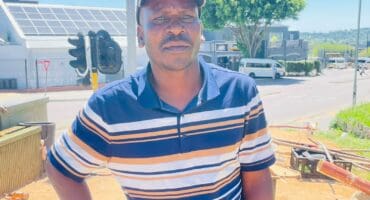
Donald Movundlela, a dedicated environmentalist at the forefront of the cleanup operation, revealed that the team has been forced to temporarily suspend their activities due to a lack of essential equipment.
Despite his persistent follow-ups, Movundlela said he has yet to receive a solid response, leaving the fate of the dam, and its ecosystem, hanging in the balance. Movundlela said the equipment to clean up salvinia molesta would cost R150 000.
Also read: Over R100 000 needed to clean up foreign plant covering Lonehill Dam
“The equipment should be sorted out soon. I have been following up with the suppliers and, hopefully soon, we will be going back to clean the dam.”
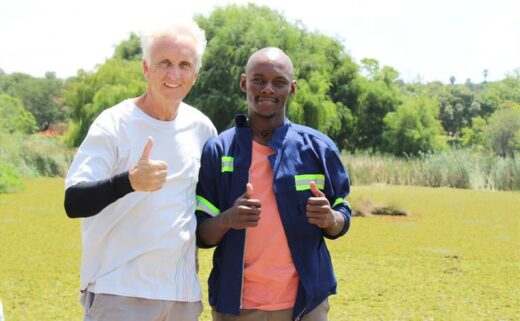
According to Movundlela, the key to resuming their efforts lies in acquiring specialized machinery, specifically a conveyor-like system designed to pinpoint and extract the salvinia molesta plant without causing harm to the surrounding environment.
He revealed that their initial plan, to drain the dam’s water and temporarily relocate the fish to a holding tank, has been scrapped, noting the need for a more targeted and efficient solution to tackle the invasive plant infestation. “The equipment won’t affect the fish in the dam at all. It would work like those pipes used to clean swimming pools, so, it is safe.”
Also read: Lonehill Dam overrun by mysteriously aggressive plant
However, this experience has been etched into Movundlela’s memory. He reflected on how disheartening it was to dedicate himself to cleaning a particular area, only to return the next day and find it in disarray once more. As if his efforts had been completely undone. “I did not expect to run into a circus like this, but I’m taking it as a learning curve, and a challenge in my career. I won’t lie, this came with so much pressure.”
Movundlela was able to find the origin of the plant. He said, according to Wikipedia, the plant, which infested a large portion of Lake Kariba between Zimbabwe and Zambia, is an aquatic fern and native to south-eastern Brazil.
Salvinia molesta is a free-floating plant that does not attach to the soil, instead it remains buoyant on the surface of a body of water. The fronds are 0.5–4cm long, and broad, with a bristly surface caused by the hair-like strands that join at the end to form eggbeater shapes.
Read more: The sewage issue at Lonehill Dam persists despite Johannesburg Water’s repairs
“The plant comes from Brazil, then Zimbabwe, and sort of made its way to South Africa. This one here is thriving and grows back quickly because of the sewage that is leaking into the dam. So, that is also making it hard for us to complete the cleanup because it is able to get its nutrients. Even if you remove its stern, it will still grow back again in just two days.”
Follow us on our Facebook, X, Instagram, and TikTok pages. Join our WhatsApp group for any story ideas you may have.