Bertha Gxowa’s grave site declared a provincial heritage site
Women’s rights activist honoured.
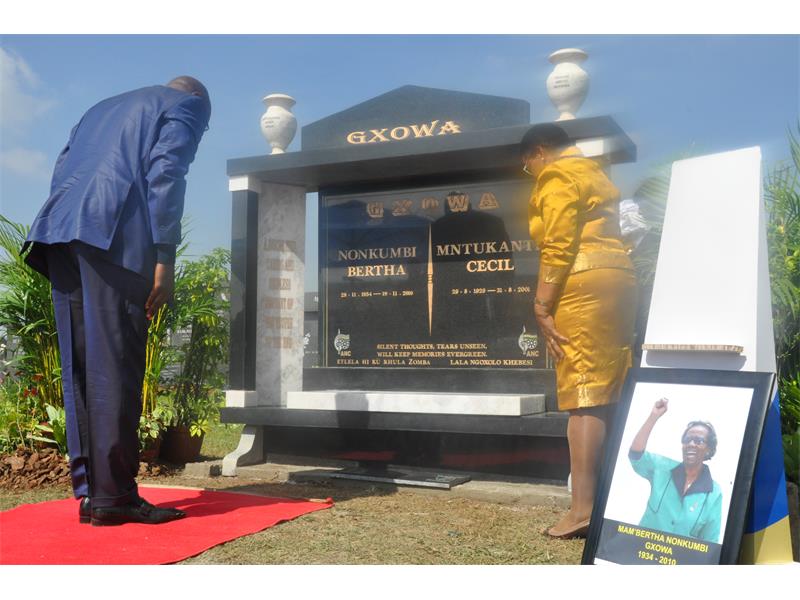
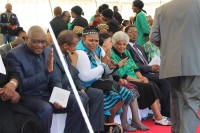
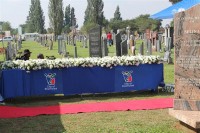
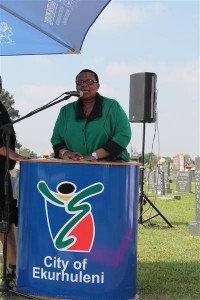
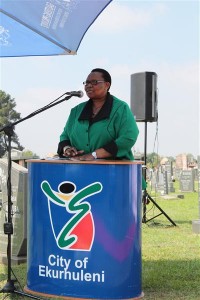
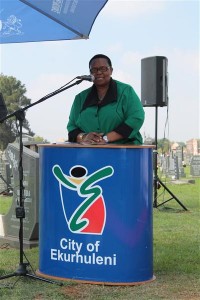
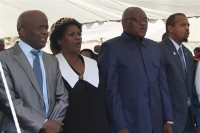
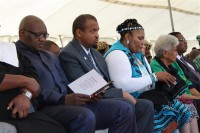
The Thomas Nkobi Cemetery was filled with family members and dignitaries, last Saturday, when the grave site of Ma’ Bertha Gxowa was declared a provincial heritage site.
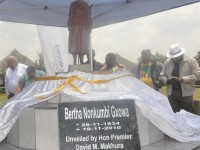
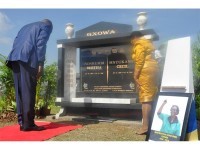
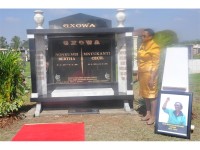
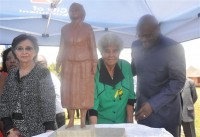
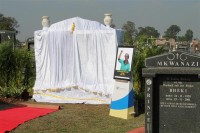
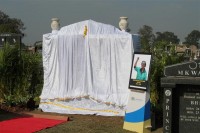
The event, hosted by the metro, in partnership with the Gauteng provincial government, saw a beautiful a tombstone, statue and plaque being unveiled as part of the day-long commemorative day in Gxowa’s honour.
The event kicked off with a breakfast for family members and government officials and, from there, moved to the cemetery, where the tombstone and plaque were unveiled and the site declared a provincial heritage site.
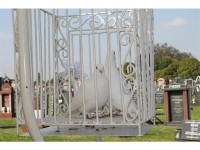
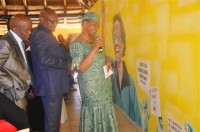
From there guests travelled to the Ke-Ditselana Cultural Village, in Vosloorus, where a statue of Gxowa was unveiled.
The event culminated in a memorial lecture delivered by the former mayor of Tshwane, Gwen Ramokgopa, in the Germiston Banquet Hall.
Bertha Gxowa was born on November 28, 1934, in Germiston and died on November 19, 2010, in Johannesburg.
She was one of the leaders and organisers of the 1956 Women’s Anti-Pass March.
Gxowa attended school in the Germiston location and grew up there.
Her father was a garment worker who had become the first black person to work on the cutting floor, work that was previously reserved for white labourers only.
Her experiences in the Germiston location triggered her interest in opposition politics, because permits were required to live and to move in and out of the location.
As a result, Gxowa volunteered to be in one of the first groups of defiance campaigners who went into Krugersdorp without permits.
She was arrested for this and spent 10 days in prison, after refusing to pay a fine.
Gxowa started her working life as an office assistant for the South African Clothing Workers’ Union, where she collected subscriptions from factories and participated in wage negotiations.
As a result, the union sent her to a commercial college where she studied bookkeeping and shorthand.
Signing up to join the ANC Youth League during the anti-Bantu education campaign strengthened her involvement in politics, but her involvement was quickly shifted to focus on women’s issues.
She became a founder member of the Federation of South African Women, which organised the historic women’s march against pass laws in 1956.
Gxowa travelled the entire country with Helen Joseph, collecting petitions that were to be delivered to the Union Buildings during the march; 20 000 petitions were collected.
Between 1956 and 1958, Gxowa was a defendant in the Treason Trial and, in 1960, she was banned under the Suppression of Communism Act, a status she retained for 11 years.
Once her banning order was lifted, she joined the South African National Tuberculosis Association, doing community work.
She also went back to her church, the African Methodist Church, which, she believed, was the only church that stood for the cause of black people.
In 1990, after the unbanning of all political parties, Gxowa was called upon to re-organise the ANC’s Katlehong branch.
She started a women’s social club that was invited to participate in voter education during the 1994 election campaign.
Gxowa’s other activities involved sitting as chairman on the boards of two women’s skills development projects, Malibongwe and Kwazekwasa. Both these projects are committed to the total emancipation of women.
Gxowa was married to the late Cecil Mntukanti Gxowa, and had five children.
She died at the age of 76, from complications after an operation.
(Information on Gxowa’s history obtained from: https://www.sahistory.org.za/people/bertha-gxowa-mashaba)