Ekurhuleni moves ahead with solar and gas-to-power projects
The 400MW independent power procurement programme is expected to attract R8.5b in private investment, create thousands of jobs and help reduce the city’s reliance on bulk electricity purchases.
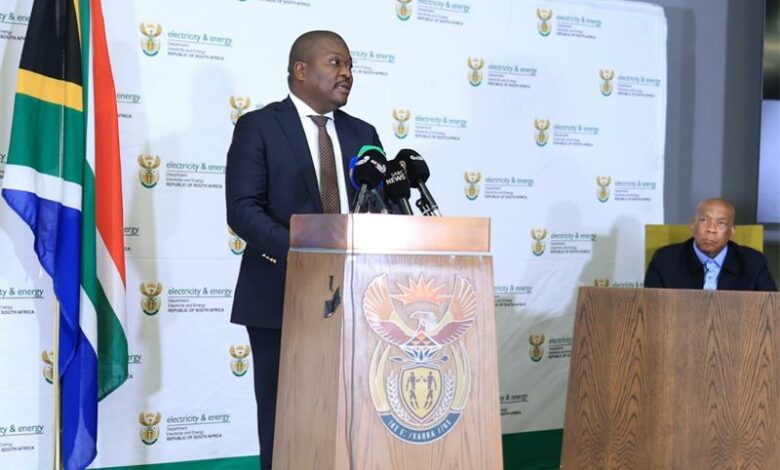
The City of Ekurhuleni has become the first municipality in South Africa to officially implement the Energy Partnership Programme (EPP), paving the way for the procurement of 400MW of new electricity generation capacity through independent power producers (IPPs).
Executive Mayor Alderman Nkosindiphile Xhakaza welcomed the announcement by the Minister of Electricity and Energy, Dr Kgosientsho Ramokgopa, describing it as a significant development in the city’s efforts to address energy security and attract investment. The programme will comprise 100MW of solar photovoltaic (PV) generation and 300MW of gas-to-power capacity.
According to the city, the initiative is expected to unlock approximately R8.5b in private investment and create about 5 000 direct and indirect jobs. Of these, 4 350 are projected to be created during construction, with a further 350 permanent positions expected.
ALSO READ: City of Ekurhuleni assures residents of drinking water safety standards
The city also anticipates saving approximately R36b over 20 years on bulk electricity purchases, while helping to cushion residents and businesses against electricity tariff increases.
The mayor said the programme was an important step towards addressing the effects of load-shedding and electricity supply instability on households and businesses.
“By being the first to implement this programme, we are not just talking about fixing the energy crisis, we are actively solving it,” he said.
R16.2b infrastructure investment anticipated
Beyond the 400MW procurement programme, the city estimates that infrastructure investment across its broader energy initiatives could reach R16.2b.
The anticipated investment is distributed across four areas:
• Solar PV: R10b.
• Waste-to-energy: R4b.
• Natural gas: R1b.
• Innovative technologies: R1.2b.
These figures represent the city’s projected investment across its energy initiatives and should not be confused with the R8.5b in private investment specifically anticipated from the 400MW programme.
The city said the approval would provide greater certainty to developers and investors involved in its IPP programme, allowing some appointed producers to move towards financial close and begin construction of their power plants. Other developers are expected to submit completed funding applications to commercial banks to secure the capital required for their projects.
Programme dates back to 2017
Ekurhuleni began its independent power producer programme in 2017 and has since appointed more than 75 IPPs through two bid windows. The city first applied for a Section 34 determination under the electricity generation regulatory framework in 2020.
According to its statement, the application progressed through the review stage and was awaiting concurrence from the National Energy Regulator of South Africa (NERSA).
The city subsequently finalised other requirements, including its power purchase agreement (PPA) contract and the establishment of an escrow account.
In March 2026, the city received written comments from the Department of Electricity and Energy following consultation under Section 33 of the Municipal Finance Management Act regarding projects in its second IPP bid window. The department clarified that organs of state must apply for a Section 34 determination when developing or procuring new electricity generation capacity.
Ekurhuleni then submitted an application covering both Bid Window 1 and Bid Window 2 of its IPP programme. The city describes the Section 34 determination as the final approval required to enable the projects to proceed. With the determination in place, appointed IPPs can advance towards securing financing, finalising project requirements and commencing construction, subject to the completion of the remaining project-specific processes.
What it could mean for residents and businesses
The programme comes as electricity reliability and affordability remain important concerns for households and businesses across Ekurhuleni, a major industrial and commercial centre. Additional generation capacity could help diversify the city’s electricity supply and reduce its dependence on bulk purchases.
The anticipated investment and employment opportunities could also benefit local communities, particularly during the construction phase.
The city also held a sod-turning ceremony on October 22 at the Ekurhuleni Fresh Produce Market to mark the start of construction of the market’s 25MW solar PV and sustainable energy storage project under the Ekurhuleni Independent Power Producer Programme (EIPPP).