Germiston leads SA’s fight against plastic waste
World Environment Day was marked with a call to #BeatPlasticPollution, as Minister Dion George visited Germiston’s Extrupet recycling facility and launched South Africa’s first Coastal Climate Change Adaptation Plan to tackle pollution and climate threats.
Thursday marked World Environment Day (WED), commemorated annually on June 5 since its establishment in 1973.
It is the largest international observance dedicated to the environment, aimed at raising global awareness and encouraging action on pressing environmental issues.
This year’s theme, ‘#BeatPlasticPollution’, served as a global call to action, urging governments, cities, organisations, and industries to invest in and implement sustainable solutions to end plastic pollution and foster a circular economy.
ALSO READ: Institute of Race Relations demands list of expropriating authorities from government
Minister of Forestry, Fisheries and the Environment, Dr Dion George, emphasised that these are not isolated issues but are deeply interconnected—driven by three global environmental crises: climate change, biodiversity loss, and pollution.
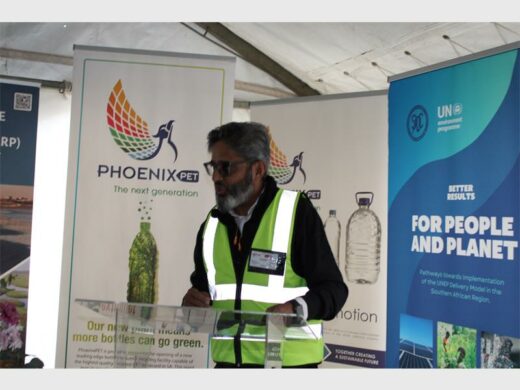
“These complexities, driven by human activity and unsustainable patterns of consumption and production, demand urgent, coordinated action across all levels of society,” Dr George said.
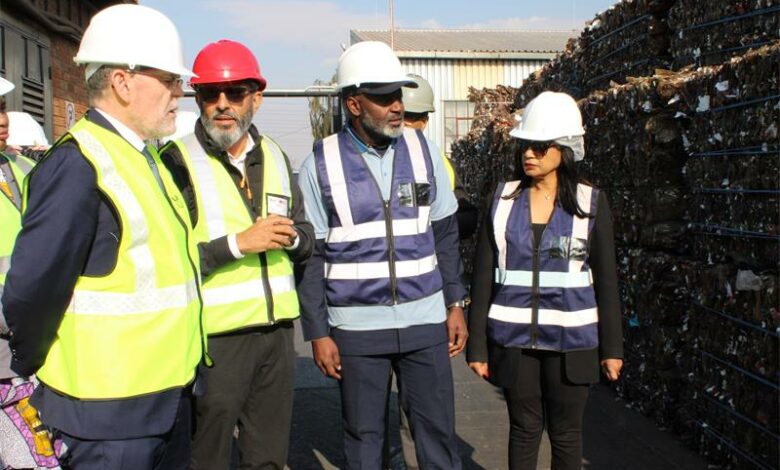
The minister made these remarks during his visit to Extrupet, a plastic recycling centre located in Wadeville, Germiston.
The visit was particularly significant as it aligned with the 2025 World Environment Day theme: Ending Plastic Pollution.
ALSO READ: Gauteng CoGTA outlines plans to improve local government performance
Earlier that day, the minister launched South Africa’s inaugural Coastal Climate Change Adaptation Response Plan (CARP)—the country’s first sector-specific climate adaptation plan focused on enhancing climate resilience.
CARP was developed in alignment with the Climate Change Act (No. 22 of 2024), the National Climate Change Adaptation Strategy, and key international frameworks such as the Paris Agreement and the Sendai Framework for Disaster Risk Reduction.
CARP aims to raise public awareness about the dual threats of climate change and plastic pollution to coastal ecosystems, while showcasing an integrated, science-based approach to building coastal resilience.
Extrupet, which has operated in South Africa for 25 years, recycles both PET and HDPE bottles. It is the leading plastic recycler on the African continent and the largest producer of food-grade recycled PET (rPET).
“This was made possible by the voluntary Extended Producer Responsibility (EPR) scheme started in 2000 with PETCO—a clear example of how a functional producer responsibility organisation and local industry can collaborate to create a circular economy and divert plastic waste from landfills,” said Chandru Wadhwana, joint managing director at Extrupet.
The minister was given a tour of one of the largest and most advanced PET recycling facilities on the continent. Extrupet converts waste PET bottles into various grades of PET flakes and chips, which are then used to produce fibre, thermoformed packaging, food-grade materials, and strapping-grade materials, ensuring high-quality end products for various packaging and industrial applications.