Gauteng learners showcase innovation at schools of specialisation festival
The Gauteng Department of Education celebrated the province’s brightest minds as learners presented inventive solutions to real-world challenges in science, technology and sustainability.

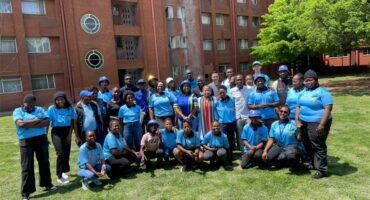
Katlehong Engineering School of Specialisation (SoS) took centre stage at the 2025 Gauteng Maths, Science, ICT and Engineering Schools of Specialisation Festival.
The school impressed audiences with its groundbreaking hydrogen-on-demand fuel-saver Car, a 200-plate innovation that uses water as a fuel source to reduce costs and carbon emissions.
The inventive approach earned Katlehong third place in the Engineering category, showcasing the depth of talent and technical skill emerging from Gauteng’s next generation of innovators.
ALSO READ: Germiston Athlete sets focus on Athletics South Africa
Hosted by the Gauteng Department of Education (GDE) at Letsibogo Girls Maths, Science and ICT School of Specialisation in Soweto, the annual festival brought together 28 Schools of Specialisation from across the province, including 19 Maths, Science and ICT schools and nine Engineering schools.
The event provided a platform for learners to display creativity, innovation and problem-solving abilities across the STREAM subjects: science, technology, reading, engineering, art and mathematics.
Gauteng Education MEC Matome Chiloane praised the learners for their ingenuity and perseverance, reflecting on the broader vision of the Schools of Specialisation programme.
“These projects are not just about science and technology,” he said. “They teach our learners the values of life – commitment, research, making mistakes and learning how to correct them, teamwork and perseverance. They will carry these lessons with them forever.”
He emphasised that the Schools of Specialisation initiative remains one of the department’s most transformative programmes, designed to bridge the gap between education and the corporate world and to nurture skills aligned with South Africa’s growing industries.
Throughout the festival, learners presented innovative projects addressing real-world challenges in sustainability, technology and community development.
Standout projects included Letsibogo Girls MSI SoS’s Smart Fabric Jacket, which automatically adjusts its temperature to match changing weather conditions; Mandisa Shiceka MSI SoS’s Hydroponic and Solar-Powered Smart House promoting sustainable living; and UJ Academy MSI SoS’s Smart Facial Recognition Register, an automated attendance system powered by motion detection and artificial intelligence.
These projects, together with Katlehong Engineering SoS’s hydrogen-on-demand fuel-saver car, reflected how Gauteng’s Schools of Specialisation are cultivating critical thinkers and problem-solvers shaping the future through STREAM education.
MEC Chiloane congratulated all participating schools, commending their creativity and determination.
ALSO READ: Partnership offers IT skills to jobless local youth
“Your projects show that innovation and education truly have the power to change lives,” said Chiloane. “Our Schools of Specialisation have been incubated and supported to grow, but we must reach a point where we extend this competition to other schools.
“For example, our Engineering Schools of Specialisation should compete with Technical Schools. This will uplift learners across the system rather than having our nine Engineering Schools compete amongst themselves.
“If we allow our SoS to compete with other schools, we will uplift the event itself because these projects make a real difference in our children’s lives.”
The GDE’s structural alignment of Schools of Specialisation to Gauteng’s five economic corridors ensures that learners are equipped with skills that feed directly into the province’s key industries, from manufacturing and logistics to ICT, renewable energy and innovation.
“Since the inception of the programme in 2016, the GDE has launched 36 Schools of Specialisation across the province, each focusing on one of five key disciplines: maths, science and ICT; commerce and entrepreneurship; engineering; sports; and performing and creative arts,” said Chiloane.