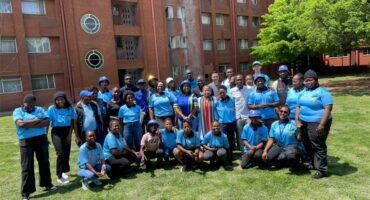
Human Settlements hosts Ekurhuleni public hearings on illegal eviction law changes
Chief Director of Legal Services Paul Masemola outlined key amendments to the PIE Act, including stronger accountability, improved coordination between government spheres and harsher penalties for illegal land occupation incitement.

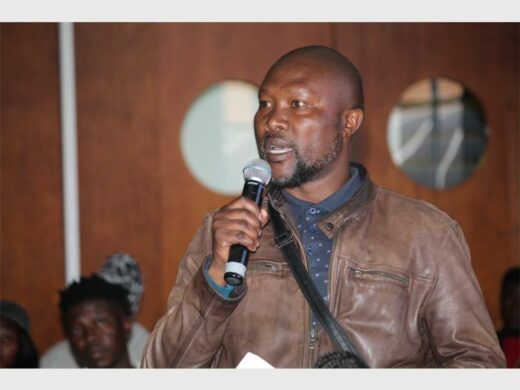
Paul Masemola, who is the Human Settlements chief director of legal services, led the public information Sessions on the Prevention of Illegal Eviction from and Unlawful Occupation of Land (PIE) Amendment Bill.
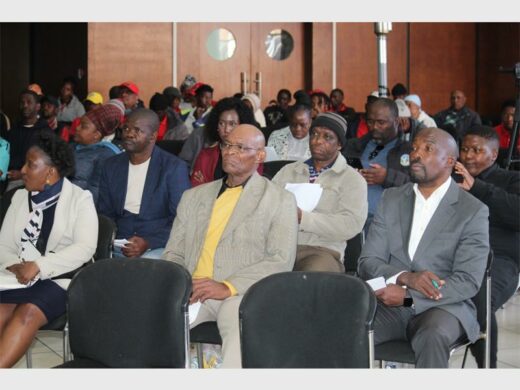
The session was held at the Germiston Banquet Hall with members of the community in attendance.
The Minister of Human Settlements, Thembi Simelane, also extended the period for the submission of public comments on the Bill. The extension is from July 6 to August 6.
ALSO READ: Beware of housing scams – Gauteng Human Settlement warns
South Africa continues to face deep and persistent socio-economic challenges arising from insecure tenure, unlawful occupation, and the widespread occurrence of forced evictions.
Despite the constitutional guarantee of access to adequate housing and protection against arbitrary eviction (Constitution of the Republic of South Africa, 1996, Section 26), millions of households continue to reside in informal settlements, backyard dwellings, makeshift accommodation and other forms of insecure tenure.
“Estimates suggest that more than one million households, representing well over four million individuals, live in informal settlements, often on public or peri-urban land.
“These communities remain at constant risk of displacement and hundreds of thousands of people continue to face eviction annually, frequently without meaningful engagement, legal representation, or provision of alternative accommodation,” said the department.
“Forced evictions severely undermine a wide range of civil, political and socio-economic rights. Research shows that eviction, particularly when sudden, violent or procedurally unlawful, results in displacement, household fragmentation, loss of livelihood, loss of schooling for children, deterioration of social support networks and heightened vulnerability to crime, exploitation and poor health outcomes,” said Masemola during the hearing.
ALSO READ: Department of Human Settlement warns of housing scams
“Women, children, the elderly, persons with disabilities, migrant households and those surviving on informal or precarious livelihoods face disproportionate harm.
“These impacts reinforce spatial inequality and entrench intergenerational cycles of poverty.
“Many municipalities struggle to maintain credible housing waiting lists, undertake regular land audits or acquire serviced land for low-income households.
“As a result, many families resort to unlawful land occupation as a survival strategy when formal systems fail to provide access to housing or land close to economic opportunities,” said Masemola.
ALSO READ: Gauteng Human Settlements Department issues flood warning as rainy season begins
Masemola added that the Bill seeks to repeal the Prevention of Illegal Eviction from and Unlawful Occupation of Land Act of 1998 (PIE Act), which was enacted to prevent random evictions and to address historical injustices where people were removed from land without due process.
Summary of changes
The proposal amends the PIE Act to close legislative gaps, standardise definitions, and ensure evictions are carried out fairly, transparently, and in line with constitutional rights.
“It seeks to prevent unlawful occupation proactively while requiring meaningful consultation, legal advice, and feasible alternatives before any eviction.
“The framework mandates that municipalities, provinces, and national government coordinate on land assembly, emergency housing, and funding to avoid homelessness. It also strengthens accountability mechanisms for landowners, courts, and state organs involved in eviction proceedings,” said Masemola.
The Act highlights that the overall aim is to baance property rights with human dignity, creating a more just, equitable, and development-friendly human settlements environment.
Insert the following definition within the amended PIE Act to ensure consistent interpretation by courts:
a. “home” to align with the Constitution,
b. “land and building or structures on land to align with the existing definition of landed property,
c. municipality to be aligned with the Municipal Systems Act,
d. temporary accommodation to meet the minimum standards as prescribed in the Code,
e. Other
f. Correct the following definition of
i. State President (remove word State next to President)
ii. Person in charge refined to be a person who has legal authority to administer or control the land.
• Section 3 – Put deterrent measures/ mechanism for persons who will incite people to occupy land as part of position jogging. And add a fine of 2 million or imprisonment not exceeding 2 years or both such fine and imprisonment. This harmonises the provisions proposed in the private members’ Bill, which recommended 5-year imprisonment.
ALSO READ: MMC of Human Settlements councillor Mabaso warns of an imposter on TikTok
• When the Court convict someone who committed this offence, the Court must order that all assets/money acquired using the proceeds of position jogging.
•Section 4: Principle of Joinder – When someone is instituting the proceedings for evictions, they must include provincial departments and any other organ of state that has an interest in the proceedings (This may incl National Departments).
• Section 4 – Insert Section 4.10. The court to consider and order demolition or removal of improvement of structures on the land, and this includes harvesting of crops. This is to assist or be beneficial to the evictee.
• Section 4.13. Inserted that the Court must determine who qualifies for Alternative accommodation and whether it is temporary and define the period.
• Section 5: Inserted additional considerations that the Court should consider – Agility and swiftness in granting an agent court order as the pace and scale of unlawful occupation is often fast.
• Section 6 – Insert mediation measures that are mandatory where the organ of state is the owner of land.
Over and above information sessions, members of the public are also urged to submit their comments to PIE. AmendmentBill@dhs.gov.za.
TEnquiries: Tsekiso Machike, Spokesperson to the Minister on 077 410 5050 Tsekiso.machike@dhs.gov.za.