Lutheran Church awarded a blue plaque
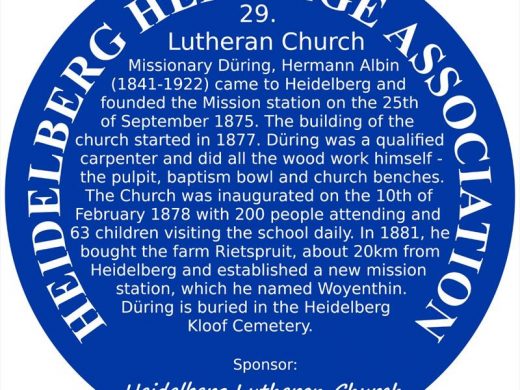
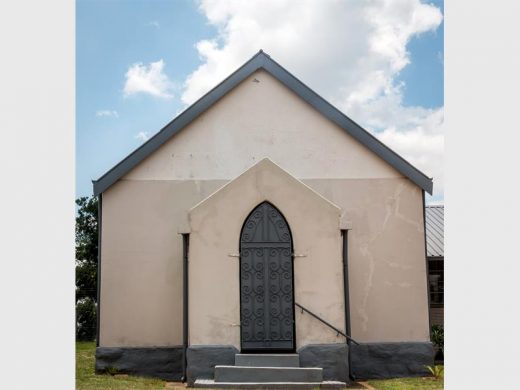
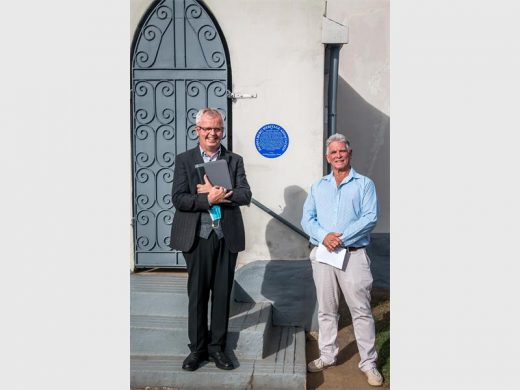
The Lutheran Church in Spruyt Street is the latest historical building to be honoured with a blue plaque.
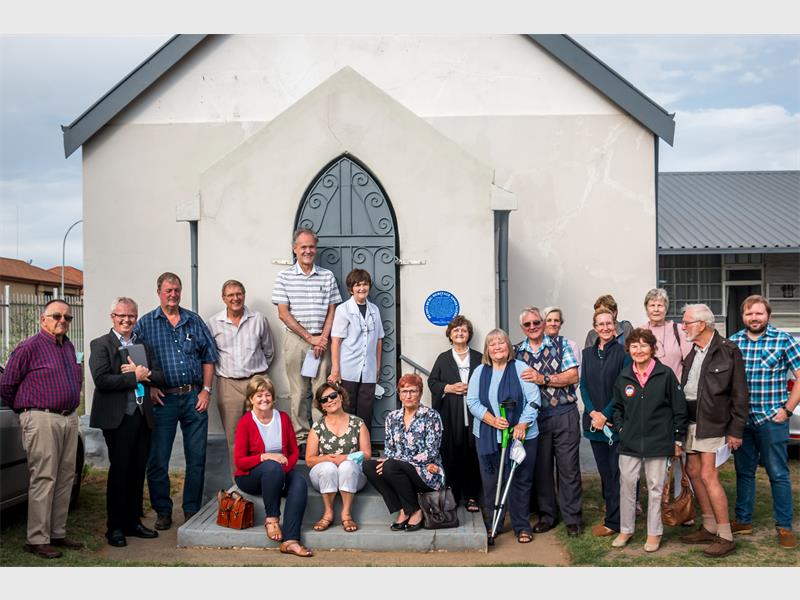
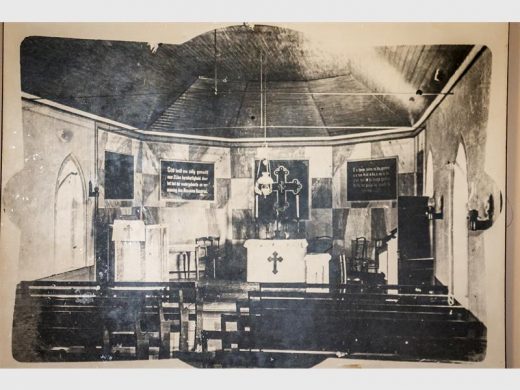
It was one of the first churches built in Heidelberg. The recorded date is 1878 and was commissioned by the Berlin Mission Society – Germany.
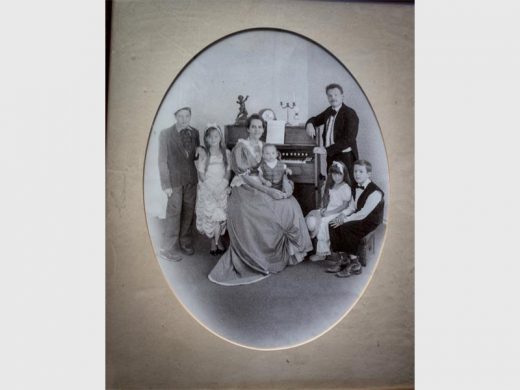
The first minister responsible for the building and purchasing the church was Herman Albin Düring, who was born on March 1, 1841.
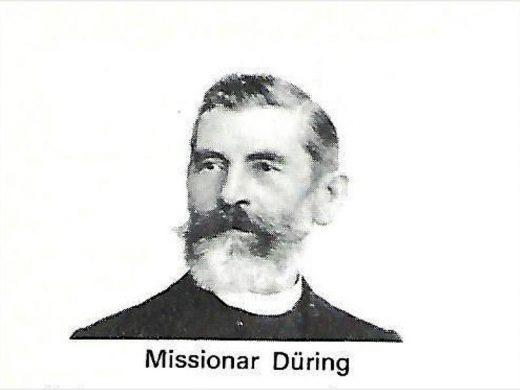
He arrived in South Africa in 1869 and died on September 5, 1922, in Heidelberg.
Düring was married twice, but marital dates were not recorded. His first wife was Louise Amalie Bertha Salomon, born September 25, 1838. She died on May 13, 1904, in Heidelberg.
His second wife was Anna Selma Leuschner, who was born March 5, 1872. She died on March 13, 1950, in Heidelberg.
Düring came to South Africa as a missionary and started working in Lydenburg and Botshabelo until 1875.
He then came to Heidelberg to establish a mission station. When arriving in Heidelberg, he struggled to find accommodation for himself and his family.
He stayed in an ox-wagon until the mayor of Heidelberg, Mr Marais, gave him a small dwelling to stay in.
Düring purchased a piece of ground for the Berlin Missionary Society, where he built a dwelling and started training, as well as held church services for the African community of Heidelberg. It did not take long once he started and he soon had 22 adults and 20 children in attendance.
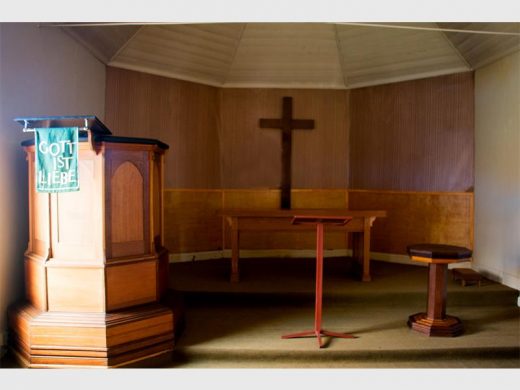
In 1877, Düring started building a church. He was a qualified carpenter and did all the woodwork in the church himself.
When the church opened in 1878, there were already 200 people attending. In 1879, 63 children attended the school daily.
The residents of Heidelberg objected against the mission work and complained about the representative of Foreman Sebolo and his followers.
Düring proceeded to buy the farm Rietspruit in 1881 that was approximately 20km from Heidelberg, where he established a new mission named Woyenthin and worked there until he retired.
The furniture in the church was all removed and taken to Woyenthin.
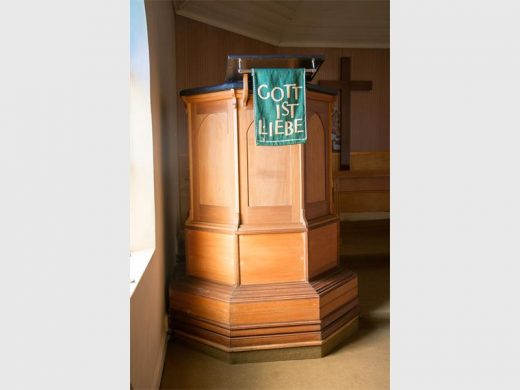
Düring and his wives are buried in the Heidelberg Kloof Cemetery. They are not buried together. The church is still in operation one Sunday per month.
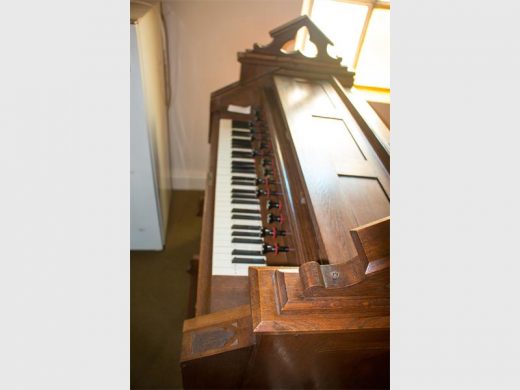
The services are conducted in German. The pedal organ is still working well.
History of the Lutherans in Heidelberg
White Lutherans have been the dominant group in the Lutheran churches throughout its history in South Africa.
Their social base has been in the German-speaking farming community. German missionaries were able to impose this theology on all Lutheran churches, black and white.
Traditional Lutheran church historiography has tended to reduce the history of Lutheranism in South Africa to the history of the German missionaries and settlers.
History of German missionaries in South Africa
The Berlin Mission Society started sending missionaries to South Africa as early as 1833. Many missionaries with close ties to Berlin also had been working in South Africa for the London Missionary Society and the Rhenish Mission, resulting in South Africa being chosen as the first country where mission fieldwork was conducted by the Berlin Mission Society.