St Ninian’s Anglican Church receives blue plaque status
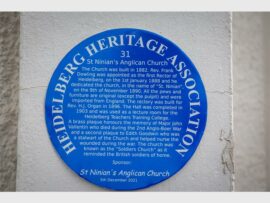
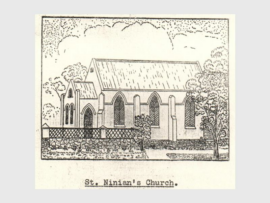
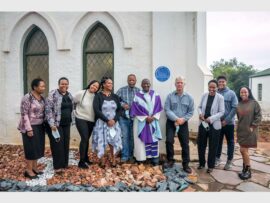
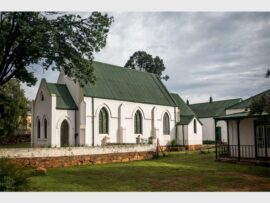
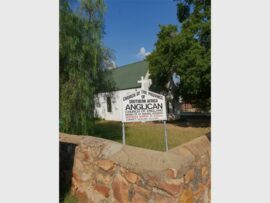
St Ninian's Anglican Church received blue plaque status on December 5 from Tony Burisch of the Heidelberg Heritage Association.
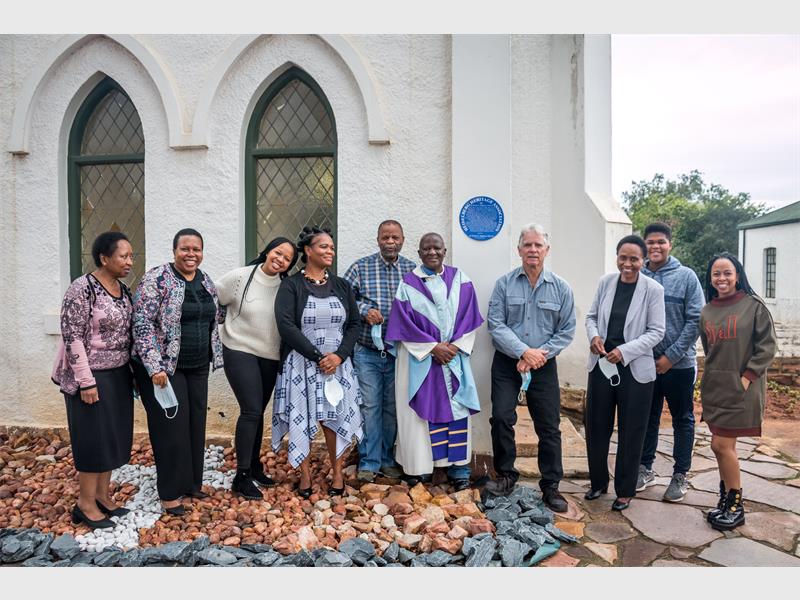
The church has been a mainstay in Heidelberg since 1882 and is of Scottish heritage.
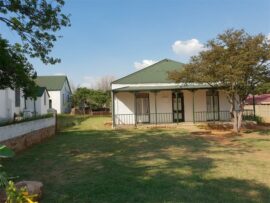
It was built between 1882 and 1885. The parsonage was completed in 1896.
The pews and furniture were all imported from England.
Rev George Sharkey, a travelling minister in the area, visited Heidelberg on a few occasions. His first visit was in 1874 and then again in 1875. He maintained that an English-speaking church in Heidelberg was needed.
The first reverend who was appointed at the church was Rev Frank Dowling.
The church was mainly visited by British troops while they were staying in Heidelberg during the Anglo-Boer War. This led to the church being known as ‘the soldiers’ church’ during the second Anglo-Boer War. Troops that camped nearby were allowed to attend services on Sundays.
One Private Tucker wrote in his diary:
“August 12, 19:00: Sunday evening, we were permitted with a pass signed by the company officer to go to church in town. I went and quite enjoyed the service. It was like being at home.”
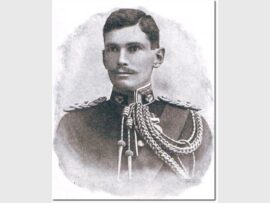
Maj JM Vallentin, the district commissioner of Heidelberg, also visited the church regularly. He served as brigade major during the siege in Ladysmith, where he contracted enteric fever (typhoid).
While recuperating, he was appointed as the district commissioner of Heidelberg. His office was the stone building in Louw Street.
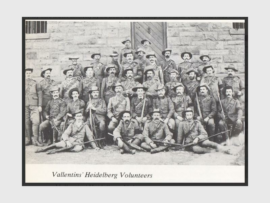
In early 1901, he was ordered to raise volunteers for law enforcement and counter-insurgency in the Heidelberg district.
The unit was known as Vallentin’s Heidelberg Volunteers or the Nigel Mine Guards. The unit never exceeded 200 men and was commonly known as the ‘Witkoppen’ by the Boers due to their white hatbands.
Many men were known as joiners and were hated by the Boers and shown no sympathy if captured.
Vallentin left Heidelberg in December 1901 and commanded a mixed force of men under Gen Plummer near Ermelo.
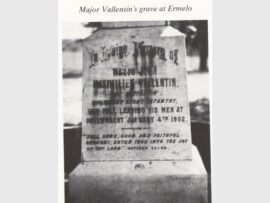
He was killed in battle on May 4, 1902, in Onverwacht, 32km east of Ermelo.
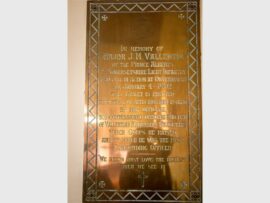
A brass plaque was erected in the church to honour the memory of Vallentin by his fellow officers.
Vallentin is buried in a cemetery in Ermelo.
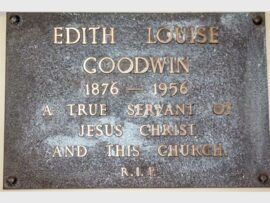
A second plaque was installed in the church in memory of Edith Goodwin, who helped nurse the injured during the Anglo-Boer War.
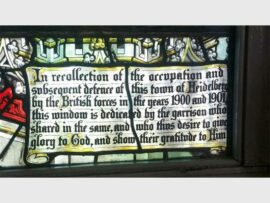
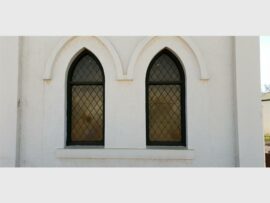
The church’s stained glass windows also add to the character of the church.
Dr Nixon ordered the stained glass windows from England, which he chose especially in memory of his wife. The window was then mistakenly sent to China. When it arrived in Heidelberg, and after establishing that it was the wrong window, it was not sent back but installed on the northern side of the church.
When the original window arrived later, it was installed on the southern side of the church building.
The church hall was completed in 1903 and used as a lecture room for the Heidelberg Teachers’ College between 1912 and 1914.
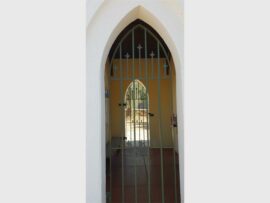
Thereafter, the teachers’ college was moved to the now known Army Gymnasium. The church porch was built in 1930.