Multi-billion rand project launched
Kanana City construction to change the landscape.
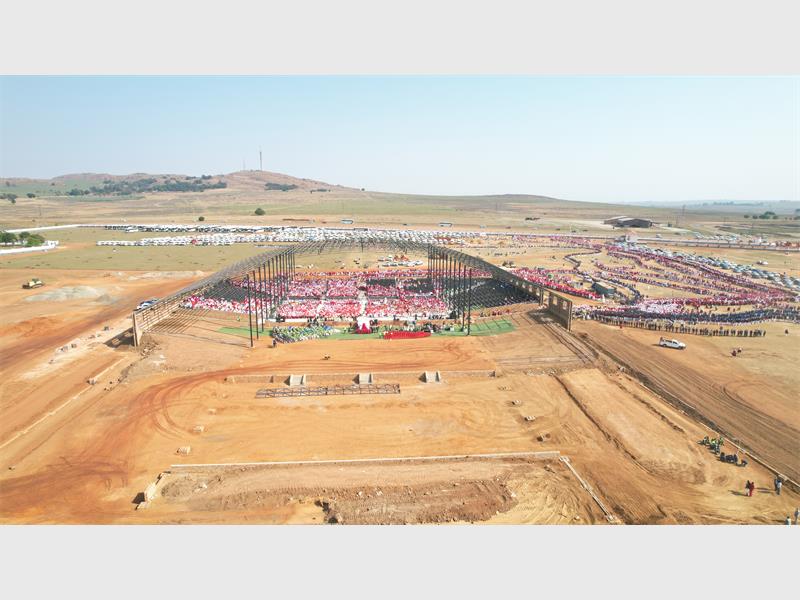
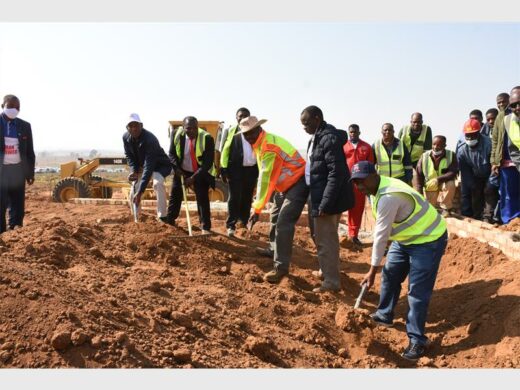
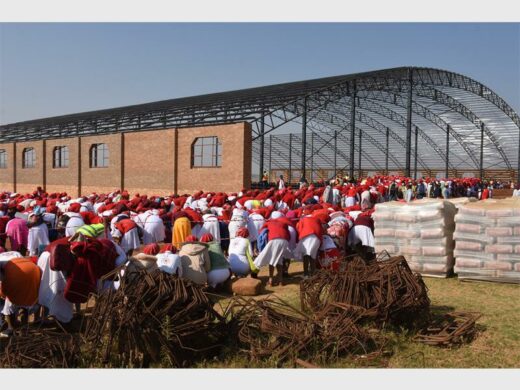
The International Pentecost Holiness Church (IPHC), also known as the IPCC, held a sod-turning event on September 25 to mark the start of the first phase of the construction project of a new church precinct in Heidelberg.
Up to today everyone always asked what is happening at the premises on the road between Heidelberg and Nigel, in the big open property with white and red walls around it.
The road between Heidelberg and Nigel was a beehive of activity as transport came from all roads, leading to the IPHC property. Guests and congregation members started arriving as early as 06:00.
On the grounds, facilities and a hospitality building will be built to the value of R250m. Other buildings and establishments that will also be built are a filling station, a small shopping complex, brick-making operations, factories for the production of church uniforms (already in operation), toilet paper manufacturing, a hotel, an independent school, a vehicle fitment centre and more.
The estimated cost of the construction is about R3b. Of the 110 hectares, 67 hectares are earmarked for the 50 000-seater dome and 43 hectares will be dedicated to commercial and educational purposes. The precinct will be known as Kanana City.
According to reports, the project will be the IPHC’s greatest creation to date.
The IPHC has a strong congregation amounting to three million people that believed in the vision to be self-sustaining. IPHC spokesperson priest Vusi Ndala said, “The entire development is self-funded through donations and income from entities that have a commercial interest in the church. No loans, bonds or securities are used for any of these projects.
“Having such qualified individuals within our congregation is a testament to our self-reliance. We are an empowered group, one that can draw upon our resources and skills to build something as iconic as Kanana City.
“The dome and medical health centre will form part of the first phase of development, worth R250m, and will be the largest congregational arena in the southern hemisphere measuring 15 000 square meters. The site has over 200 ablution facilities, a food court and other amenities associated with the place of worship,” continued Ndala.
In addition, the church will be involving technical experts from within the congregation in all development phases.
Civil engineers, environmental impact assessors, quantity surveyors and many more will form part of the development team, ensuring the safety and sustainability of the project.
The idea of Kanana City is 60 years in the making. Ever since Comforter Frederick Modise founded the IPHC in 1962, building a city for its people has always been a prime objective.
While current problems have marred the 60th-anniversary celebrations, Ndala said the IPHC, under the current tutelage of Michael Sandlana, is looking towards the next 60 years as it builds a legacy from which its future congregants can benefit and thrive.
The IPHC’s spiritual leader’s mission is to fulfil three objectives, said Ndala: to heal the sick, and to care for widows and orphans.
Sandlana recognises that his duties go beyond the actual church ministry, particularly when observing this rapidly changing world and reflecting on the lessons from the Covid-19 pandemic.
“Sandlana has set out to improve the lives of his congregants from a socio-economic perspective. Healing the sick takes place in the church but taking care of widows and orphans is a social responsibility and it is a continuous, lifelong duty of His Grace.
“Kanana is part of a long-term legacy strategy for the IPHC. It intends to build similar cities, with Melkbosstrand in the Western Cape as a potential site for urban development,” said Ndala.
An additional unspecified amount will later be invested for entertainment, recreational facilities, and education. An independent school and a skills development centre – the latter is already in operation and provides accredited and non-accredited artisanal training to plumbers, electricians, and technical training in renewable energies – form part of this development phase.
The church is working closely with town planners and the Lesedi Local Municipality to ensure its infrastructure development meets industry standards.