
Eye-catching dangers behind contact lenses
With the silly season fast approaching make sure you aren't buying cosmetic contact lenses illegally.
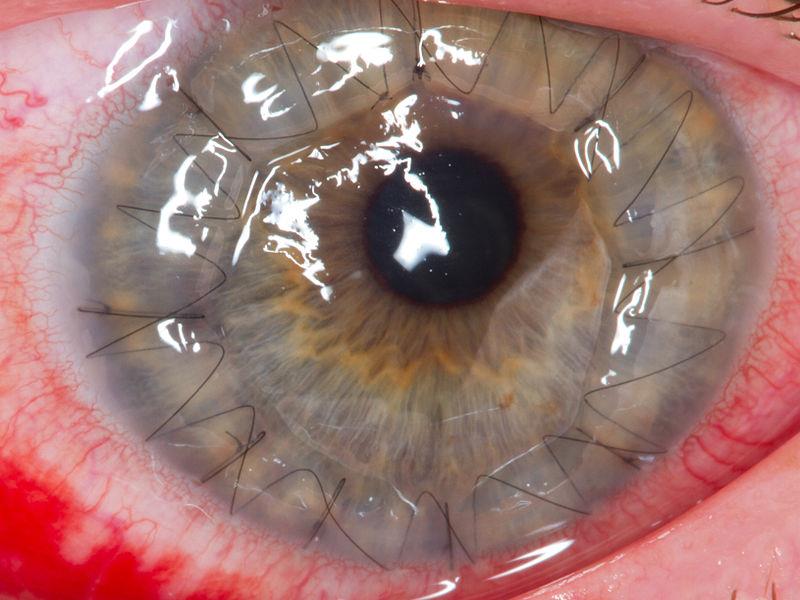
CRAZY eyes, cat eyes or ghost eyes complete the perfect Halloween costume, but who would have thought that the perfect costume could leave you blind
Over the counter contact lens sales are illegal in South Africa. The South African Optometric Association (SAOA) warns consumers that wearing these contact lenses improperly can cause serious eye disorders and infections.
Due to the ocular health risk, the fitting and sale of contact lenses falls within the scope of profession and practice of registered optometrists in South Africa and is therefore regulated by the HPCSA.
When are cosmetic contact lens sales illegal?
IN many countries, including South Africa, a comprehensive eye examination is required prior to fitting and supplying any type of contact lens.
This is a legislated professional act of a registered optometrist. The distribution of contact lenses by unregistered persons is therefore illegal in South Africa.
A concerning development in recent years has been the sale of contact lenses by non-optometric unregulated vendors. These lenses continue to be sold over the internet, fashion and beauty outlets and even at fleamarket stalls.
Due to the unregulated nature of these sales, little is known about the materials and processes used by the manufacturing companies from whom the lenses are obtained.
This means that the lenses may not comply with the standards set by the local (SABS) and international compliance authorities (such as ISO or FDA).
According to the SAOA, cosmetic contact lenses are often advertised by online sales sites as “no prescription necessary” or “fits all sizes”, but the truth is that non-optometric distribution of these lenses place the wearer at a significant risk for irreversible vision loss.
What are the Risks?
CONTACT lens-related vision loss is rare when the correct care and hygiene procedures are followed.
However, research has shown that unmonitored use of cosmetic contact lenses by individuals who have not been trained to use them, greatly increases the risk of permanent vision loss requiring serious surgery (corneal transplant or even the removal of the eye).
When inserted into the eye, the contact lens rests on delicate transparent tissue that covers the iris and pupil known as the cornea.
The cornea needs a good oxygen supply and healthy tears to function properly. The ocular surface is also host to a variety of micro-organisms (bacteria) that usually remain passive unless the ocular environment is disturbed.
When a contact lens is placed on the cornea, it reduces the oxygen supply and changes the tear composition. It may also cause injury to the ocular surface and this can trigger disease-causing (pathological) microbial activity. Scratches (abrasions) on the cornea from the contact lens can weaken the corneal defence and expose it to painful infections (keratitis).
The contact lens, if not properly cleaned and maintained, can easily become contaminated by bacteria and other contaminants.
Common symptoms of contact lens-related corneal infection include redness, burning and tearing, foreign body sensation, light sensitivity, blurry or hazy vision, sticky discharge and eye pain.
To find your nearest SAOA optometrist, log onto www.saoa.co.za or contact 011 805 4517.