Save lives with your free gift of life
Become a donor and save lives with your blood donation.
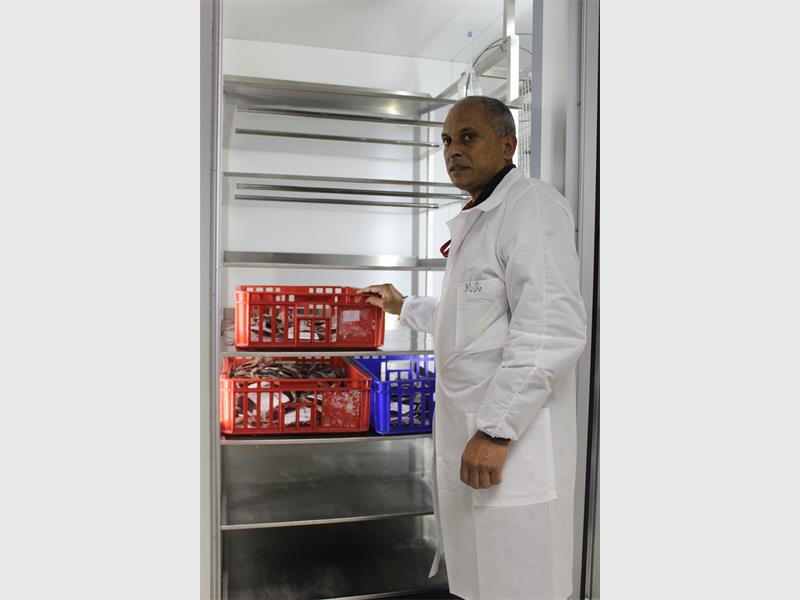
THE empty shelves in the refrigerators at the SANBS laboratory in Pinetown are one of the many reasons behind the organisation’s constant plea for donors to assist in replenishing the low blood stock.
In commemoration of Blood Donor Month, the Highway Mail conducted an interview with the SANBS regional marketing manager, Sifiso Khosa, who emphasised the importance of blood donations, the critical shortage faced by KZN as well as alarming statistics.
Khosa said, “World Blood Donor Day is celebrated on 14 June. This year, the theme for the campaign is, ‘Thank You for Saving My Life’. It focuses on thanking blood donors who save lives every day through their blood donations and strongly encourages more people around the world to donate blood voluntarily. The campaign also aims to highlight stories from people whose lives have been saved through blood donations.”
Each day, 3 000 units of blood must be collected to supply the hospitals in South Africa. The need for blood is on ongoing – every 35 seconds, someone in South Africa needs a blood transfusion.What happens to your blood once you have made your donation: A pint of blood is drawn from a donor. The blood is collected into a sterile bag and labelled. Units are then transported to the nearest SANBS testing and processing lab. In the processing lab, blood is spun down in the centrifuge and then separated into its different components – red blood cells (used to treat patients with anemia or blood loss due to trauma or surgery), plasma (used to treat patients with serious blood disorders) and platelets (crucial in helping blood clot). The blood is then tested to ensure it is safe for transfusion. Local hospitals thereafter place orders with SANBS for blood products based on their needs. Blood is transfused to patients in need, and just one blood donation has the potential to save three lives.
Statistics: Blood donations are used in the following cases: Surgical – 21 per cent, medical – 27 per cent, childbirth and gynaecological needs – 26 per cent, paediatric – 10 per cent, orthopaedic – six per cent, casualty – four per cent, and research/laboratory – six per cent. “Forty per cent of our blood donations come from schools and universities. This month the students start with their examinations, and this affects our collections. We therefore host mobile clinics at corporate companies to help build our stock levels.”
Studies have revealed that eight out of 10 people will need donated blood at some point in their life. While donated blood saves many lives, only one per cent of around 50 million people donate blood.
To become a donor, you must be between the ages of 16 and 65, weigh more than 50kg, lead a sexually healthy lifestyle and be healthy on the day of donation.
For more information, call 0800 119 031 or visit www.sanbs.org.za.