Oil-covered heron dies despite rescue attempt
Centre for Rehabilitation of Wildlife (CROW) was also forced to euthanise a woolly-necked stork that collided with a plane.
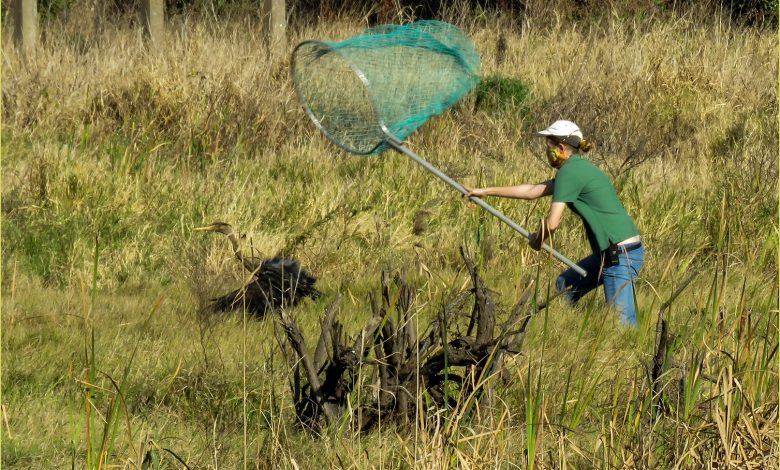
THE Centre for Rehabilitation of Wildlife (CROW) caught a heron covered in oil in Mobeni recently but, despite the non-profit organisation’s best efforts, it died two days after admission.
Nurse Zoe Dougall attended the scene and caught the heron in a swampy area off the canal that runs alongside the Mondi paper mill.
“The heron’s feathers were completely drenched in thick, syrupy oil that came from an unknown source. He was unable to eat or move freely upon admission. Despite several baths and tube feeding, he died suddenly in his sleep two nights after being admitted. A very sad end to a story that was brought on by human recklessness,” said Dougall.
ALSO READ: ‘Who’ is this? Help CROW name rescued owl
In another incident, a woolly-necked stork, that sustained two breaks and multiple smaller fractures, was dropped off at the organisation by a Durban airport employee.
According to CROW’s primate manager, Tayla Hawkins, the bird collided with an aeroplane.
“His elbow and wrist joints were completely shattered and unfortunately irreparable. These kinds of breaks cannot be fixed by pinning as the break was not clean and multiple fractures throughout the wing left shards of bone in his transport box. We made the decision to humanely euthanise this poor guy as he was in such immense pain and the possibility of this wing ever being able to fully function again was almost impossible,” she said.
Hawkins said the situations were not uncommon as birds and bats may fly into aeroplanes or are sucked into one of the plane’s engines.
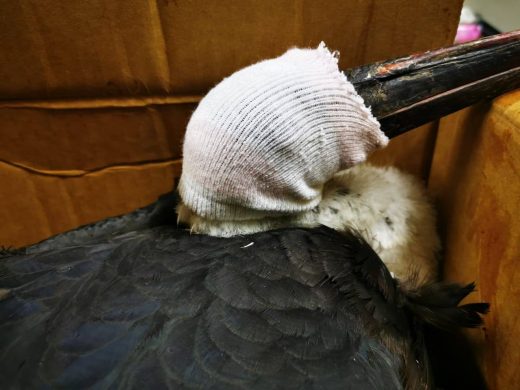
In the event of an injury to any large bird, the head of the bird is covered with a piece of material as it calms the bird and stops it from further injuring itself or biting the rescuer.
“Although most bird strikes happen within 200m above ground, Bird Life South Africa and the Airports Company South Africa initiated a Wildlife Hazard Management Programme at all airports throughout the country,” she said.
Caxton Local Media Covid-19 reporting
Dear reader,
As your local news provider, we have the duty of keeping you factually informed on Covid-19 developments. As you may have noticed, mis- and disinformation (also known as “fake news”) is circulating online. Caxton Local Media is determined to filter through the masses of information doing the rounds and to separate truth from untruth in order to keep you adequately informed. Local newsrooms follow a strict pre-publication fact-checking protocol. A national task team has been established to assist in bringing you credible news reports on Covid-19.
Readers with any comments or queries may contact National Group Editor Irma Green (irma@caxton.co.za) or Legal Adviser Helene Eloff (helene@caxton.co.za).
At the time of going to press, the contents of this feature mirrored South Africa’s lockdown regulations.

Do you want to receive alerts regarding this and other Highway community news via Telegram? Send us a Telegram message (not an SMS) with your name and surname (ONLY) to 060 532 5409.
You can also join the conversation on Facebook, Twitter and Instagram.
PLEASE NOTE: If you have signed up for our news alerts you need to save the Telegram number as a contact to your phone, otherwise you will not receive our alerts.
Here’s where you can download Telegram on Android or Apple.