WATCH: I am a lupus warrior, says Birch Acres resident
‘There was a time I had to take close to 50 tablets a day’- Selaelo.

Imagine being told by your doctor that your body’s immune system is attacking its own tissues and organs.
It is the sad reality for Selaelo Makwela (24) of Birch Acres and other people living with lupus.
Lupus is a systemic auto-immune disease. Among other things, the inflammation caused by lupus can affect many different body systems including your joints, skin, kidneys, blood cells, brain, heart and lungs.
Makwela has been living with lupus for five years and is also among those passionate about raising awareness and offering support for others living with the disease.
“I was diagnosed with systemic lupus erythematosus (Lupus SLE) in November 2013 and had no idea what it was,” said Selaelo.
“There are different types but SLE is the most common type. Symptoms vary and may be mild to severe.
“I came from an interview when I first got sick on October 10, 2013. I will not forget that day because it is the same day my aunt died. On my way back I wasn’t feeling too good and thought I was just tired because I had woken up early to get to the interview on time.
“A few days later, I was alarmed that my body and daily routine had changed from always waking up in a happy mood, playing music and being my bubbly self to completely losing my appetite and being tired daily.
“I was informed that I got the job and thought the symptoms were stress of starting to work but I also noticed I had a rash shaped like a butterfly all over my face.”
She also noticed a dramatic weight loss in a few days.
“I had to go shopping for my aunt’s funeral, and when my cousin and I got to the mall I felt very dizzy and had to sit down.”
“We started fitting on clothes and to my surprise, I had gone from my normal size (medium) to extra small without even realising it.
“I just wanted to eat Morvite for breakfast, lunch and dinner every day. Everything else smelled horrible.”
When she went to Soweto for the funeral, her mother was shocked to see her like that after only a week.
“At that time, my whole body was in pain. My mother took me to the doctor.
“We went to a general practitioner in Hospital View, Tembisa. He also thought it was stress but took urine samples and did blood tests. He recommended that I see a psychologist.
“The results showed I had an iron deficiency and was low on protein. The doctor gave me treatment for seven days but the only thing that helped was the ointment for the rash which faded a bit.”
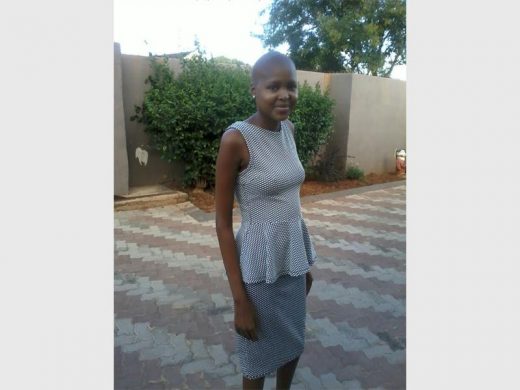
As her condition deteriorated, the 24-year-old had to move in with her grandmother in Tembisa as she couldn’t be left alone.
“I couldn’t start working because I was very weak. It was a mission to hold a pen and write. One day, my whole right arm just became incredibly painful.
“I got so sick that my mother had to move to my grandmother’s house. I kept losing weight and none of my clothes fit.
“My cousin recommended a doctor in Vosloorus who told me my condition had to do with hormones and seasonal changes. The treatment worked for a while but I relapsed a week later.”
Another doctor in Tembisa then took blood tests and did X-rays. He said the X-rays showed water in my lungs and said I had TB but referred me to a hospital to confirm.
“He told us he saw something else that was very big but he couldn’t say what it was. Although the doctor said it was not cancer, I thought it was.”
At Edenvale Hospital she was told it was not TB and they went back to Tembisa Hospital. A student doctor did a complete body analysis and saw her nails were blue and she had brown spots on her palms and under her feet.
“I explained my symptoms to her and she did another X-ray to confirm whether it was TB or not. I was diagnosed with pulmonary TB and based on the body analysis, she thought I had lupus.
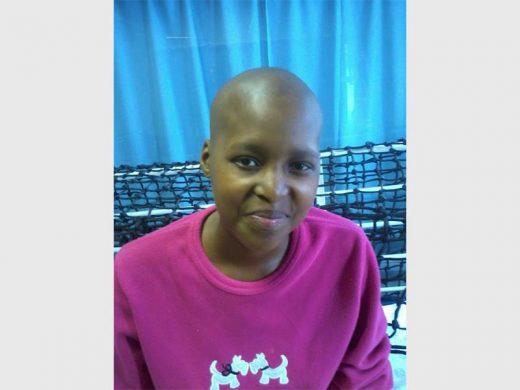
“At the beginning of lupus your immune system is very weak and you can catch anything, which was how I got infected with TB. I started with TB treatment and when I went for a check-up a week later, I was admitted.
“At some point I was on an oxygen machine as I couldn’t breathe properly on my own.”
The youngster said she felt better a few days after admission but soon relapsed.
“I couldn’t bathe or feed myself, started hallucinating, my complexion became darker, I had a short memory span, battled to sit on a toilet seat because my joints were extremely painful and I had mouth ulcers.
“Two weeks later, in December, I was discharged from Tembisa Hospital and had to wait three weeks to be admitted to Steve Biko Academic Hospital for lupus treament.
“I woke up one morning at Steve Biko Academic Hospital and had no idea where I was. I was confused because the nurses knew me but I couldn’t recognise them. My family and the nurses had to explain to me why I was in hospital.
“In February I was discharged for a week happy to be home. I was better and even able to climb the stairs on my own.”
Part of Selaelo’s treatment involved chemotherapy. She had three cycles of Cyclophosphamide which helped her recover a lot.
The rest of 2014 went smooth. She got another job but resigned and registered at Rosebank College in 2015 for an office administration course.
Her first semester in college was fine but things changed in the second.
In February 2015, she felt a cringe in her right hip and started limping. She went back to the hospital in Pretoria where X-rays showed nothing.
In 2016, the pain got worse and a rheumatologist decided to do a magnetic resonance imaging (MRI) which revealed ther right hip was slowly collapsing and the left hip was showing signs of doing the same.
“According to research and their understanding, my medication was causing my hip to collapse. They discovered one of the pills I was taking was the cause but the same pill was the most important pill to treat lupus.
“They referred me to an orthopaedic surgeon who referred me to a joint replacement doctor. I had to go for an emergency operation for a left femoral head decompression, which involves putting screws in my left hip so blood could flow to it in order to save the left hip from collapsing.
“I had to wait for the right hip to completely collapse and the doctors were concerned about me having to get a hip replacement at such a young age, as I was only 21.
“I pushed myself and completed the office administration course while doing a promotions job.
“In October 2016, I felt excruciating pain and I knew my right hip had collapsed and a hip replacement was done.”
For the rest of 2016, Selaelo recovered and went back to school in 2017 to start with a B Com in marketing management. She is now in her second year.
“I am happy. But the beginning of my journey with lupus was very bad – I went from being a healthy and fit teenager to taking close to 50 tablets a day.
“I am grateful that I have a strong support structure in my family and friends.
“I wrote to Express because I want people to know about lupus. When I tell people I have it, they ask what it is. Some people look at me and say you look good, so it must be a good disease or one not to worry about. It is not the case, because lupus can strain you from doing your daily activities in seconds.
“Lupus is called The Great Imitator because it imitates many diseases, which is why others get misdiagnosed.I would like the government to create awareness about the illness.
“I am impressed with some of the organisations and the awareness talks I have seen this year. I just wish more people could join and support all those living with lupus. Spreading awareness might help all those who get misdiagnosed, get proper treatment.”
Although Selaelo is a stronger and healthier young woman today, she sees five different medical specialists – a rheumatologist for arthritis and lupus, a nephrologist for her kidneys, a gyneacologist, orthopaedic surgeon and ophthalmologist to take care of her eyes as she could become blind.
“My medication intake has reduced to 15 tablets a day but never in my life did I think I would live like this. I do, however, feel I had to go through it all in order to educate and help support others because every time I hear about someone diagnosed with lupus, I just want to reach out.
“My advice to people who suspect they have lupus is to go to hospital and ask to see a rheumatologist. Earlier detection is better.
Selaelo wrapped up the interview with advice: “Acceptance is the most important key for people with a condition. Once you accept it, you have overcome a lot of things that come with it.
“You need to stop feeling sorry for yourself and asking for pity. Have faith in yourself. I decided that I won’t let lupus define who I am.
“I command my body and tell it not to turn against me. It is not easy, because we are faced with an ugly war with our bodies every day but we have to be strong and survive. You are the most important motivator in your own life and nobody is going to get you on the road to recovery quicker than yourself.”