
Using warm asphalt speeds up road construction
To date South Africa has successfully produced and paved over a million tons of warm mix asphalt
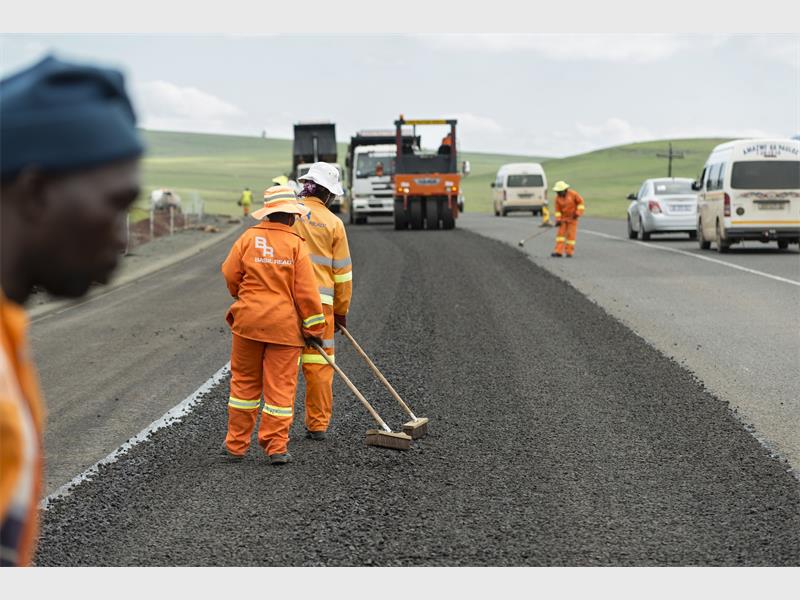
The benefits of using warm asphalt as opposed to hot asphalt on South Africa’s national highways have been boasted at a recent international roads conference in Durban.
Krishna Naidoo, a material and pavement specialist at the South African National Roads Agency SOC Limited (SANRAL) Eastern Region, said the roads agency was working towards ensuring that its stand-alone asphalt supply plants produced only warm mix asphalt (WMA).
“In this way SANRAL will be leading the charge on worker safety as well as reducing its carbon foot-print in providing sustainable infrastructure,” Naidoo said.
He was addressing delegates attending the conference themed “Roads to Social and Economic Growth” arranged by the South African Road Federation (SARF) in association with the Washington-based International Road Federation (IRF) and the Paris-based World Roads Association (PIARC).
Warm mix asphalt is produced using temperatures up to 50 degrees Celsius lower than what is used for traditional hot mix asphalt. Less energy is needed to heat the warm mix asphalt, so it uses less fuel, decreasing the plant’s carbon footprint.
It is a greener process that has less impact on the environment, with reduced hydrocarbon emissions and greenhouse gases. Due to its lower temperature, it is also safer for construction workers to use.
“When compared to hot mix asphalt, warm mix asphalt cools at a lower rate, so the paving season is extended, allowing road repairs and construction to finish more quickly.
“This benefit helps save time and money on labour and equipment, as workers and tools are needed for a smaller span of time and projects can be finished more quickly. It also lessens the impact on traffic, as projects finish faster and there are less interruptions to roadways.”
The benefits of WMA, Naidoo said, were now being realised by more clients countrywide and have also been included in the draft revision of COTO – Standard Specifications for Road and Bridge Works.
“To date South Africa has successfully produced and paved over a million tons of WMA.
“The latest success story has been the 370km haul of asphalt to a SANRAL job in Harrismith,” said Naidoo.