
Thembisa woman tells her journey of defying cancer
Mokgopha’s story serves as an inspiring reminder to approach life's challenges with positivity and resilience.
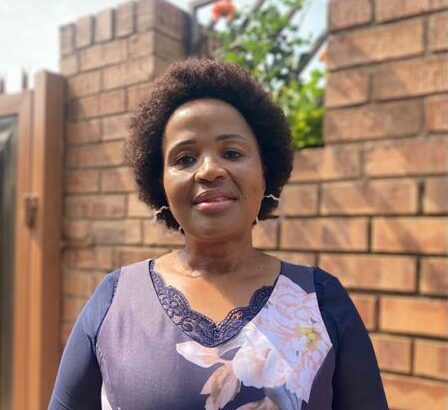
Thembisa resident Neria Nonkulukeko Mokgopha took on the battle of her life when she was diagnosed with cancer and she came out stronger.
The 55-year-old has a captivating nature and the utmost desire to share her story in the hopes that it inspires others battling with cancer to not lose hope.
Despite being told that her time was limited, Mokgopha’s unwavering determination and positive mindset propelled her on a journey of healing, defying all expectations.
Mokgopha’s story is an inspiring reminder to approach life’s challenges with positivity and resilience.
ALSO READ: Festival raises funds to fight breast cancer
Her battle with illness began in 2011 when she was diagnosed with diabetes mellitus type two.
“I learned that I needed to undergo a check-up every six months to ensure my kidneys were still operating properly.
“After nine years of that, I became quite ill in 2020 and was diagnosed with pulmonary embolism or blood clots in the lungs.
“They had to start me on warfarin, which are blood thinners. I had already come to terms with the fact that I was sick, as the doctors had said, and that my life had been up and down.
“I had to go to the intensive care unit (ICU) due to dyspnea, and by the time I was admitted, I was too sick to work.
“The doctor had also neglected to order an MRI, which would have allowed them to check every part of my body.”
According to Mokgopha, things took a turn for the worse in 2022 when she began urinating while sleeping. She said at that point, she realised that something was seriously wrong.
ALSO READ: Local library educates girls about cervical cancer
“After being admitted for an MRI, the doctor informed me that I had stage three cancer on my left kidney and that my kidney was damaged, requiring kidney removal. At that point, I was 54 years old,” she said.
According to Mokgophha, her kidney was removed, and the procedure went smoothly.
However, after two days, she experienced internal bleeding and had to return to the hospital, whereupon she slipped into a coma.
“After the oncologist informed me that I had little chance of survival and that I would need to tell my family that I might pass away at any time, by which point I was in severe pain, I assured her that according to Psalm 126, I would survive to witness to God’s kindness.
“She advised me to get an MRI so they could make sure the cancer had not spread to any other parts of my body, as stage three cancer is quite deadly.
“I had an MRI scan, and the results were negative. She told me I needed to retake the test after three months, so I did.
“The results were negative again after three months. These two MRI scans were completed last year, and she told me I wouldn’t undergo chemotherapy because the results were negative twice.
“Early in the year, I had another MRI, and the results were negative. She told me she saw God’s hand at work in my life.”
ALSO READ: CoE raise breast cancer awareness
Today, Mokgopha is cancer-free.
“I received my cancer-free certification early this year, but the oncologist insisted that I get an MRI every six months. My life has altered, and I am unable to consume anything.
“I advise those who are battling cancer not to believe everything their doctor says. Fear is a factor in some deaths, so even though things appear to be going poorly, people should maintain an optimistic outlook.
“Doctors can make mistakes, as I have experienced, and I have told people I would die at any time and that I needed to plan my funeral. Now that I’ve told you my true story, don’t believe everything they say,” she said.
“To do this, they must maintain an optimistic outlook, speak positively about themselves constantly, follow dietary advice, live a healthy lifestyle, and give everything to God.
“They must remember not to panic after receiving a diagnosis,” she added.
“I was officially declared disabled. I hold onto Habakkuk 2:14, which speaks of the earth being filled with the knowledge of the glory of the Lord as the waters cover the sea,” said Mokgopha.
Lucy Balona, head of marketing and communications officers at CANSA, said early kidney cancer does not usually cause any signs or symptoms.
ALSO READ: Daredevils raise largest amount for male cancer awareness
“Most kidney tumours are found incidentally, during an evaluation with radiologic imaging studies for other nonspecific abdominal complaints (gallbladder pain, for example), or during follow-up for other previously treated malignancies.”
According to Balona, these incidental cancers are often found early, before any symptoms have occurred.
“Such cancers are usually detected before they have spread. Patients with incidental kidney tumours are often cured of their disease, commonly by surgery alone.”
As many as 30% of kidney masses represent a benign condition.
Below are some of the earliest signs and symptoms of kidney cancer include:
• Blood in the urine (haematuria)
• Low back pain on one side (not caused by injury)
• A mass (lump) on the side or lower back
• Fatigue (tiredness)
• Weight loss not caused by dieting
• Fever that is not caused by an infection and that does not go away after a few weeks
• Swelling of the ankles and legs (oedema)
Balona said none of these symptoms are positively indicative of kidney cancer.
“For example, blood in the urine may be a sign of kidney, bladder or prostate cancer, but can also be an indication of a bladder infection or a kidney stone,” said Balona.
Treatment of kidney cancer
Common treatment options for people with kidney cancer usually include surgery, targeted therapy, or biological therapy. A patient may receive more than one type of treatment.
Treatment depends mainly on the following:
• The size of the tumour
ALSO READ: Get your flip flops in support Childhood Cancer Foundation
• Whether the tumour has invaded tissues outside the kidney
• Whether the tumour has spread to other parts of the body
• Age and general health
Balona added that at any stage of disease, supportive care is available to control pain and other symptoms, to relieve the side effects of treatment and to ease emotional concerns.
Some people with kidney cancer may need to have radiation therapy to relieve pain or certain other problems.