
Hands-free vs hand-held myth busted
Hands-free devices offer very little if any benefit to safety when using a cellphone, says popular Discovery television show MythBusters.
An experiment by the show was done at the Stanford University Automotive Innovation Facility using a simulator comparing hands-free devices to the “hands-full”.
“We have long considered hands-free devices better, safer and easier because they allow you to have both hands on the wheel,” said Warwick Scott-Rodger, head of Dialdirect.
“This experiment places some big question marks behind this well-known ‘fact’.”
Motorists had a relatively simple task: they needed to pay attention to GPS instructions and avoid crashing into any other vehicles or pedestrians.
During the experiment, 15 drivers were tested using a cellphone and 15 others a hands-free device.
Out of the 15 “hands-full” drivers, only one passed, five failed by driving the wrong way and nine crashed.
Of the 15 “hands-free” drivers, one passed, six failed by driving the wrong way and eight crashed.
This means that, statistically, there was no difference in the potential danger of these two approaches.
“Some will say that the one group of drivers was simply better at multitasking than the other,” said Scott-Rodger.
“We can also argue at length about the obvious benefits of having both hands on the wheel.
Fundamentally, both hand-held and hands-free devices split your attention between having a conversation and driving and endanger lives, both yours and other motorists’.”
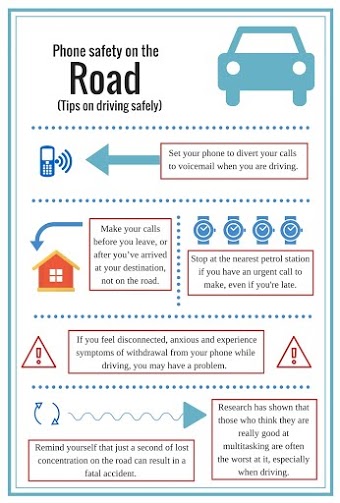
Dialdirect offers the following tips on phone safety while on the road: