Echoes of Krugersdorp: The powerful legacy behind the Paardekraal Monument
From the First War of Independence to modern-day heritage preservation, the Paardekraal Monument continues to stand as one of Krugersdorp’s most important historical landmarks.
In the 27th edition of Echoes of Krugersdorp, we look at one of the most iconic Krugersdorp monuments in town, the Paardekraal Monument.
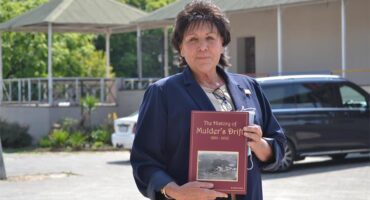
The Krugersdorp News, in partnership with the Krugersdorp Heritage Association (KHA), spoke to co-founder Jaco Mattheyse, who said that few places in South African history carry the emotional and symbolic weight of the Paardekraal Monument.
He added that long before the granite structure rose above Krugersdorp’s western landscape, the site was already sacred ground to thousands of burghers (residents) who gathered there in defiance, faith, and unity during one of the darkest periods in the history of the Zuid-Afrikaansche Republiek (ZAR).
“Today the monument stands quietly in Paardekraal Street, yet beneath its stone exterior lies the memory of a people determined to reclaim their independence,” he said.
The origins of Paardekraal
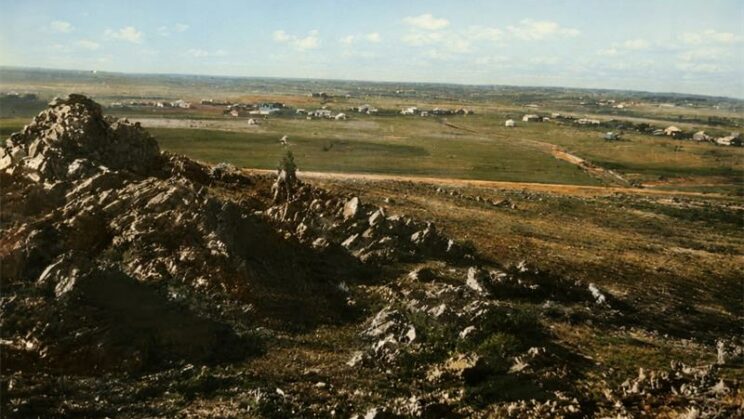
Before it became a historic landmark, the area was simply known as Paardekraal – literally meaning ‘horse enclosure’ or ‘horse corral.’ Mattheyse explained that the open veld provided a suitable gathering place where horses could be kept during large meetings and travelling expeditions.
“Few could have imagined that this humble piece of land would later become one of the most symbolically important sites in South African history. Long before the discovery of gold transformed the Witwatersrand, Paardekraal had already secured its place in the national consciousness,” he continued.
The gathering at Paardekraal
On April 12, 1877, Sir Theophilus Shepstone annexed the Zuid-Afrikaansche Republiek on behalf of Britain. Mattheyse added, remarkably, that the annexation occurred without a single shot being fired. For many burghers, however, the loss of independence was deeply humiliating and unacceptable.
Over the next three years, Boer leaders attempted to restore the republic through peaceful negotiation. Delegations led by Paul Kruger travelled to Britain in the hope of reversing the annexation, but all efforts failed.
“By late 1880, patience had run out. A call went out for the citizens of the republic to gather at Paardekraal on December 8, 1880. Roughly 6 000 burghers answered the summons. What unfolded there would become one of the defining moments in Afrikaner history,” he explained.
“The atmosphere was not merely political – it was deeply spiritual. Contemporary accounts describe the assembly almost as a sacred covenant between the people and God. Many of those present believed they stood there under divine guidance, much like the Voortrekkers before them during the Great Trek and the Vow of 1838,” he added.
During the meeting, it was resolved that the time had come for decisive action against British rule. Paul Kruger proposed that each man present place a stone upon a growing pile as a symbol of unity and commitment.
“One by one, the burghers stepped forward.”
Each stone represented personal sacrifice, loyalty, and a shared determination to restore freedom to the republic. He said no single stone was more important than another; together they formed a united foundation of resistance.
At the same gathering, the Paardekraal Vow was taken – a solemn pledge of faith, perseverance, and dedication to liberty.
The road to freedom
The spirit awakened at Paardekraal quickly transformed into armed resistance. The events of December 1880 directly led to the First War of Independence and ultimately to the famous Boer victory at Majuba on February 27, 1881.
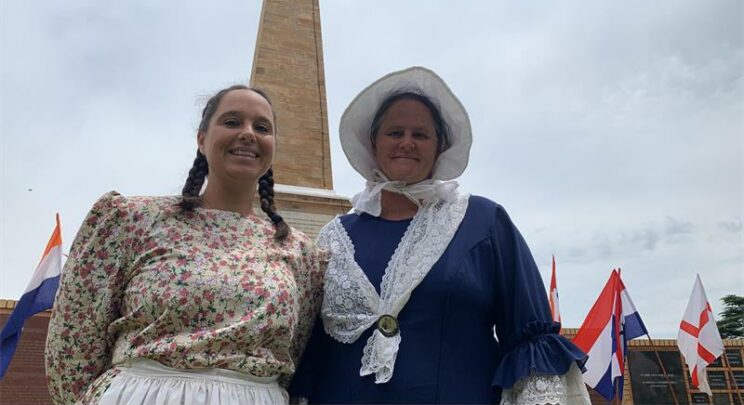
He continued, with the restoration of the ZAR’s independence, Paardekraal became a place of thanksgiving and remembrance. From December 13 to 16, 1881, a massive festival was held on the site by a grateful people celebrating the return of their freedom.
The first official state festival of the republic was also celebrated there in 1886, further cementing Paardekraal’s place in the national consciousness.
Krugersdorp and the legacy of Paardekraal
The later establishment of Krugersdorp, following the discovery of gold in 1886, was closely linked to the growing significance of the Paardekraal area.
“By then, Paardekraal was already regarded as sacred ground by many citizens of the republic. The developing town nearby, therefore, inherited not only economic importance but also deep political and cultural symbolism. In many respects, the origins of Krugersdorp cannot be separated from the legacy of Paardekraal itself,” he said.
Also read: Echoes of Krugersdorp: Inside the town’s infamous first prison
The construction of the monument
By 1889, Mattheyse said there was growing support for the erection of a permanent monument over the original stone cairn. JC Human, then magistrate of Krugersdorp, approached President Paul Kruger to obtain approval for the project.
Permission was granted, and in 1890, construction commenced.
The monument was designed by the renowned state architect Sytze Wierda, whose work shaped much of the architectural identity of the ZAR. Construction was undertaken by builder WY Veitch, beginning in April 1890 and concluding in November of that year.
“The structure itself was deliberately imposing. Built of massive stone blocks, the monument possesses an almost fortress-like appearance, symbolising permanence, resilience, and strength. Unlike many monuments erected merely for decoration or prestige, the Paardekraal Monument enclosed something profoundly meaningful – the original stones placed there by the burghers themselves,” he continued.
A national shrine
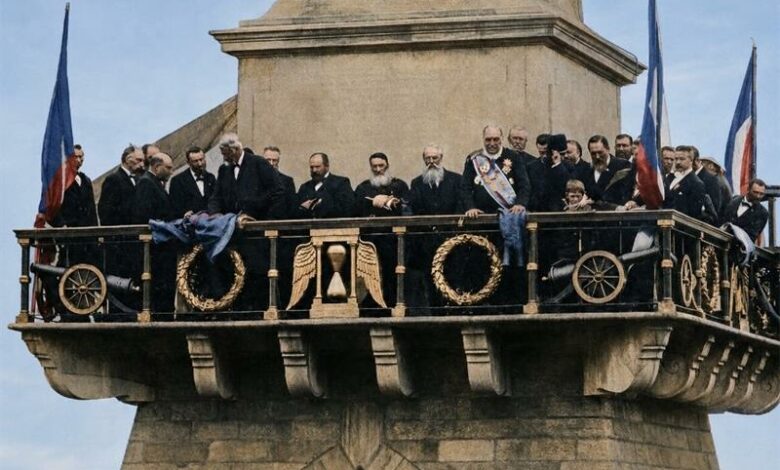
In December 1891, President Paul Kruger officially unveiled the monument during a grand commemorative festival attended by thousands.
“Significantly, this was also the first major public celebration in which the Vow of 1838 was again formally commemorated. Over time, Paardekraal evolved into far more than a memorial. It became a place of pilgrimage and remembrance – regarded by many as a national shrine of Afrikanerdom.
“School groups, veterans, political leaders, church organisations, and cultural societies regularly gathered there for commemorations and Geloftefeeste. The site played a major role in preserving Afrikaner identity and historical memory during the early twentieth century,” he added.
In 1916, a major festival was conducted under the leadership of General Louis Botha. Although later celebrations became smaller and more localised, the Paardekraal Feeskommissie ensured that the tradition endured.
From 1946 onward, larger five-yearly commemorations were revived and drew substantial attendance.
Desecration during the Anglo-Boer War
The monument’s symbolic power did not go unnoticed by the British during the Anglo-Boer War.
Mattheyse said in June 1901, under orders from Lord Roberts, the original stone cairn beneath the monument was removed. The stones were reportedly dumped into the Vaal River beneath the railway bridge near Vereeniging. The soldiers also vandalised the monument by adding graffiti all over it.
“The act was intended to destroy a symbol of Boer unity and resistance. Yet history often carries its own irony.
“Rather than erasing the memory of Paardekraal, the destruction of the cairn strengthened the monument’s legendary status. The removal of the stones transformed the site into an even deeper symbol of sacrifice, loss, perseverance, and cultural survival. The spirit of Paardekraal endured long after the stones themselves had disappeared,” he added.
“Ons sal handhaaf, ons sal opbou”
He explained that, at the turn of the 21st century, renewed efforts were made to preserve and strengthen the monument’s historical legacy.
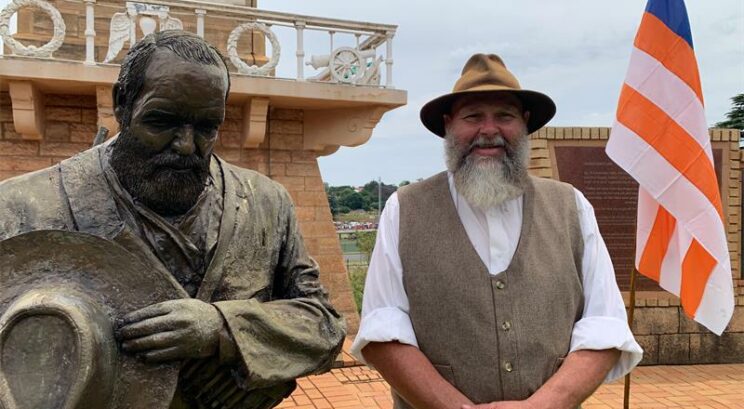
During the centenary commemorations of the Anglo-Boer War between 1999 and 2002, Geloftefees committees from across the country were invited to contribute commemorative stones for incorporation into a new memorial wall at Paardekraal.
Completed in 2001, the wall serves as a reminder to future generations of the enduring motto:
“Ons sal handhaaf, ons sal opbou [we shall preserve, we shall build]”.
“Today the Paardekraal Monument remains one of Krugersdorp’s most important heritage sites – a place where history, memory, faith, and identity continue to intersect,” he said.
Echoes through time
“The stones of Paardekraal were once gathered by ordinary citizens determined to reclaim their freedom. More than a century later, the monument still stands – not merely as a memorial to war or politics, but as a testament to unity, conviction, and the enduring power of collective memory.
“And perhaps that is the monument’s greatest legacy: not simply the stones that were piled there in 1880, but the spirit that placed them there,” Mattheyse concluded.