
ER24 reacts to accident scene complaints
“Pre-hospital emergency care has evolved ... [para]medics are able to apply their knowledge and skill to determine the best course of action for a specific patient based on that patient’s needs at the time.”
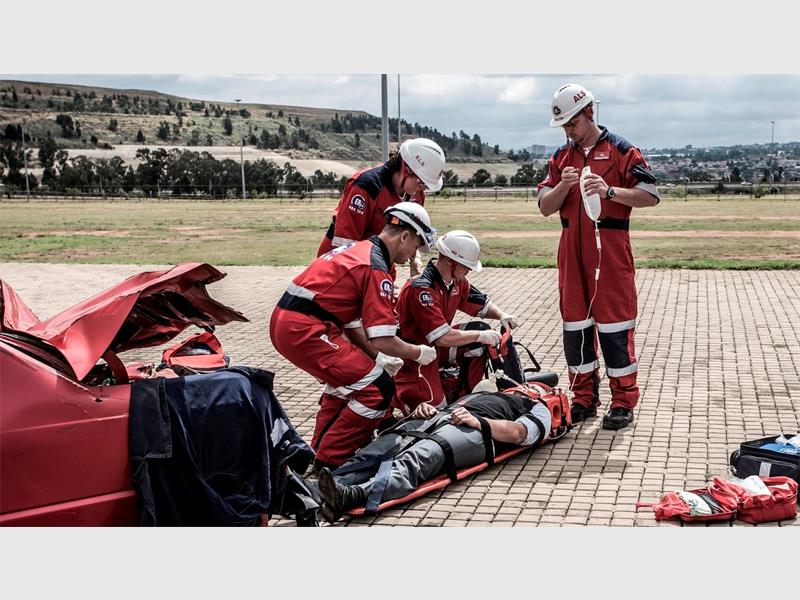
In light of recent queries about apparent differences in treating patients at accident scenes, ER24 has released an official statement describing why their techniques frequently differ.
People have lodged complaints about negligent paramedics who do not necessarily use spinal boards or cervical collars when treating accident victims on scene.
However, these items are not necessarily needed, and occasionally cause more harm than good. The complaints result from the public’s ignorance of the latest best practice within the pre-hospital emergency medical care arena.
With trauma and treatment month coming to an end, ER24 highlights the importance of providing the best possible care and treatment to avoid patient fatalities.
ER24’s Dr Vernon Wessels gave some pointers clarifying modern best-care practices. According to him, in some cases using a cervical collar can have adverse side effects.
Sometimes removing or not applying a cervical collar can be less harmful to certain patients.
He also said that paramedics are taught to do spinal clearances on scene and are allowed to do so. They know how to follow a certain protocol to identify patients who do not need to be immobilised and can be permitted to move, or be moved.
“Not using a spinal board routinely can prevent patients from developing back pain as a result of not moving over prolonged periods of time”.
Recent research in the Middle East has also proved that using the once-banned tourniquet (a band used to stop blood flowing out of a limb) can save a patient from bleeding out.
Tourniquets were banned from pre-hospital fields as they were considered dangerous, but civilian emergency service personnel have reported numerous cases where using a tourniquet stopped uncontrollable bleeding and prevented blood-loss amputations.
At present, more focus is placed on quickly moving patients with life-threatening but operable injuries to a hospital, instead of spending too much time on scene where resources are limited. Techniques such as putting up an intravenous drip,which was formerly standard procedure, have now been ruled out.
Modern EMS procedures allow paramedics to put up drips en route to the hospital in an ambulance or once they arrive at the hospital.
“Pre-hospital emergency care has evolved from simply following preset protocols that were developed based on what was thought at the time to make the most sense, to a fully fledged profession where research drives evidence-based best practice techniques,” Dr Wessels said.
“Paramedics are able to apply their knowledge and skill to determine the best course of action for a specific patient based on that patient’s needs at the time,”
Dr Wessels sums his points up as follows:
• Paramedics don’t have to use spinal boards on scene
• Paramedics don’t have to use cervical collars on scene
• They don’t have to put up an intravenous drip on scene
• They are allowed to use tourniquets
Also read:
GRAPHIC IMAGES: Road of death claims another life
Paramedics finds mangled wreck
Netcare 911 pranksters face legal action
Head-on collision leaves six injured