
The flutter of white heading to Madagascar
Every year in midsummer they gather in their millions, and migrate in a north-easterly direction.
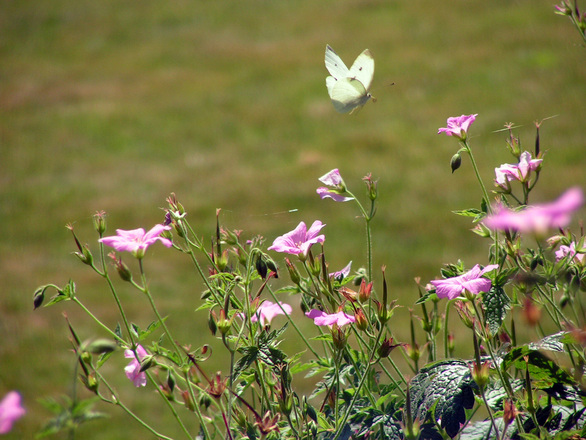
If you do not take special note of this remarkable occurrence, you may blink twice and miss it completely.
Millions of Brown-veined White Butterflies are currently on their way to Madagascar as part of their annual migration during summer and when you stare out into the distance you will notice these butterflies all around you.
According to Johan van der Walt, who wrote a blog for Wildlife South Africa about the butterflies, the annual migration of these butterflies hits especially the central, northern, and north-eastern parts of South Africa, and depending on climatic conditions like rain and drought, their numbers differ each year.
Following them, and preying on them, are hundreds of insect-eating birds, as well as many dragonflies (Anisoptera) out for a quick attack on a slow-moving, low-flying butterfly. Some butterflies caught in spider webs were also noticed.
The Brown-veined White, also called the Pioneer White or African Caper White (Belenois aurota), is of the family Pieridae, with a wingspan of 45 millimetres, and is known as South Africa’s most common butterfly. It occurs in most areas in South Africa. Every year in midsummer (December or January) they gather in their millions, and migrate in a north-easterly direction.
These butterflies start flying, and laying eggs, from a specific area in the south-west Kalahari (Northern Cape region). As they fly in a north-easterly direction, more and more join the flight. They also pause to lay eggs along the way.
Little research has been done with regard to where exactly these butterflies fly to, but they have been noticed flying above the ocean near the Mozambique coast, where at the end of their journey, they most probably fall into the sea. They need not fly back to sustain the population, as eggs have already been deposited on the way.
In reality, the flight is an emigration and not really a migration, as they only fly one way and then die at the end of their journey.
For more interesting facts about these butterflies, visit https://www.wildlifesouthafrica.com/.
Read more here